
What Is Samegawa? Ray‑Skin Material On Japanese Katana Tsuka Handles

When examining a traditional‑style katana built for collection and display, most enthusiasts focus on decorative metal fittings or the outer woven tsuka‑ito cord. Beneath that textured cord lies a lesser‑known yet essential component: samegawa. Also known as ray‑skin, this material forms the base surface of the tsuka handle and shapes both grip comfort and visual detail for Japanese‑style swords. Explore the full range of katana structural parts within katana sword‑fitting collection.
Historically, real samegawa was crafted from processed stingray hide. Artisans treated and flattened the hide to produce a hard, bumpy surface covered in small raised nodules. When placed under tsuka‑ito wrapping, this natural texture created extra friction, helping the outer cord stay firmly seated on the wooden tsuka core. Beyond practical grip improvement, samegawa carried cultural meaning during feudal Japan, as fine‑quality ray‑skin was valued for well‑crafted nihonto pieces.
Not all samegawa you will see on modern collectible katana comes from natural stingray hide. Today, many display‑oriented and anime‑themed swords use imitation samegawa. These molded replicas replicate the bumpy visual pattern of ray‑skin through synthetic materials. While they match the outward aesthetic, they lack the subtle irregular grain found within authentic natural hide.
Natural real samegawa features uneven, non‑uniform bumps. Individual nodules vary slightly in size, spacing and height across the surface. No two sections of natural ray‑skin look completely identical. On the other hand, molded imitation samegawa shows highly regular, repeating patterns. The bumps appear uniform in dimension and distribution, a tell‑tale sign of mass‑produced synthetic casting.
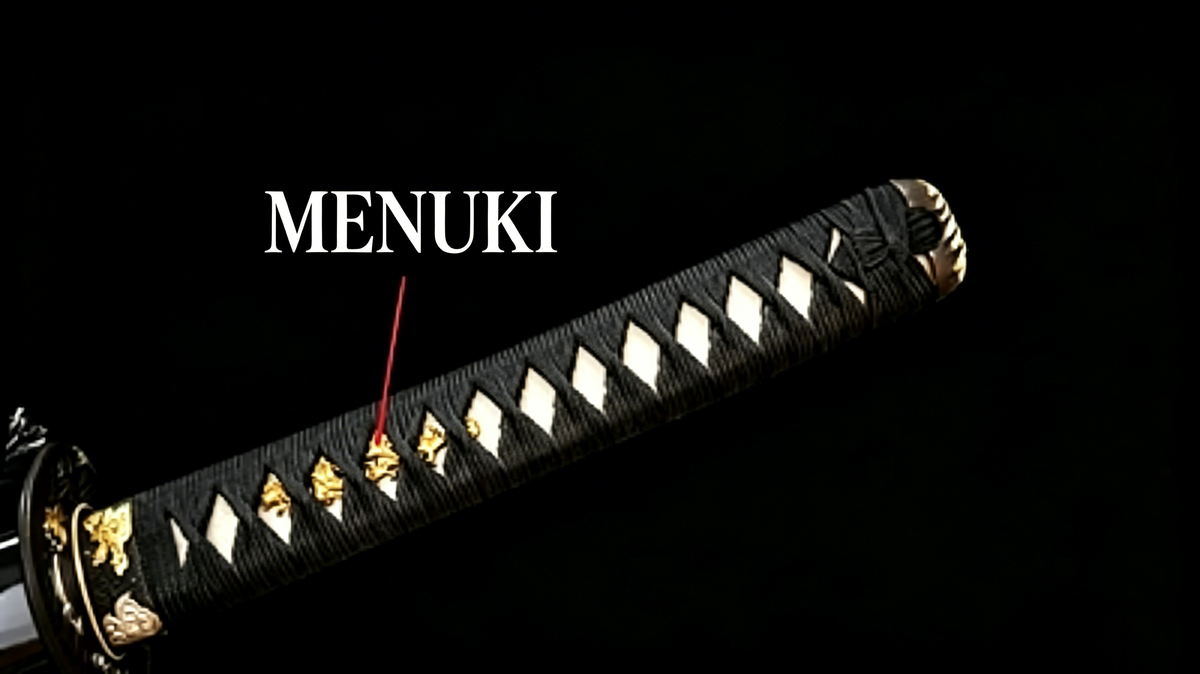
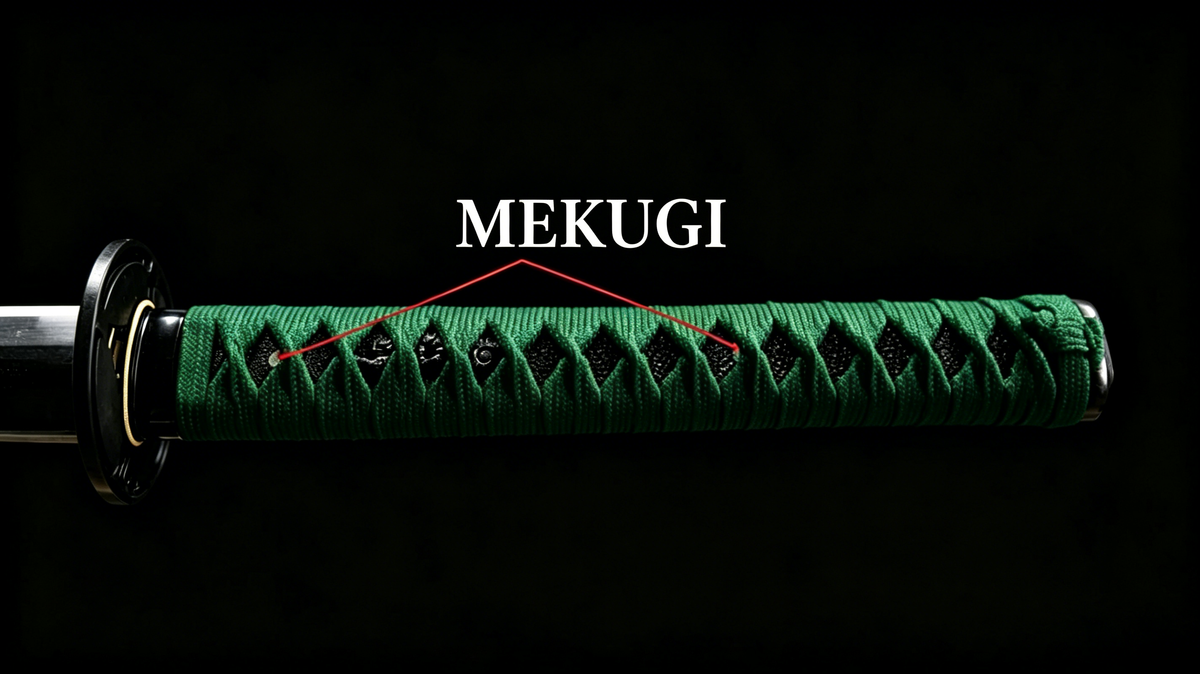
On a finished katana tsuka, samegawa sits directly glued over the wooden handle core. The tsuka‑ito cord is then tightly wrapped over top. Small diamond‑shaped cutouts in the ito wrapping intentionally expose small sections of the underlying samegawa. These exposed windows allow collectors to view the texture of the ray‑skin material without unwrapping the handle assembly. Visit composition of katana main collection to browse more articles covering Japanese sword hardware.

For modern collectors choosing display‑focused or anime‑inspired katana, there is no universal “better” option between real and imitation samegawa. Genuine ray‑skin brings historical accuracy and organic texture, suitable for high‑end heritage‑style collectibles. Synthetic imitation samegawa offers stable appearance, lower cost and good durability for everyday display‑purpose replicas. Understanding these material differences helps you set realistic expectations when evaluating sword‑related collectibles. You may explore museum archives for further reference on historical Japanese ray‑skin sword fittings.

Leave a comment
This site is protected by hCaptcha and the hCaptcha Privacy Policy and Terms of Service apply.