
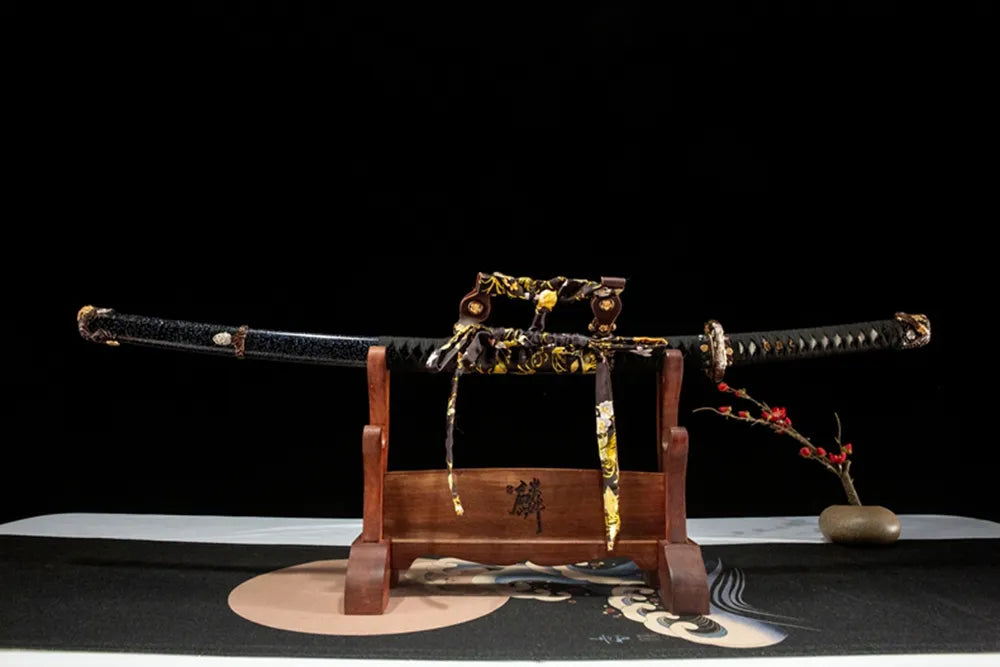
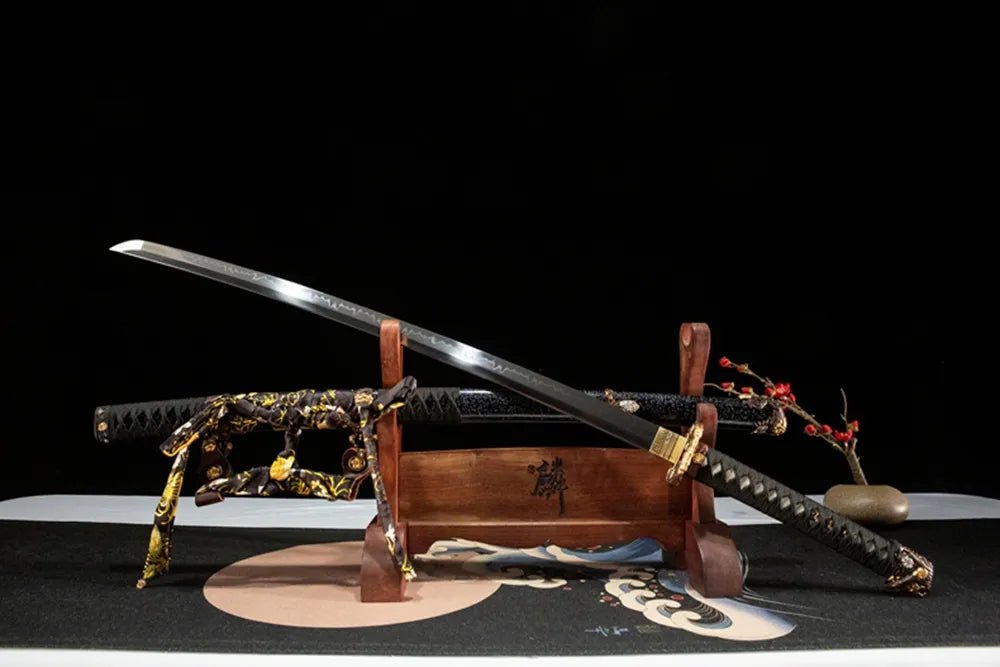
Lion King Tachi | T10 Steel Full Copper Gilded Silvered Samurai Sword

Handcrafted by experienced swordsmen

Free American Express

Perfect after-sales service

SSL End-to-end encryption secure payment
【Zencho】entire length:104cm
【Hacho】blade length:71cm
【Handle length】:27cm
【Sori】:1.7cm
【Sakikasane】:0.45cm
【Motokasane】:0.7cm
【Sahihaba】:2.3cm
【Motohaba】:3.2cm
【Kissaki nagasa 】:3.7cm
【Mizuheshi】:Tsuchioki
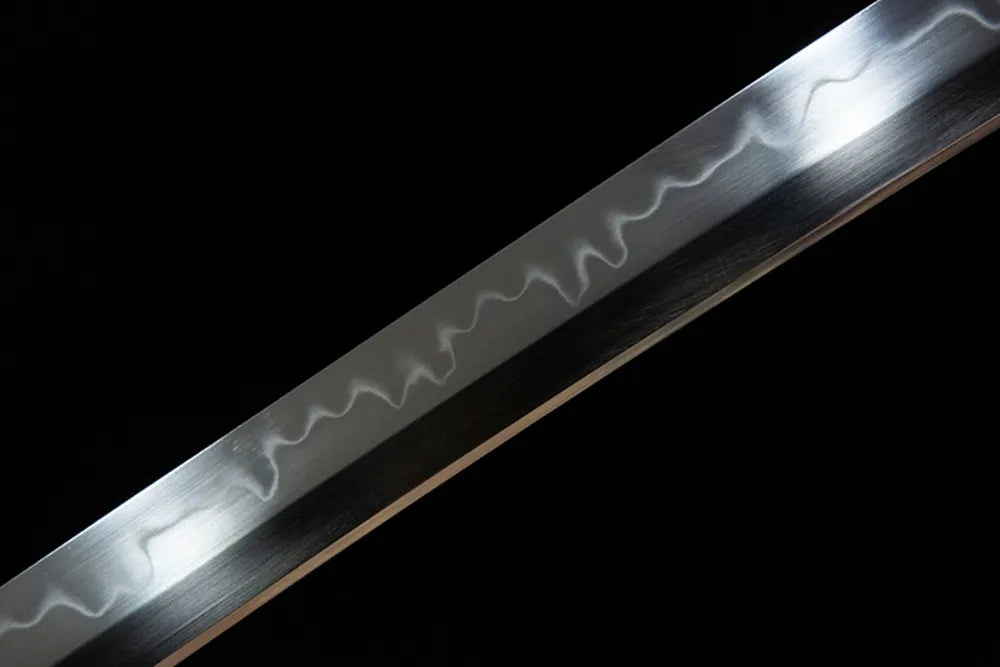
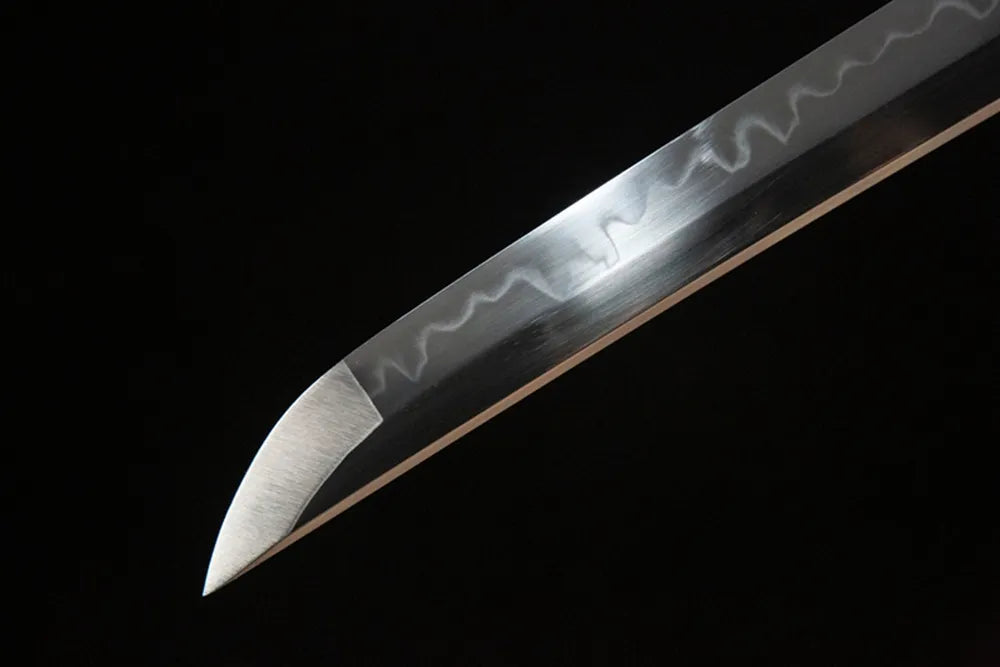
【Hamon】:Gunome
【Blade material】:T10 Steel
【Hi】:No HI
【Structure】:Maru
【Blade treatment】:Hand crafted sharpening
【Yokote】:Fake YOKOTE
【Disassembled】:Yes
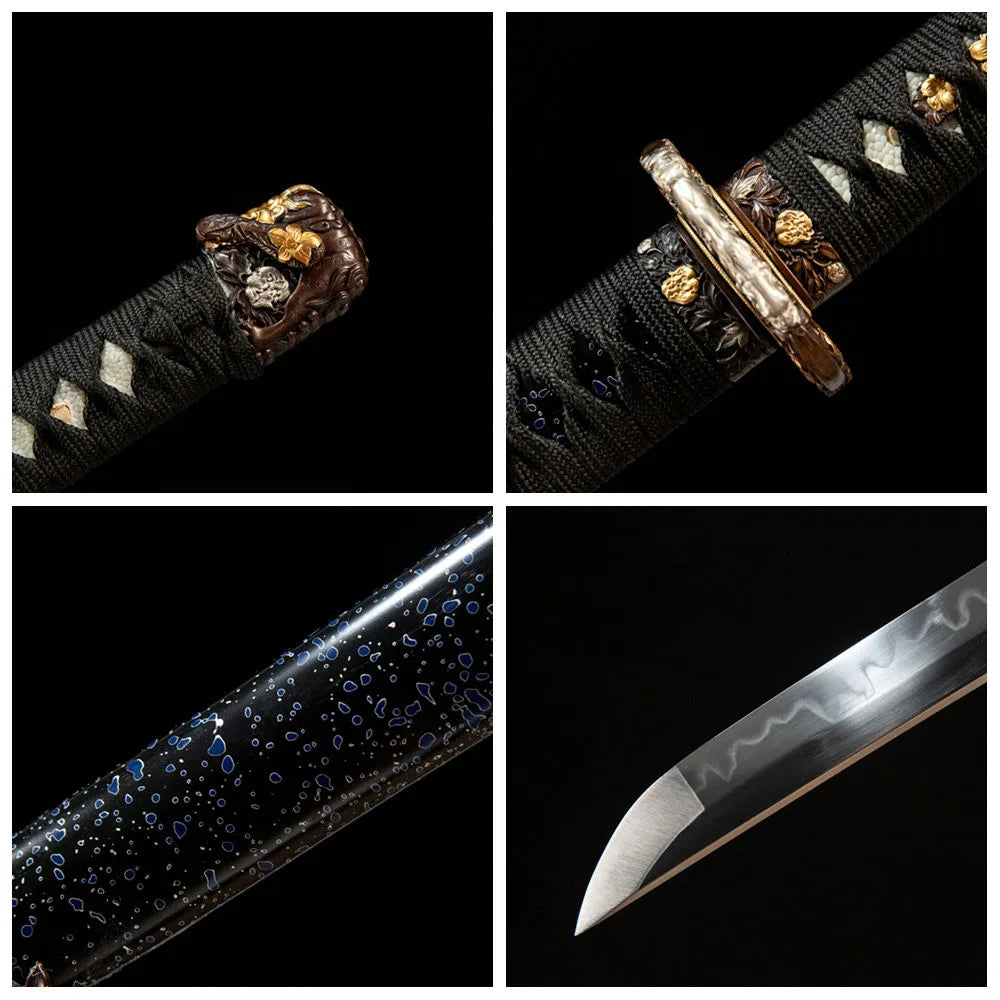
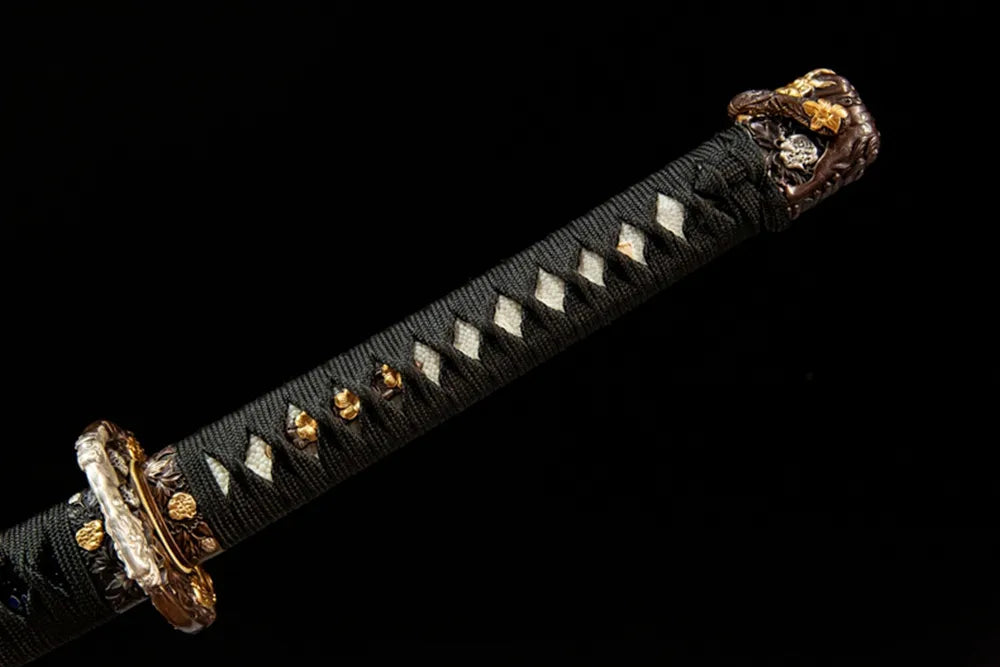
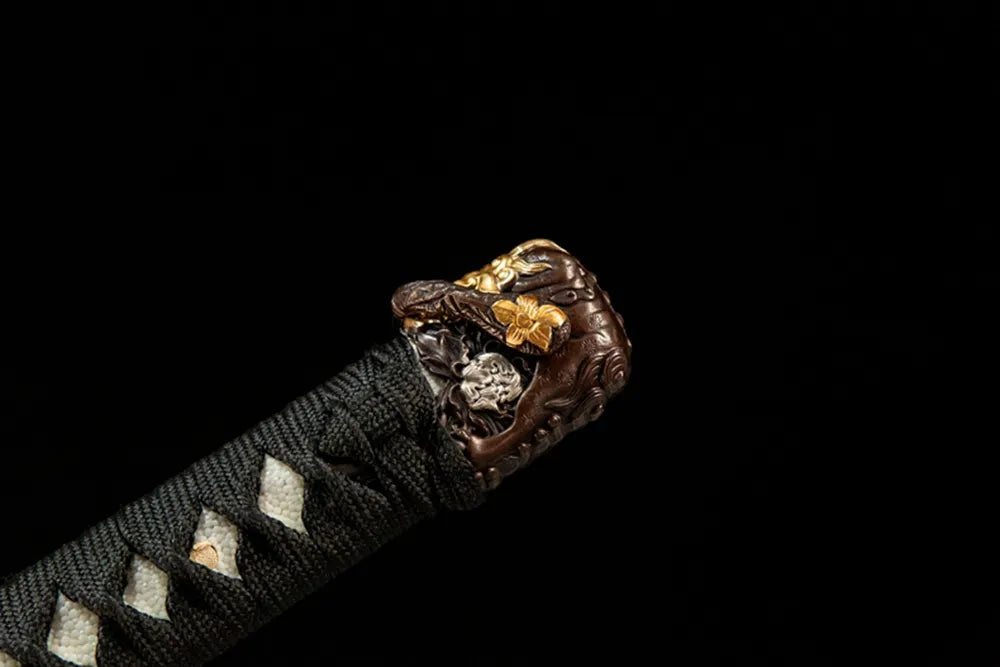
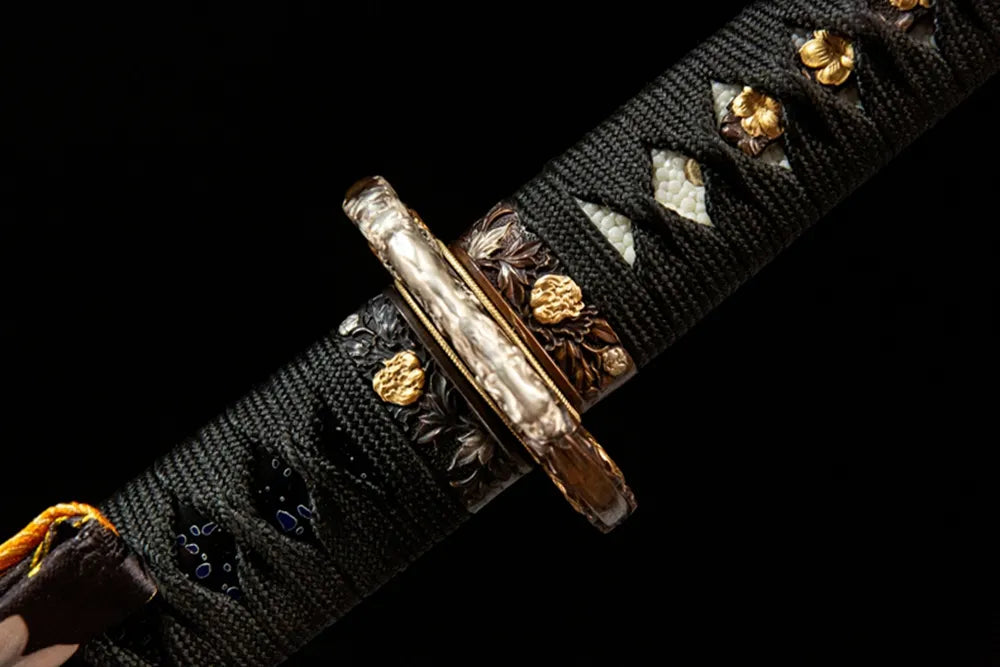
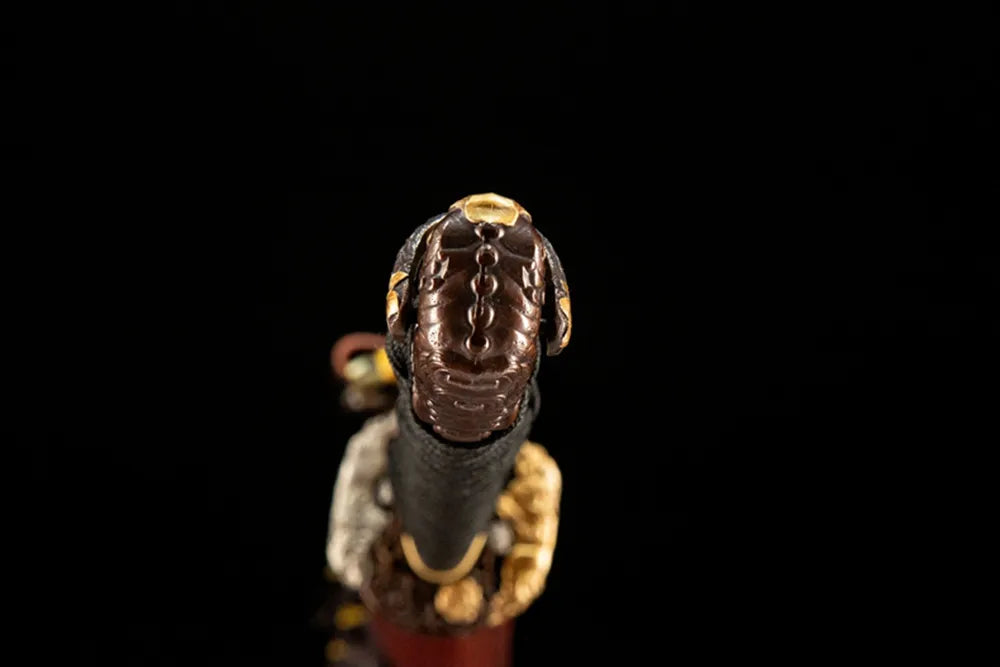
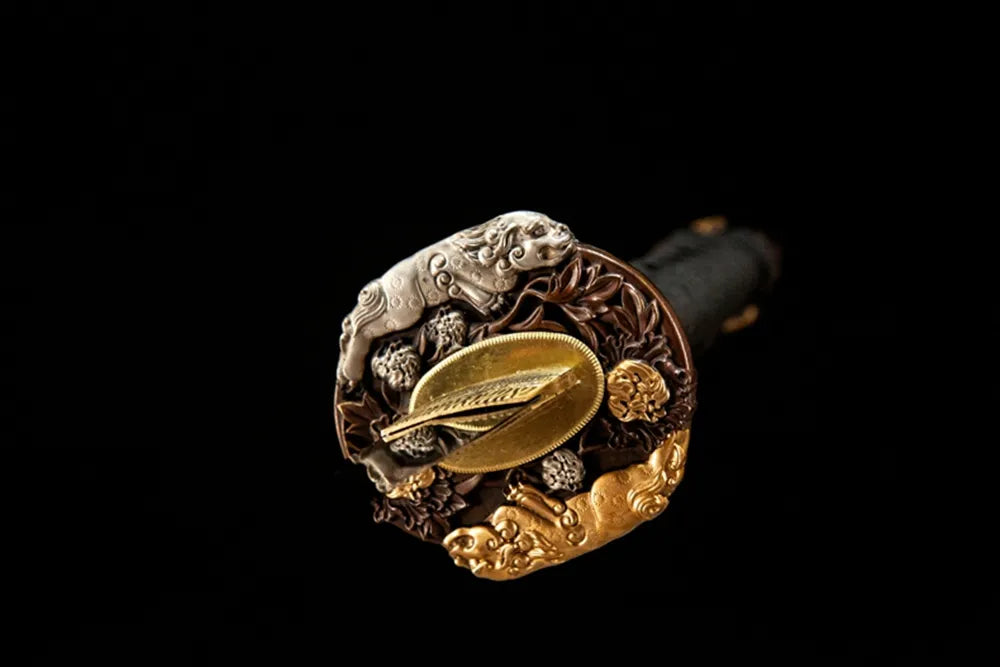
【Fuchi kashira】:Copper gilded and silvered
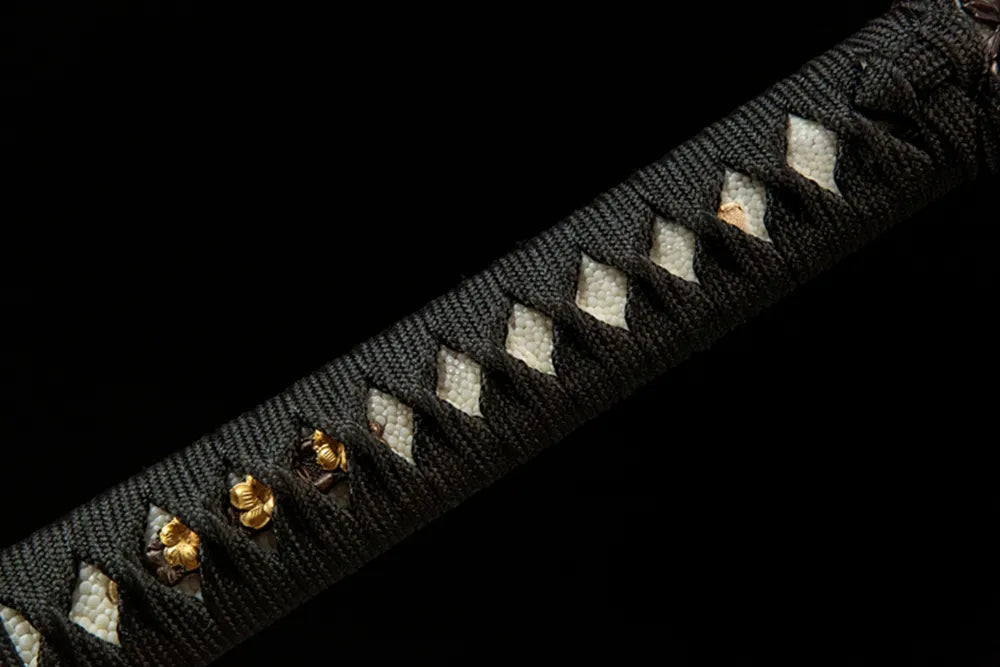
【Handle wraps】:Moro-hineri-maki
【Samekawa】:Ray skin
【Mekugiana】:Two
【Mekugi】:Bamboo
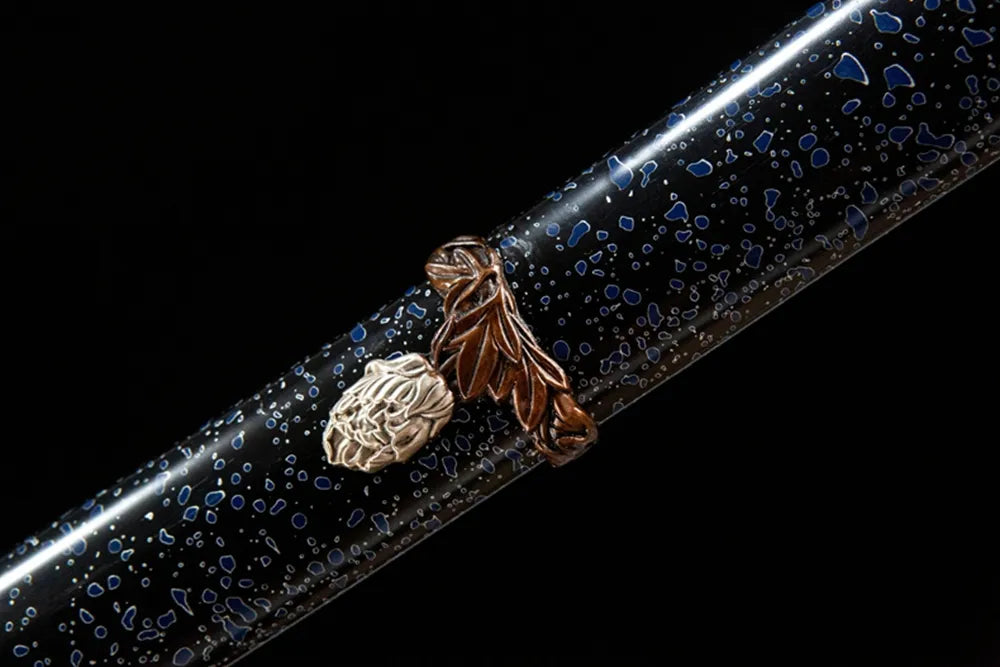
【Menuki】:Copper gilded and silvered
【Seppa】:Copper
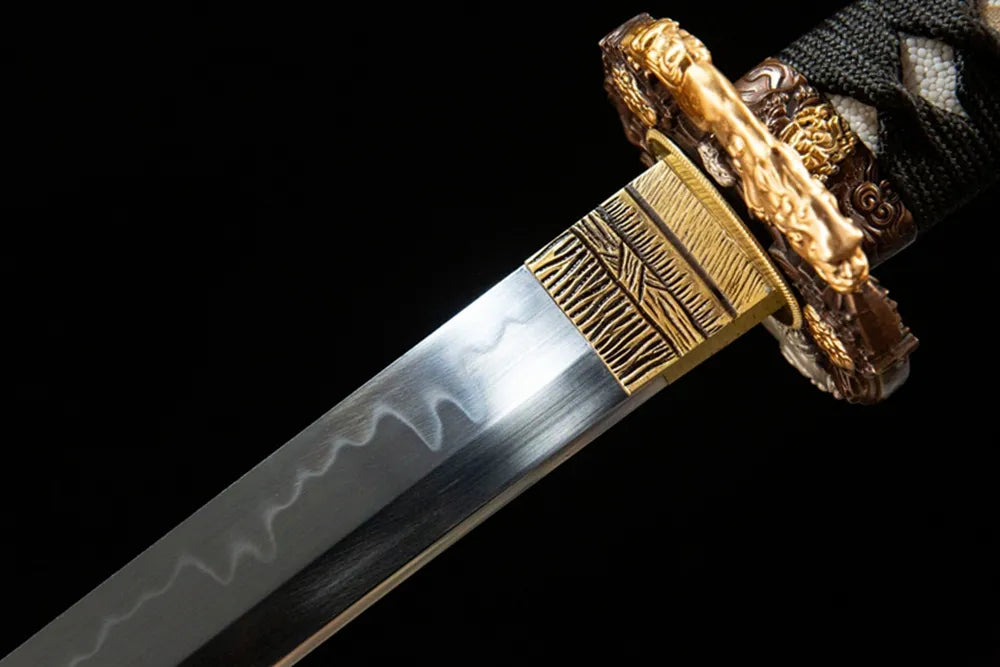
【Tsuba】:Copper gilded and silvered
【Habaki】:Copper
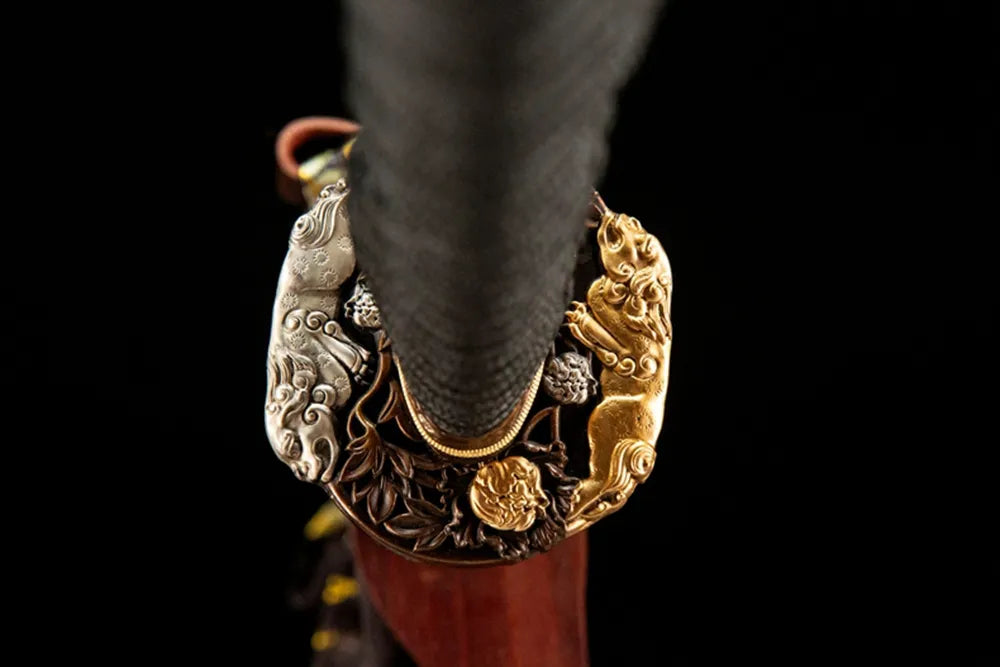
【Koiguchi】:Copper gilded and silvered
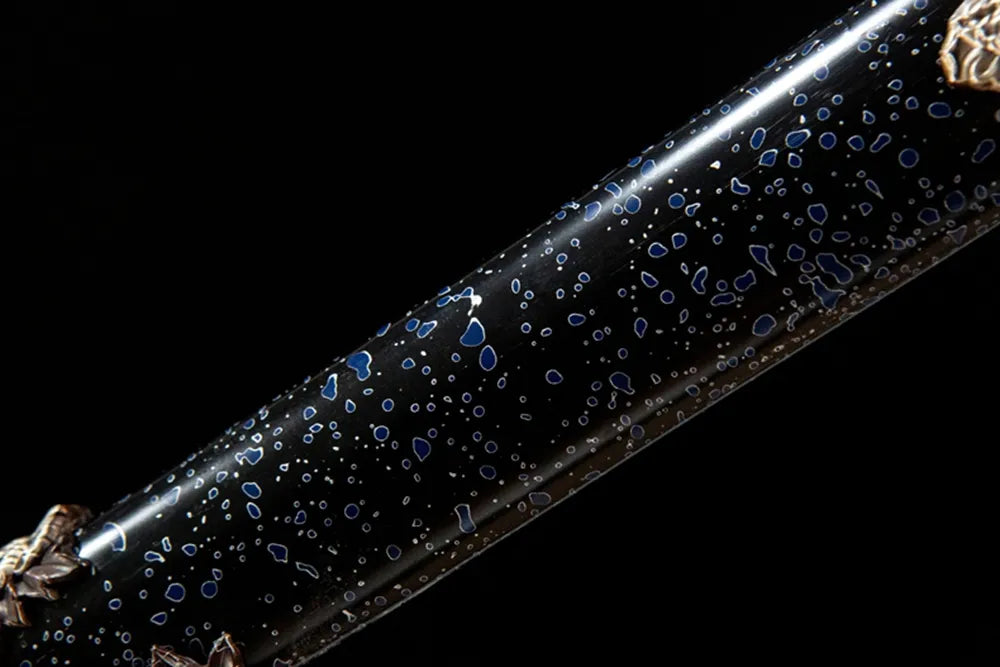
【Saya】:Chinese lacquer
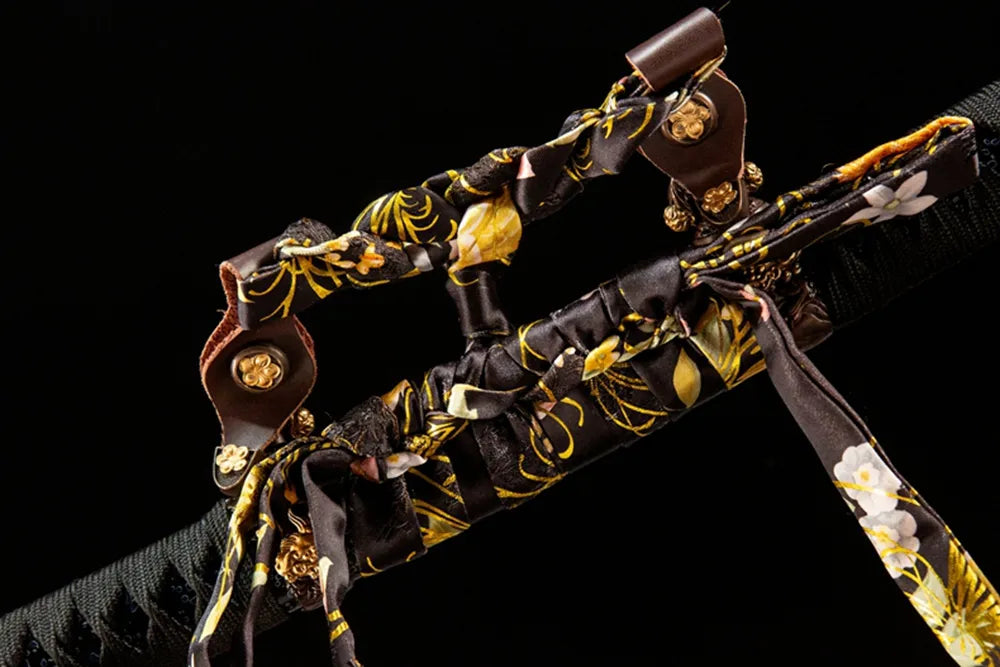
【Tachino】:Exquisite silk rope
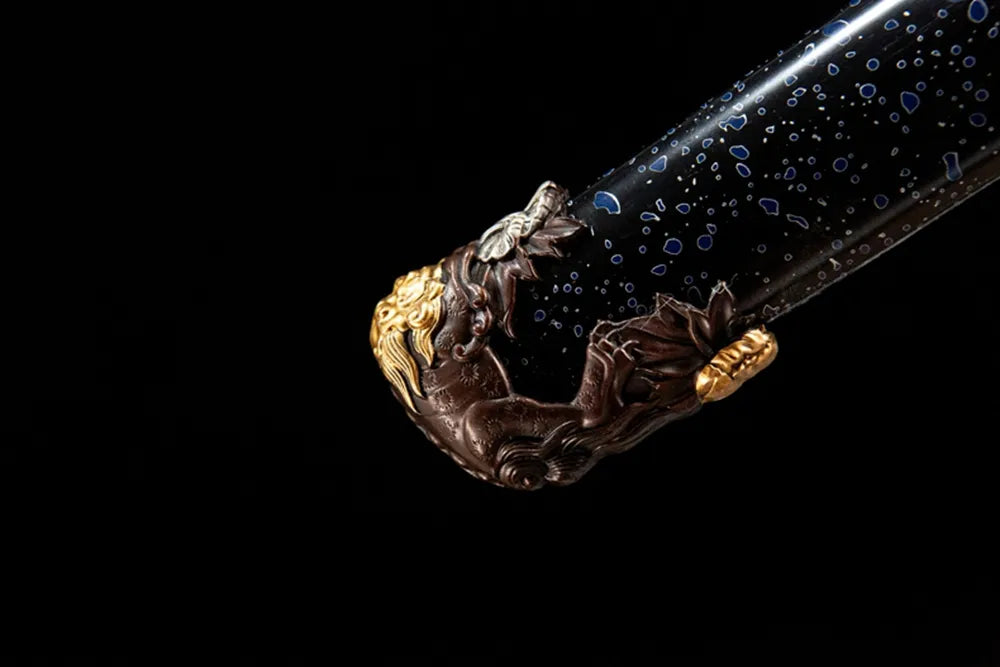
【Ashikanamono】:Copper gilded and silvered
【Kawasakikanamono】:Copper gilded and silvered
【Taikogane】:Copper gilded and silvered
【Semekanamono】:Copper gilded and silvered
【Kashiwaba】:Copper gilded and silvered
【Ishizukikanamono】:Copper gilded and silvered
【Mon】:No
【Gift】:Tachi bag
【Total weight】:1.86KG
【Desheathing weight】:1.3KG
【Other】: Handmade products have errors, specifications are for reference only!
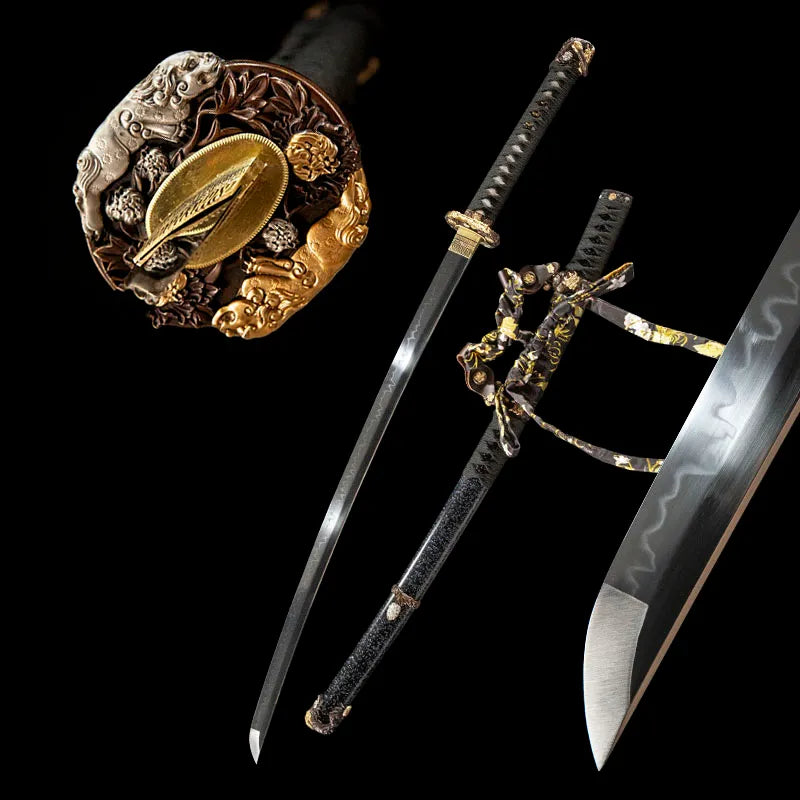
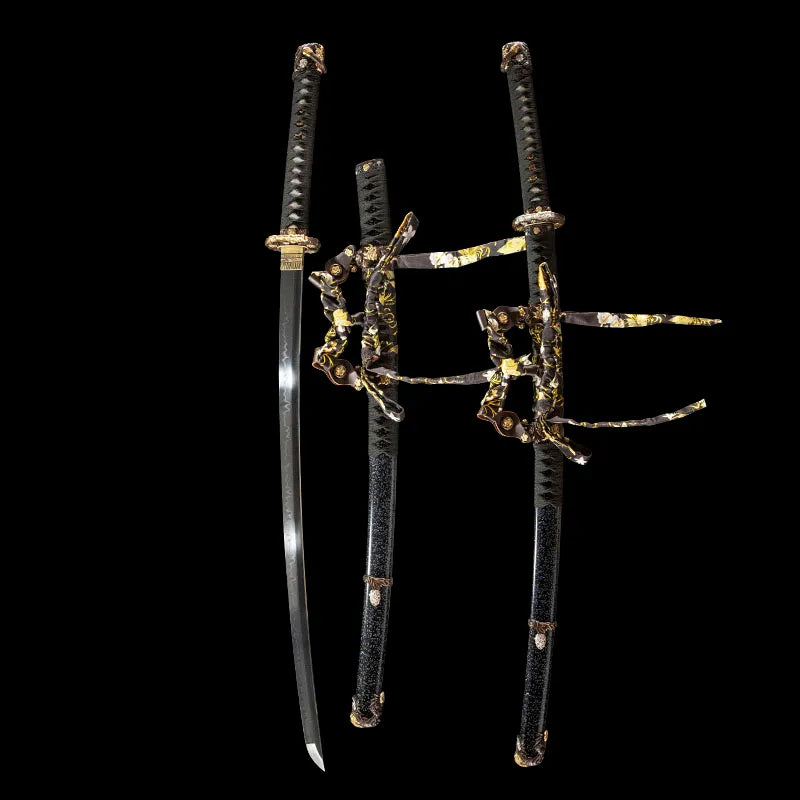
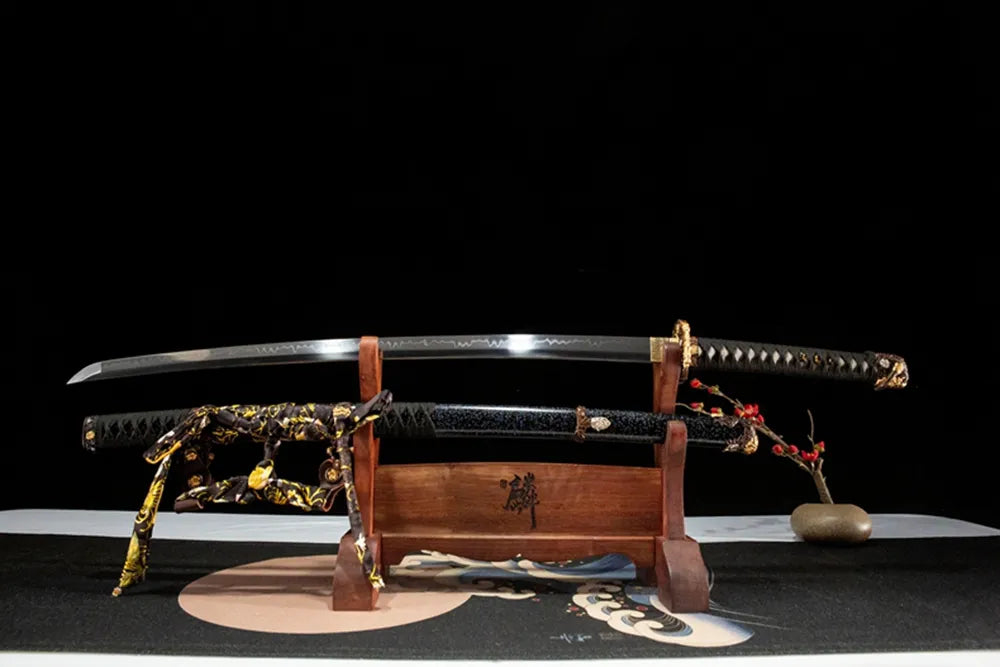
Introducing the Lion King Tachi – a premium handcrafted Japanese long sword that embodies the power and majesty of the samurai. Forged from high-grade T10 high carbon steel and clay tempered to produce a stunning Gunome hamon, this tachi features exquisite full copper gilded and silvered fittings and a luxurious Chinese lacquered saya.
Unlike mass-produced swords, every metal component of this tachi – from the tsuba and fuchi to the saya hardware – is finished in premium copper gilded and silvered plating, creating a striking contrast and timeless elegance. The traditional Chinese lacquered saya provides a durable, glossy finish that will last for generations.
Key Features
• ✅ Premium T10 Carbon Steel: Clay tempered for optimal balance of hardness and toughness
• ✅ Stunning Gunome Hamon: Irregular wavy temper line created by traditional clay quenching
• ✅ Full Copper Gilded & Silvered Fittings: All metal components finished in luxurious dual plating
• ✅ High-Grade Chinese Lacquered Saya: Durable, glossy solid wood scabbard
• ✅ Historical Tachi Proportions: 1.7cm curvature, designed for traditional edge-down wearing
• ✅ Authentic Ray Skin Handle: Traditional Moro-hineri-maki silk wrap for superior grip
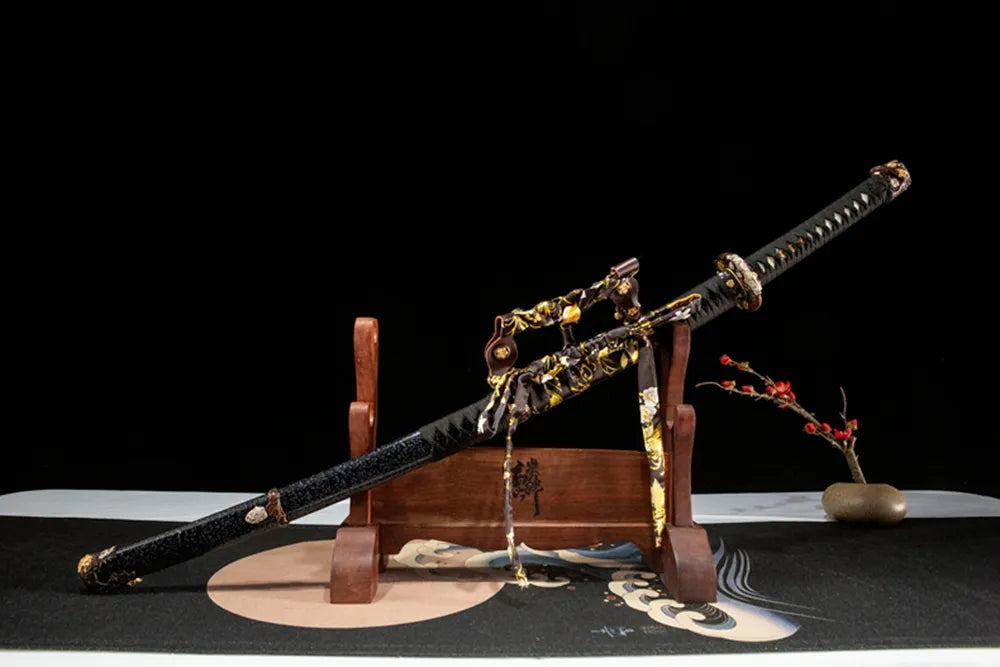
This Lion King Tachi is the perfect centerpiece for any high-end sword collection, ideal for historical display, samurai cosplay, and as a prestigious gift for Japanese history enthusiasts. The substantial 1.86KG weight gives it a premium feel and authentic presence.
### Frequently Asked Questions
Q: What is the difference between a tachi and a katana?
A: Tachi is an older style of Japanese sword worn with the cutting edge facing down, while katana is worn edge up. Tachi typically has a more pronounced curvature and was the primary weapon of mounted samurai in feudal Japan.
Q: Are all the fittings really copper gilded and silvered?
A: Yes! Every metal component including the tsuba, fuchi, kashira, menuki, and all saya hardware is finished in premium copper gilded and silvered plating for a luxurious, long-lasting appearance.
Q: What type of hamon does this tachi have?
A: It features a classic Gunome hamon – a beautiful irregular wavy temper line created through the traditional clay tempering process. Each hamon is unique to every sword.
Q: What is the saya made of?
A: The saya is crafted from solid wood and finished with multiple layers of high-quality Chinese lacquer, providing a durable, glossy, and scratch-resistant surface.
Q: Is this tachi suitable for cutting practice?
A: While it is fully functional and sharpened, we strongly recommend using it exclusively for display and collection purposes to preserve its delicate copper gilded and silvered fittings and lacquered saya.
Q: Can this tachi be disassembled?
A: Yes, it is fully disassemblable, making it easy to clean and maintain all components properly.
All Xingyu Sword products are backed by free shipping to the United States.
Explore more premium Japanese tachi: Chrysanthemum Pattern Tachi and Fukushima Masanori Tachi.
Tachi Parts names and terminology
Tachi Parts names and terminology

SHIZUJIJANAMONO The cap at the bottom of the scabbard is usually made of animal horn or metal
KASHIWABA Leaf-shaped projection on the metal decoration near shizujijanamono on the scabbard
SEMEKANAMONO Metal decoration on scabbard near shizujijanamono
ASHIKANAMONO Tachi scabbard has two metal rings (one near the scabbard mouth is called "one foot" and the other is called "two feet"), which are interwoven and woven with ropes to make it easy to carry
SAYA Sheath
MON Emblems
TACHIO Connect the straps between two taikogawa
TAIKOGAWA It is used to pass through tachio and tie it around the waist. Generally, in order to ensure the strength, some reinforcing fittings will be added
TAIKOGANE Metal buckle on taikogawa
ASHIGAWA Pass taichio through here to make it easy to wear at the waist. TAIKOGAWA, which decorates the sword, is usually folded into a rope with thin leather
KAWASAKIKANAMONO A small piece of metal connecting the ribbon with ashikanamono
TSUBA Hand guard between handle and blade
TASUKA handle

A.SAKIKASANE Thickness of blade tip.
B.MOTOKASANE Thickness of the bottom of the blade.
C.KISSAKI NAGASA Length of tip.
D.SAKIHABA Width of blade tip.
E.MUNE The surface of the katana back.
F.MOTOHABA Width of bottom of blade.
G.MUNEMACHI The notch at the top of the blade stem,where the back surface (mune) of the blade begins.
H.HAMACHI A notch at the top of the blade,where the blade begins.
I.FUKURA The radian of the blade in the tip area.
J.BOSHI Blade text in the tip area.
K.YOKOTE The boundary between blade tip and blade body.
L.KOSHINOGI Shinogi-ji above the blade tip area (yokote).
M. MITSUKADO Intersection point of yokote and blade edge of blade body and blade edge of tool tip.
N.SHINOGI MITSUKADO Shinogi,Koshinogi und Yokote linien.
O.SHINOGI-JI Blade surface between shinogi and mune.
P.SHINOGI A chear straight line extending along the longitudinal direction of the blade is the thickest part of the blade (only appearing on katana of shinogi-zakuri) .
Q.JI The surface between shinogi and nioiguchi.
R.HA The edge area of the cutter body is hardened by quenching.
S.HASAKI Asharpened edge.
T.NIOIGUCHI A clear line separating the hardened blade from the softer part of the blqde body.
U.ASHI Nioiguchi's extension line in the direction of the blade.
V.HACHO A straight line that determines the length of the blade.
W.SORI Degree of blade bending.
X.ZENCHO The total length of the katana,including the stem (the blade length is only the blade body).
Y.NAKAGO NACASA Length of katana stem.
Z.MAKUGIANA A hole in the shank for receiving Mekugi (bamboo nail for fixing the blade in the handle).
AA,MEI Inscription on the hilt (usually the name of the katana maker,but there are often other information).
Choose options