
The Firmament Tachi | T10 Maru No-Hi Gunome Hamon Traditional Mounted Japanese Tachi Sword

Handcrafted by experienced swordsmen

Free American Express

Perfect after-sales service

SSL End-to-end encryption secure payment
The Firmament Tachi | T10 Maru No-Hi Gunome Hamon Traditional Mounted Japanese Tachi Sword
Product Introduction
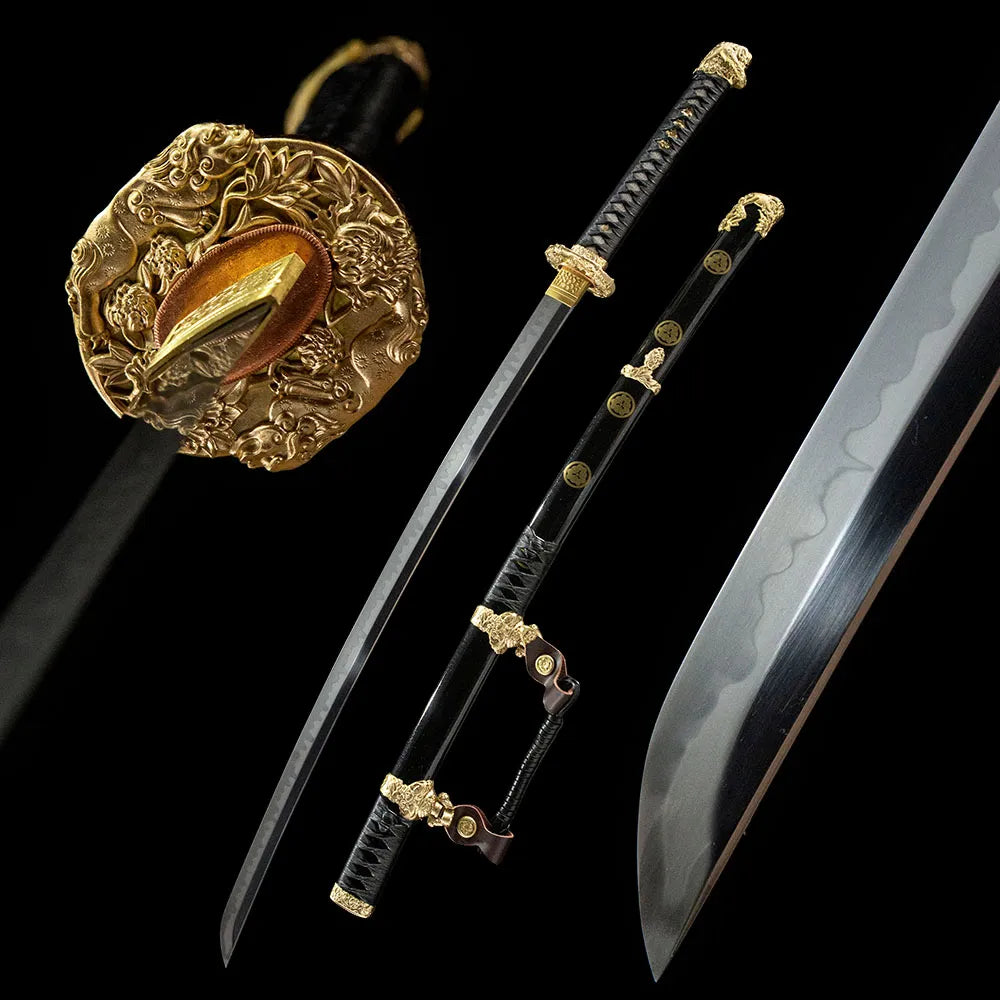
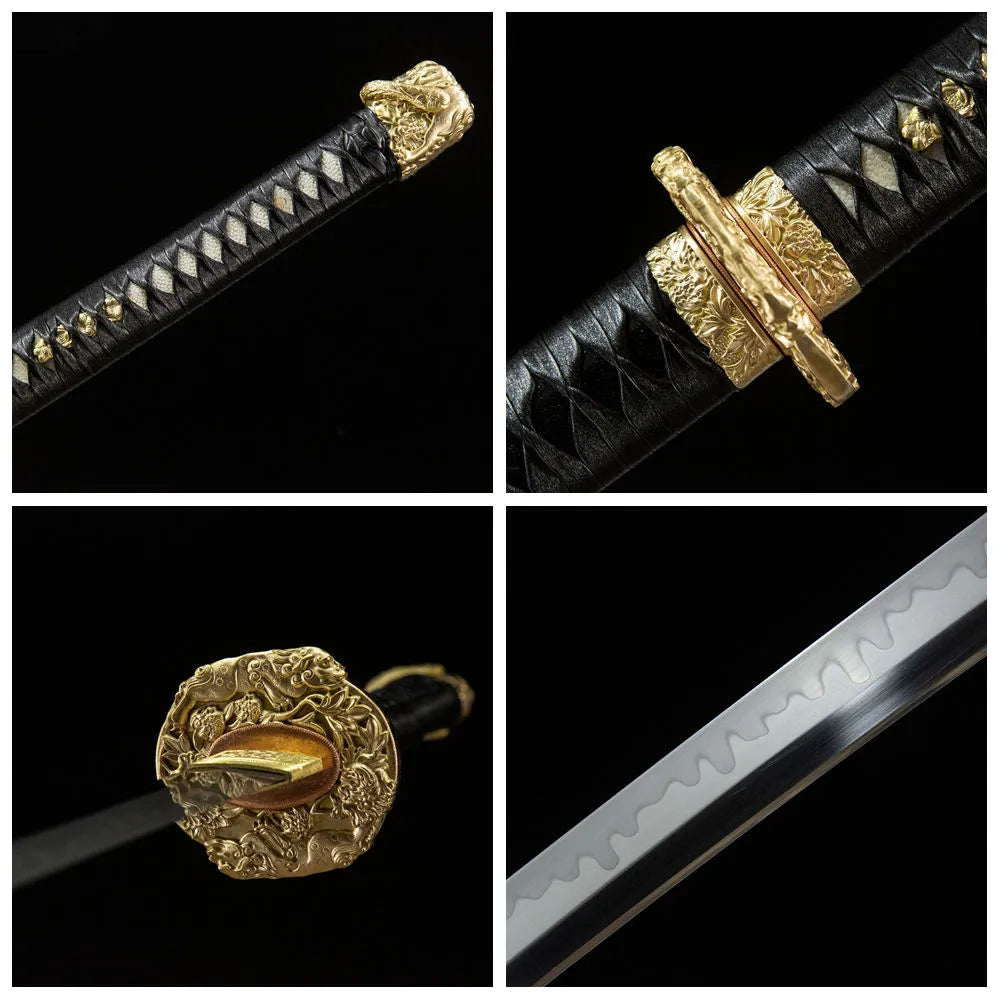
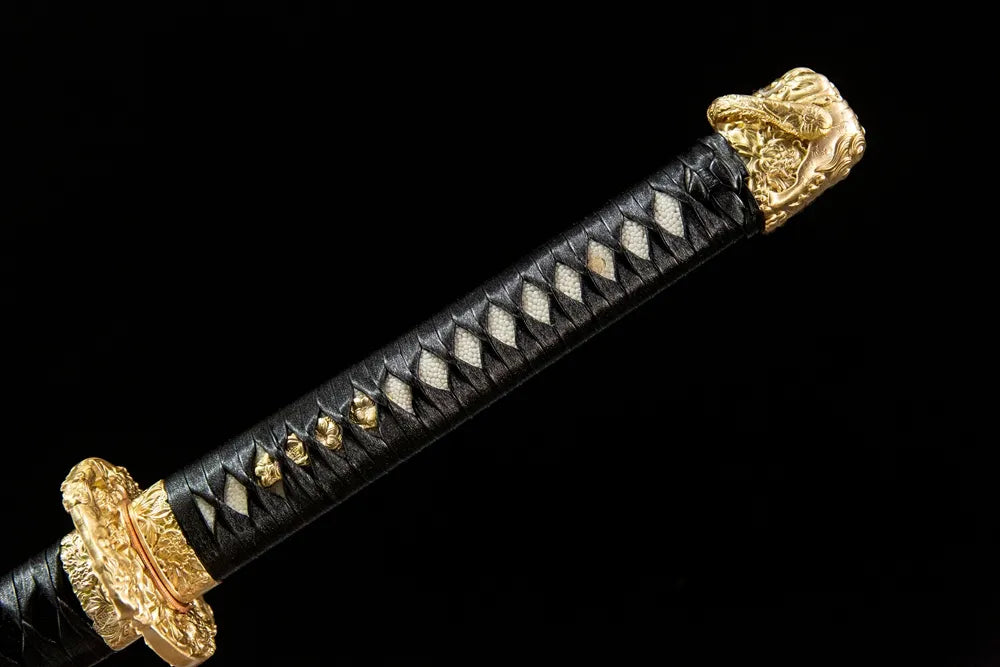
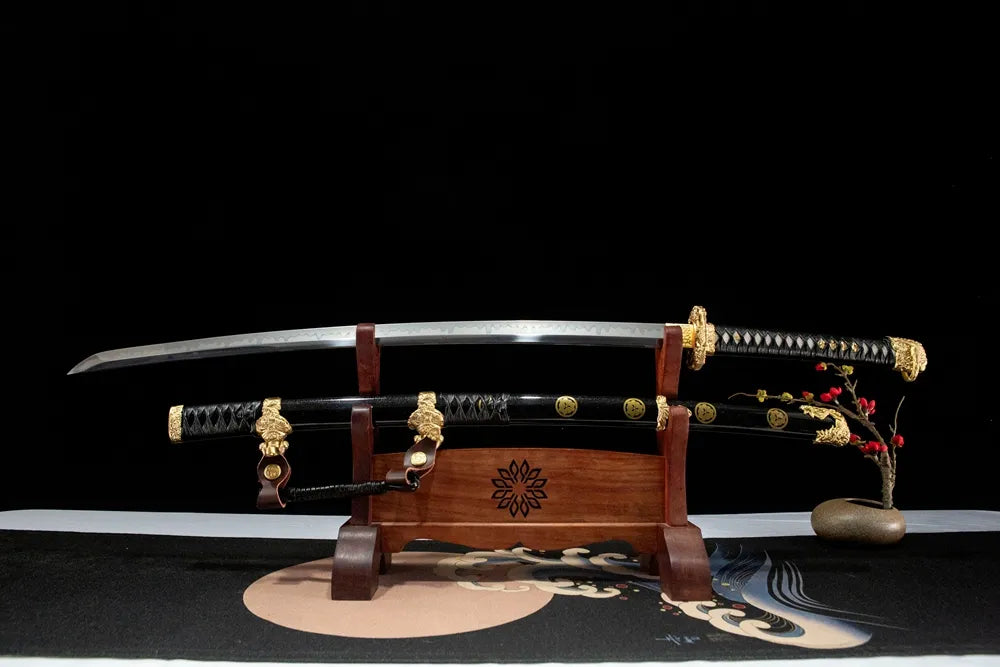
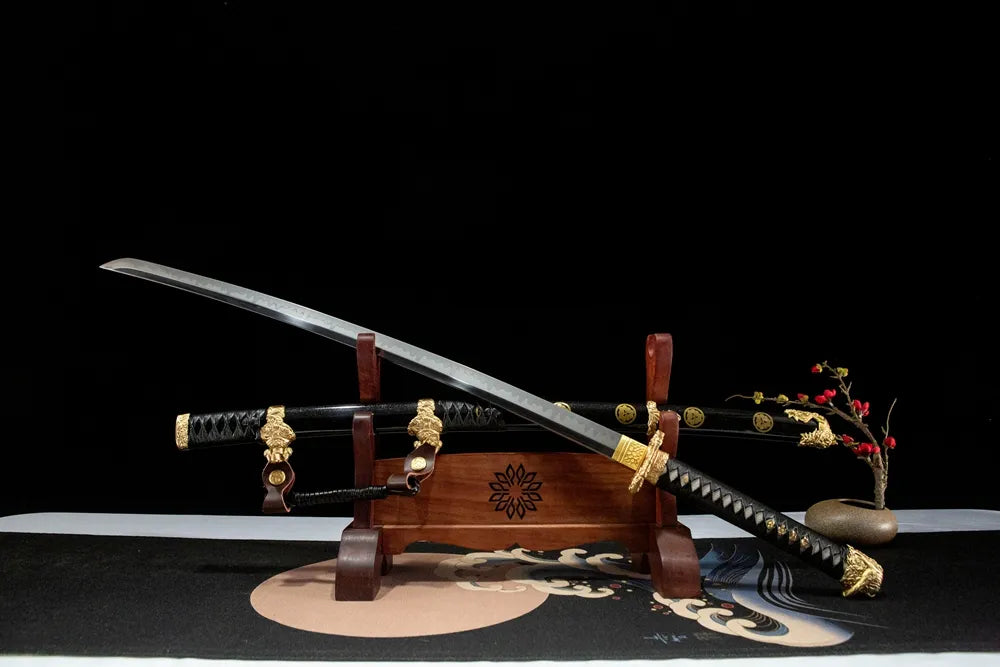
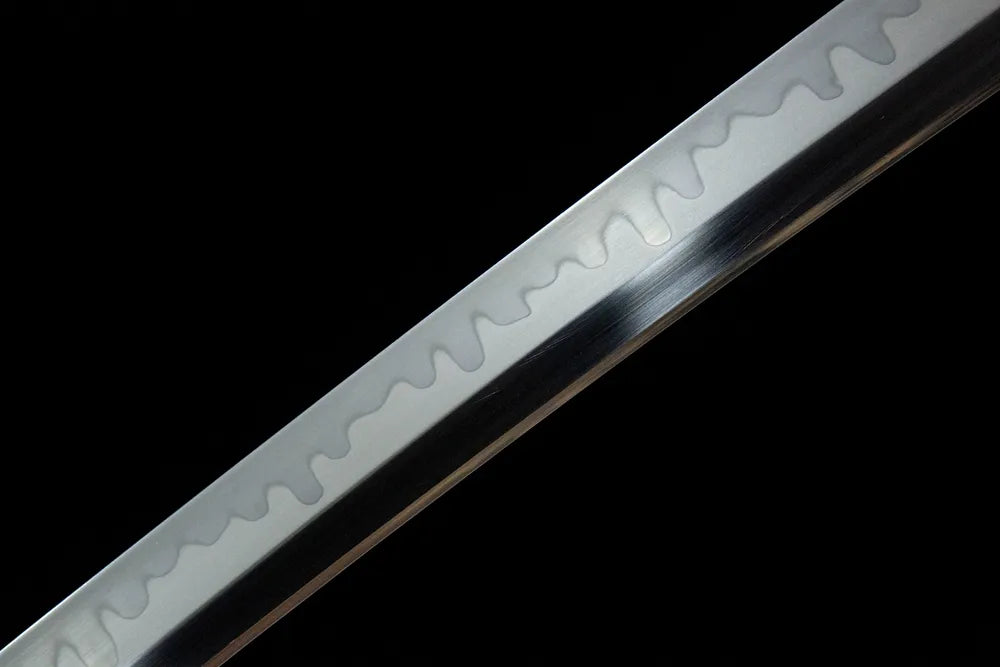
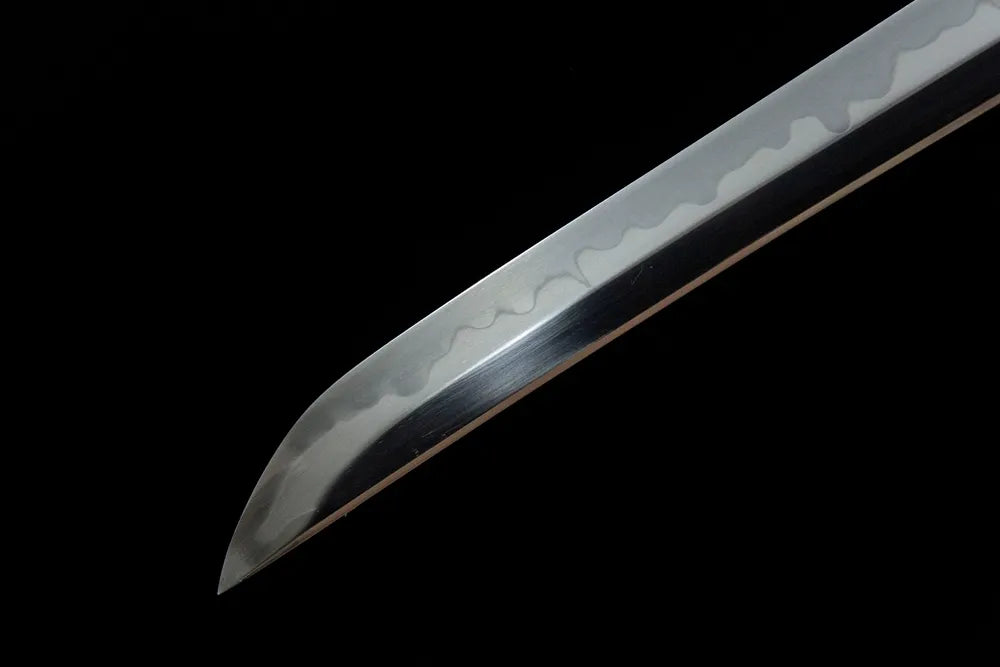
The Firmament Tachi is a historically accurate horseback-style tachi sword, distinct from regular katana with complete traditional tachi koshirae mounting system, priced at $459.99 as mid-range historical collection piece. The blade adopts T10 high-carbon maru mono steel without blood groove, processed by classic Tsuchioki clay differential tempering to form continuous natural gunome wave hamon. Full fine hand grinding is applied across the whole blade, plain uncarved surface with real yokote, fully sharpened for display and light cutting practice.
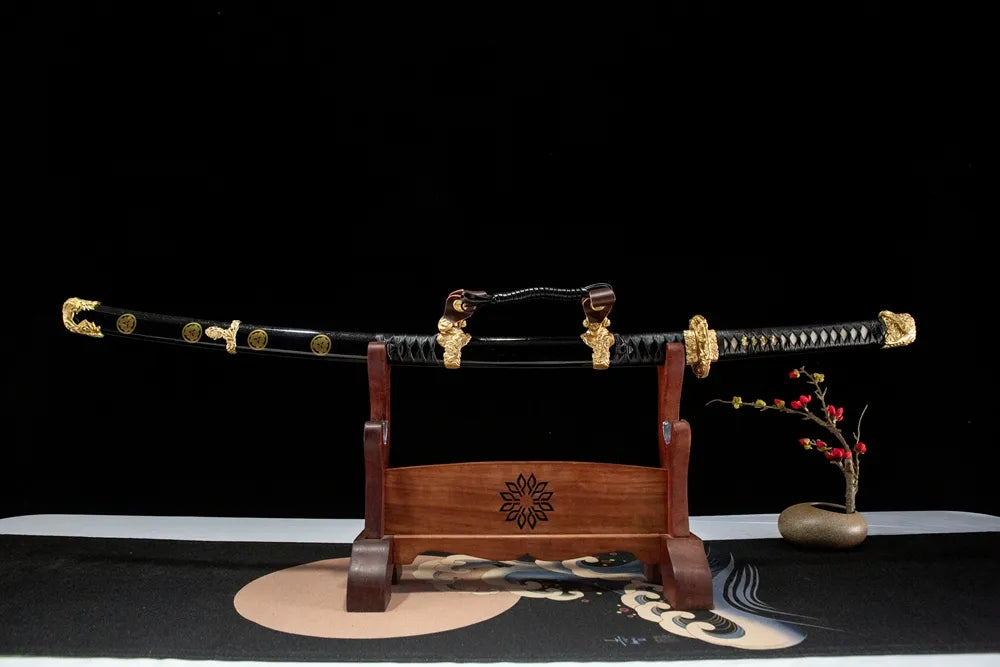
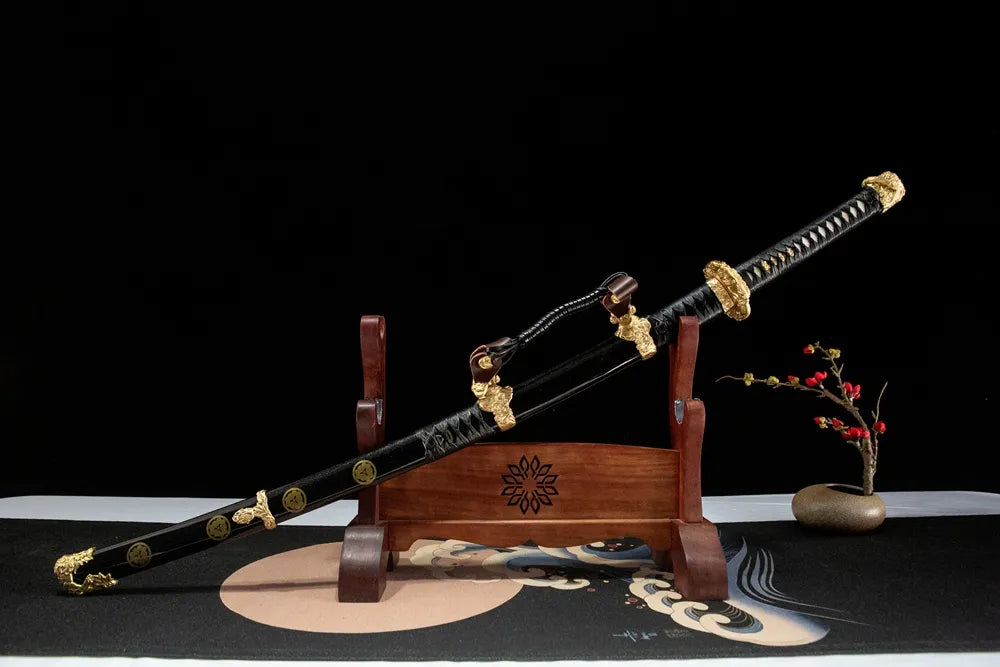
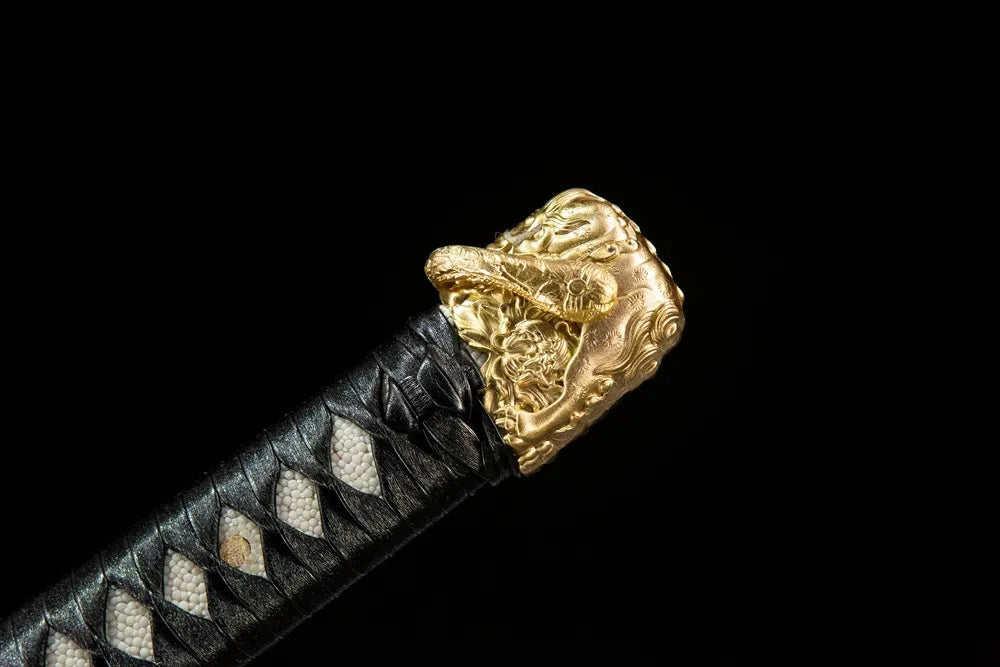
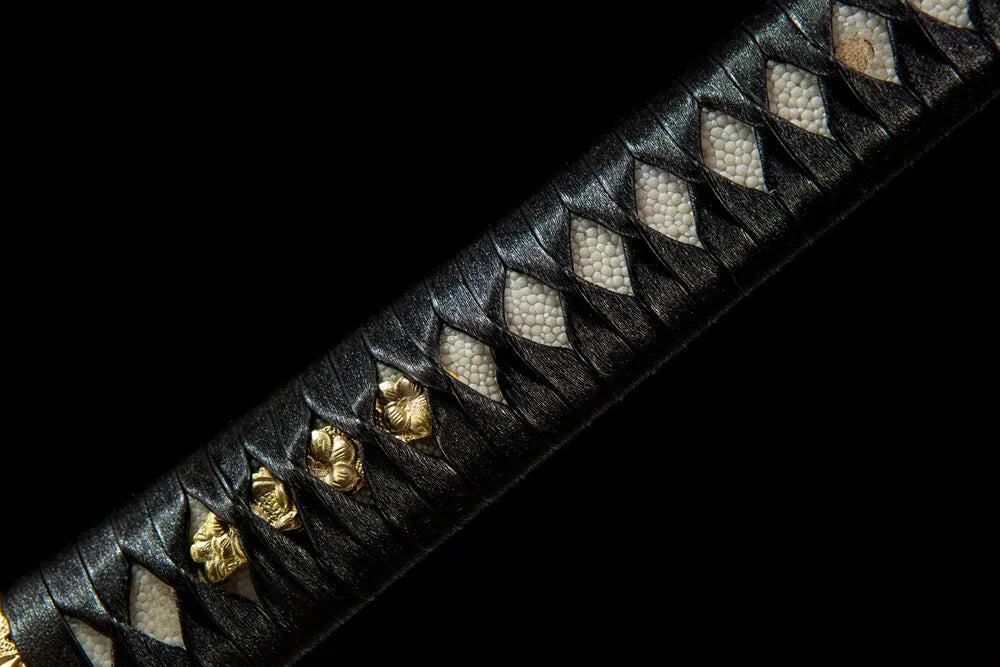
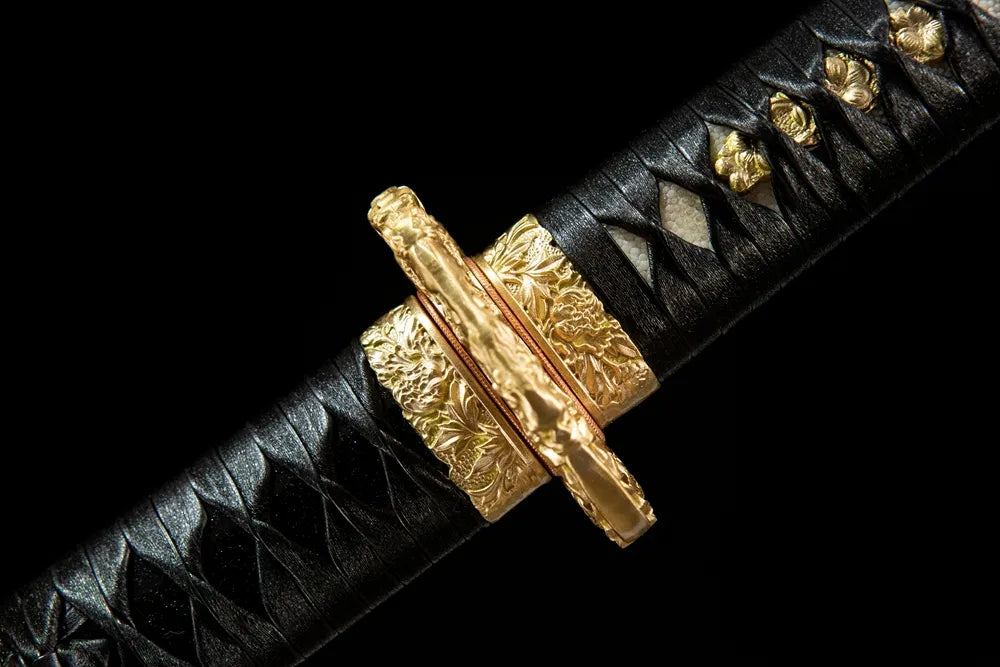
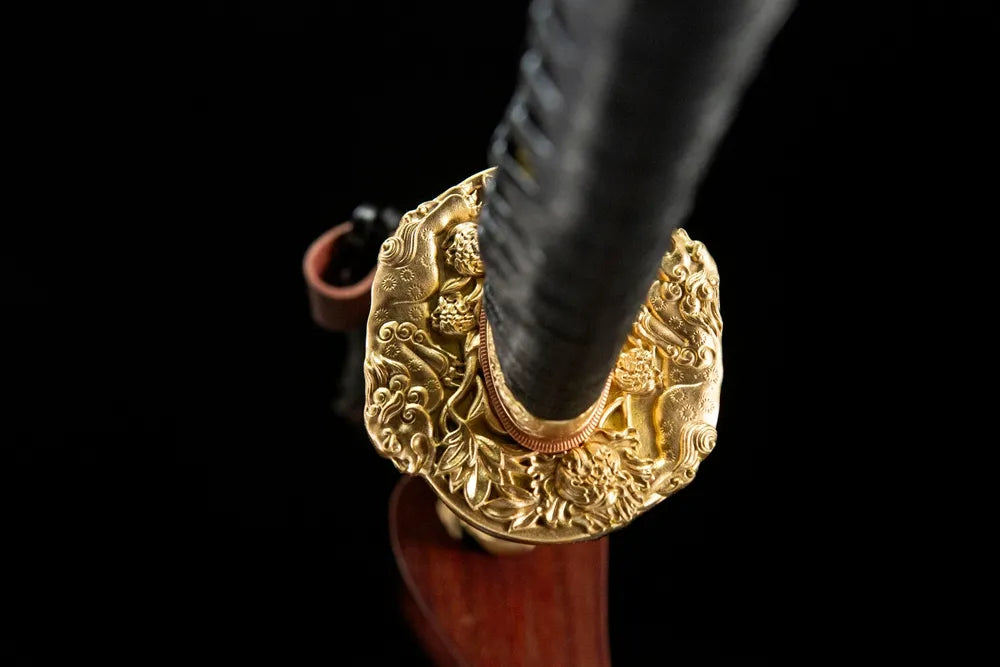
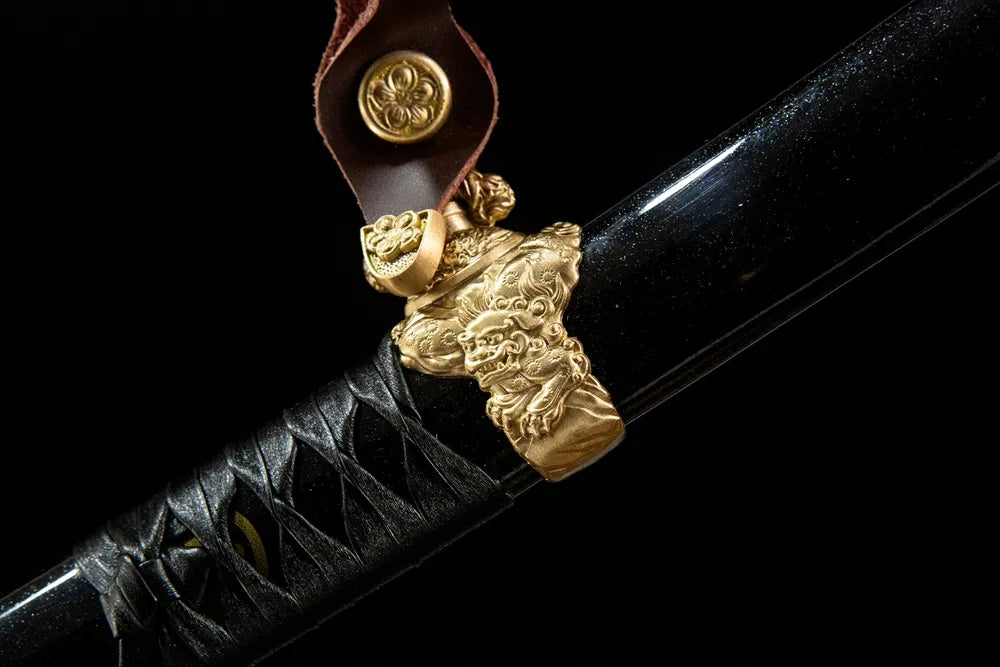
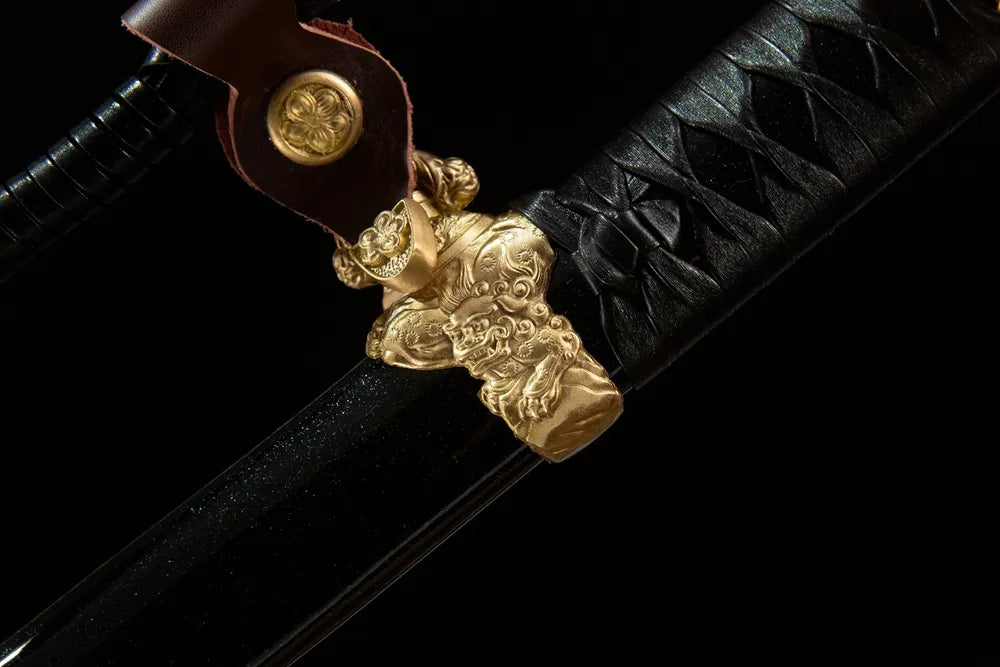
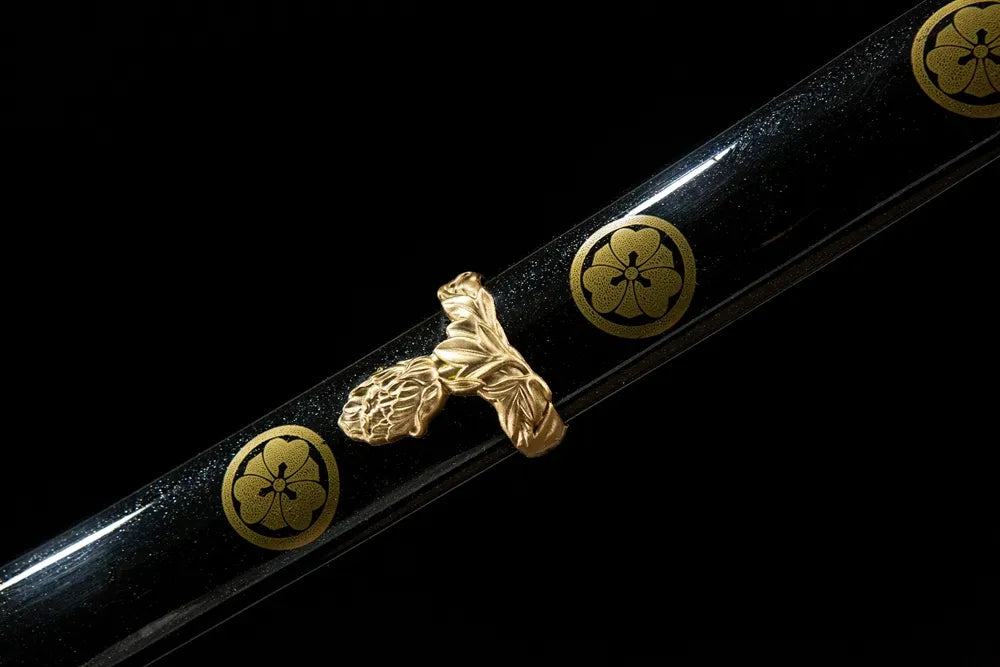
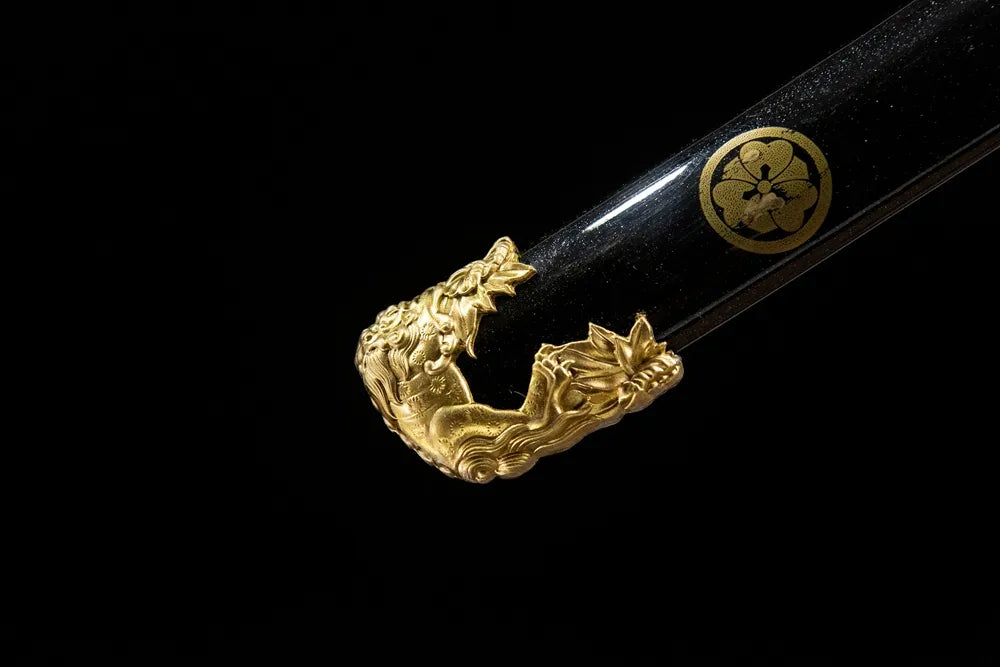
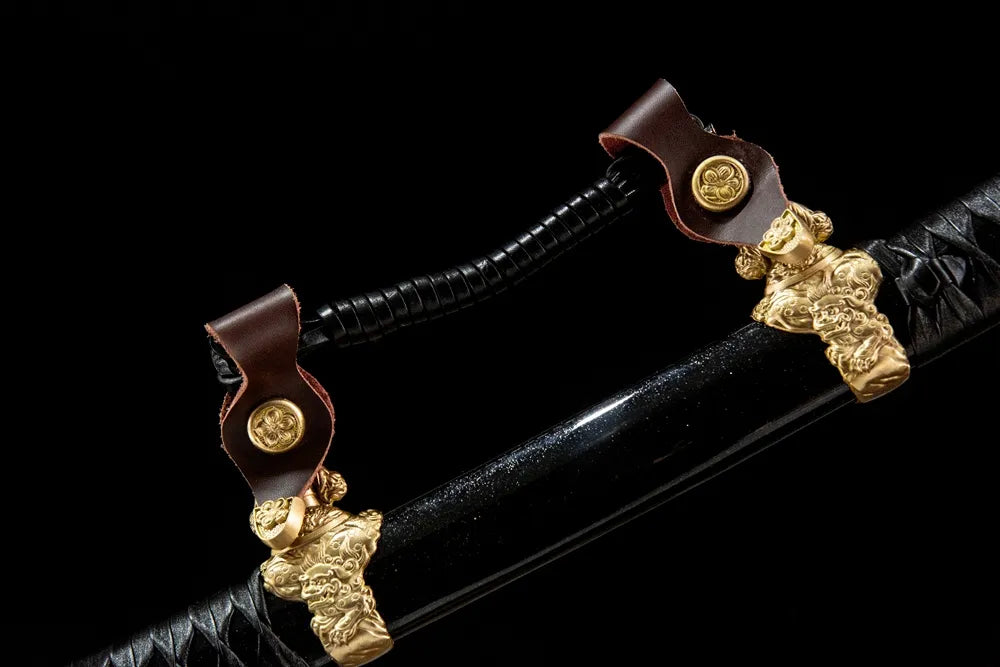
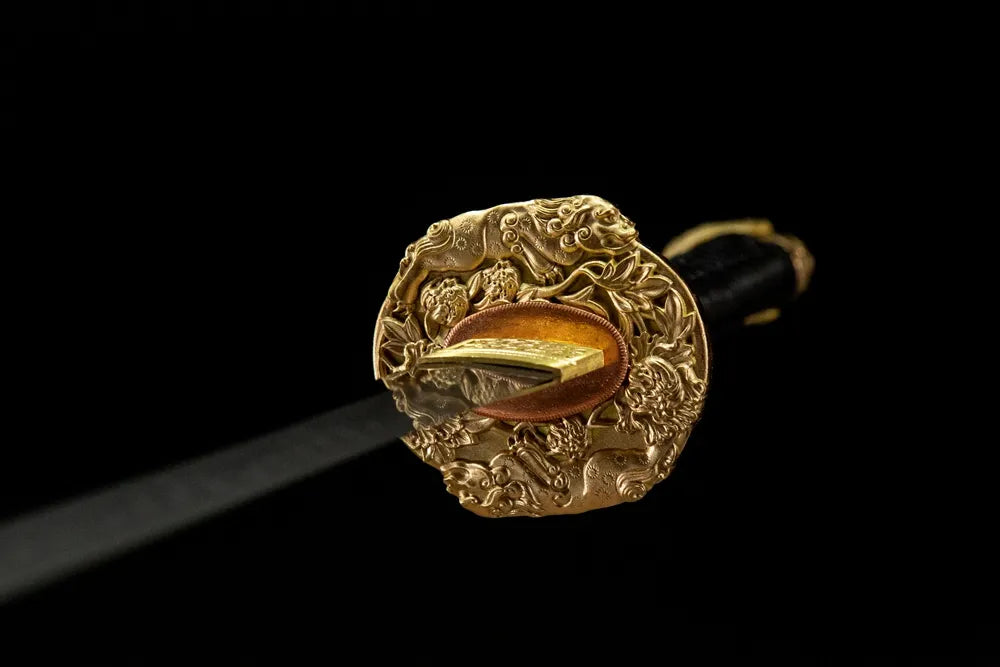
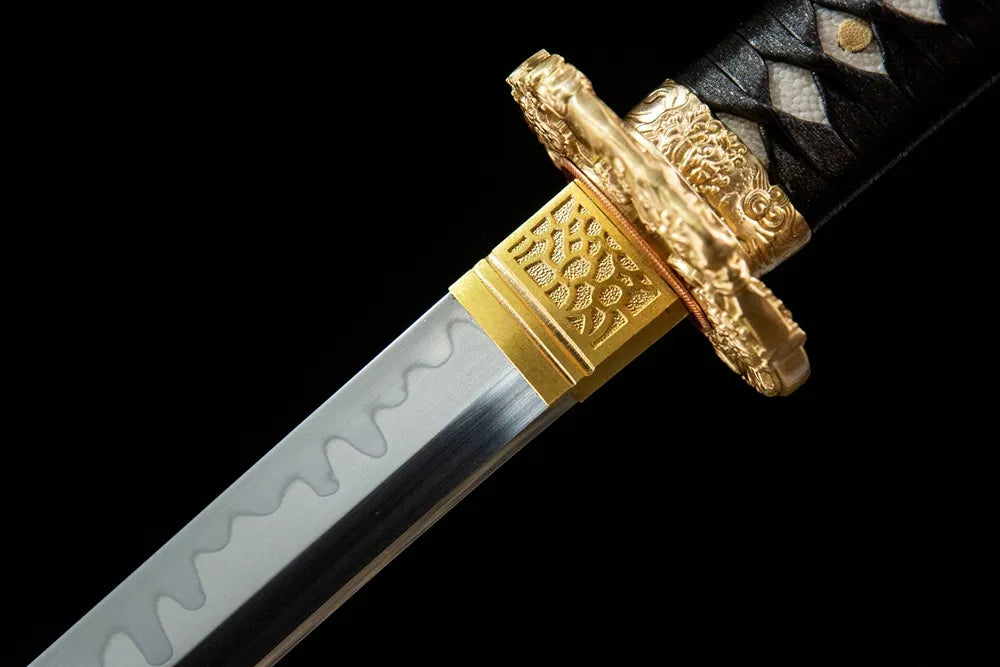
This tachi features full solid copper mounting hardware exclusive to tachi: tsuba, fuchi, kashira, menuki, seppa, habaki, koiguchi, ashikanamono, kawasakikanamono, semekanamono, ishizukikanamono and kashiwaba are all copper cast. The tsuka core is wrapped with genuine ray skin and traditional moro-hineri-maki handle wrap. Solid wood lacquered saya matches genuine cowhide taikogane tachio leather cord for waist hanging edge-down wearing, the classic tachi characteristic. Full tang disassemblable construction fixed by two bamboo mekugi pegs, easy to detach for blade maintenance. Total full weight reaches 1.85KG, desheathing weight 1.3KG, delivering heavy historical wielding texture for tachi collectors.
Core Selling Features
- Authentic historical tachi mounting system, edge-down hanging design with cowhide leather tachio waist cord
- T10 maru solid mono steel blade, no blood groove for heavy balanced horseback slashing momentum
- Natural continuous gunome wave hamon from traditional clay tempering, iconic nihonto temper line
- Complete full copper exclusive tachi fittings: ashikanamono hangers, kashiwaba leaf ornaments, semekanamono trim
- Moro-hineri-maki traditional hand wrap + genuine ray skin tsuka, restore ancient samurai tachi grip
- Heavy 1.85kg total weight delivers solid historical texture, fully disassemblable dual bamboo mekugi tang
Complete Original Product Specifications (All parameters retained without deletion)
| Parameter Value | |
|---|---|
| Zencho (Total Entire Length) | 103cm |
| Hacho (Blade Length) | 72cm |
| Handle Length | 27cm |
| Sori (Blade Curvature) | 1.7cm |
| Sakikasane (Blade Tip Thickness) | 0.45cm |
| Motokasane (Blade Root Thickness) | 0.7cm |
| Sahihaba (Blade Tip Width) | 2.3cm |
| Motohaba (Blade Root Width) | 3.2cm |
| Mizuheshi (Quenching Craft) | Tsuchioki Traditional Clay Tempering |
| Hamon Pattern | Gunome Continuous Wave Temper Line |
| Blade Material | T10 High Carbon Steel |
| Hi Blood Groove | No Hi (No Blood Groove) |
| Blade Forge Structure | Maru Mono Steel Structure |
| Blade Polishing | Full Fine Grinding |
| Disassemblable Feature | Yes, Fully Disassemblable |
| Fuchi & Kashira Material | Solid Copper Plain Finish |
| Handle Wrap Type | Moro-hineri-maki Traditional Weave |
| Samekawa Handle Skin | Genuine Ray Skin |
| Mekugiana Peg Holes | Two Double Holes |
| Mekugi Fixing Pegs | Bamboo Pegs |
| Menuki Handle Ornaments | Solid Copper Plain |
| Seppa Blade Washers | Solid Copper |
| Tsuba Hand Guard | Solid Copper Minimalist Tachi Style |
| Habaki Blade Collar | Solid Copper |
| Saya Scabbard Base | Solid Wood Paint Finish |
| Koiguchi (Sheath Mouth Fitting) | Solid Copper |
| Tachio Waist Cord Material | Genuine Cowhide Leather Rope |
| Ashikanamono (Saya Hanging Rings) | Solid Copper Dual Hangers |
| Kawasakikanamono Cord Connector | Solid Copper |
| Taikogane Leather Buckle | Genuine Cowhide Leather |
| Semekanamono Lower Saya Trim | Solid Copper |
| Kashiwaba Leaf Saya Ornament | Solid Copper |
| Ishizukikanamono Bottom Saya Metal | Solid Copper |
| Free Gift Accessory | Dedicated Tachi Storage Carry Bag |
| Total Full Weight (With Saya & Tachio) | 1.85KG |
| Desheathing Weight (Blade + Tsuka) | 1.3KG |
| Blade Sharpness Status | Fully Sharpened Functional Blade |
| Exclusive Blade Carving | Not Carving (Plain Smooth Blade) |
| Important Reminder | All swords are pure handmade crafts, slight dimensional & weight errors exist for reference only |
Frequently Asked Questions
Q: What’s the core difference between Tachi and regular Katana?
A: Tachi is worn edge-down hanging from waist via dual copper ashikanamono rings and cowhide tachio leather cord, originally designed for ancient horseback samurai; katana is tucked edge-up inside obi without hanging fittings, for foot combat.
Q: What’s the advantage of gunome wave hamon?
A: Gunome hamon forms continuous rolling wave lines along the blade edge, widely used on historical nihonto, balancing cutting sharpness and blade toughness with distinct collectible visual texture.
Q: Why this tachi has heavier total weight than regular katana?
A: Full set solid copper tachi exclusive hanging fittings add overall mass, restoring the heavy solid texture of ancient aristocratic mounted samurai tachi for historical collectors.
Q: Can I customize the tachi blade steel, leather cord color or copper fittings patterns?
A: Full custom modification supported for tachi mounting, blade steel and leather accessories, visit our Custom Katana & Tachi page to design your historical sword.
Q: Are there other historical tachi models for collection?
A: You can check our classic mounted historical sword: Fukushima Masanori Tachi.
Browse all handmade samurai swords & tachis in Handmade Samurai Sword Collection.
Learn professional tachi koshirae terminology with our Tachi Koshirae Parts Terminology Guide.
All Xingyu Sword orders support free US shipping and 30-day hassle-free return service.
Tachi Parts names and terminology
Tachi Parts names and terminology

SHIZUJIJANAMONO The cap at the bottom of the scabbard is usually made of animal horn or metal
KASHIWABA Leaf-shaped projection on the metal decoration near shizujijanamono on the scabbard
SEMEKANAMONO Metal decoration on scabbard near shizujijanamono
ASHIKANAMONO Tachi scabbard has two metal rings (one near the scabbard mouth is called "one foot" and the other is called "two feet"), which are interwoven and woven with ropes to make it easy to carry
SAYA Sheath
MON Emblems
TACHIO Connect the straps between two taikogawa
TAIKOGAWA It is used to pass through tachio and tie it around the waist. Generally, in order to ensure the strength, some reinforcing fittings will be added
TAIKOGANE Metal buckle on taikogawa
ASHIGAWA Pass taichio through here to make it easy to wear at the waist. TAIKOGAWA, which decorates the sword, is usually folded into a rope with thin leather
KAWASAKIKANAMONO A small piece of metal connecting the ribbon with ashikanamono
TSUBA Hand guard between handle and blade
TASUKA handle

A.SAKIKASANE Thickness of blade tip.
B.MOTOKASANE Thickness of the bottom of the blade.
C.KISSAKI NAGASA Length of tip.
D.SAKIHABA Width of blade tip.
E.MUNE The surface of the katana back.
F.MOTOHABA Width of bottom of blade.
G.MUNEMACHI The notch at the top of the blade stem,where the back surface (mune) of the blade begins.
H.HAMACHI A notch at the top of the blade,where the blade begins.
I.FUKURA The radian of the blade in the tip area.
J.BOSHI Blade text in the tip area.
K.YOKOTE The boundary between blade tip and blade body.
L.KOSHINOGI Shinogi-ji above the blade tip area (yokote).
M. MITSUKADO Intersection point of yokote and blade edge of blade body and blade edge of tool tip.
N.SHINOGI MITSUKADO Shinogi,Koshinogi und Yokote linien.
O.SHINOGI-JI Blade surface between shinogi and mune.
P.SHINOGI A chear straight line extending along the longitudinal direction of the blade is the thickest part of the blade (only appearing on katana of shinogi-zakuri) .
Q.JI The surface between shinogi and nioiguchi.
R.HA The edge area of the cutter body is hardened by quenching.
S.HASAKI Asharpened edge.
T.NIOIGUCHI A clear line separating the hardened blade from the softer part of the blqde body.
U.ASHI Nioiguchi's extension line in the direction of the blade.
V.HACHO A straight line that determines the length of the blade.
W.SORI Degree of blade bending.
X.ZENCHO The total length of the katana,including the stem (the blade length is only the blade body).
Y.NAKAGO NACASA Length of katana stem.
Z.MAKUGIANA A hole in the shank for receiving Mekugi (bamboo nail for fixing the blade in the handle).
AA,MEI Inscription on the hilt (usually the name of the katana maker,but there are often other information).
Choose options