
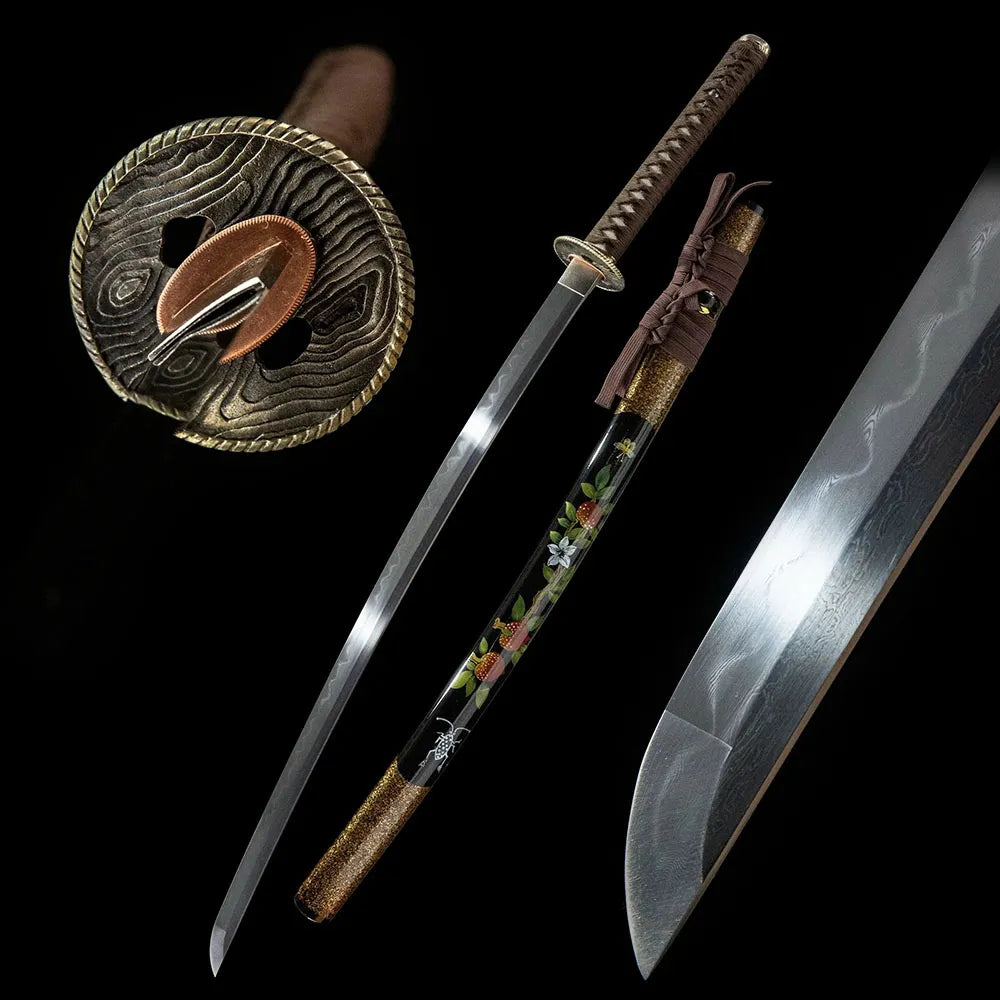
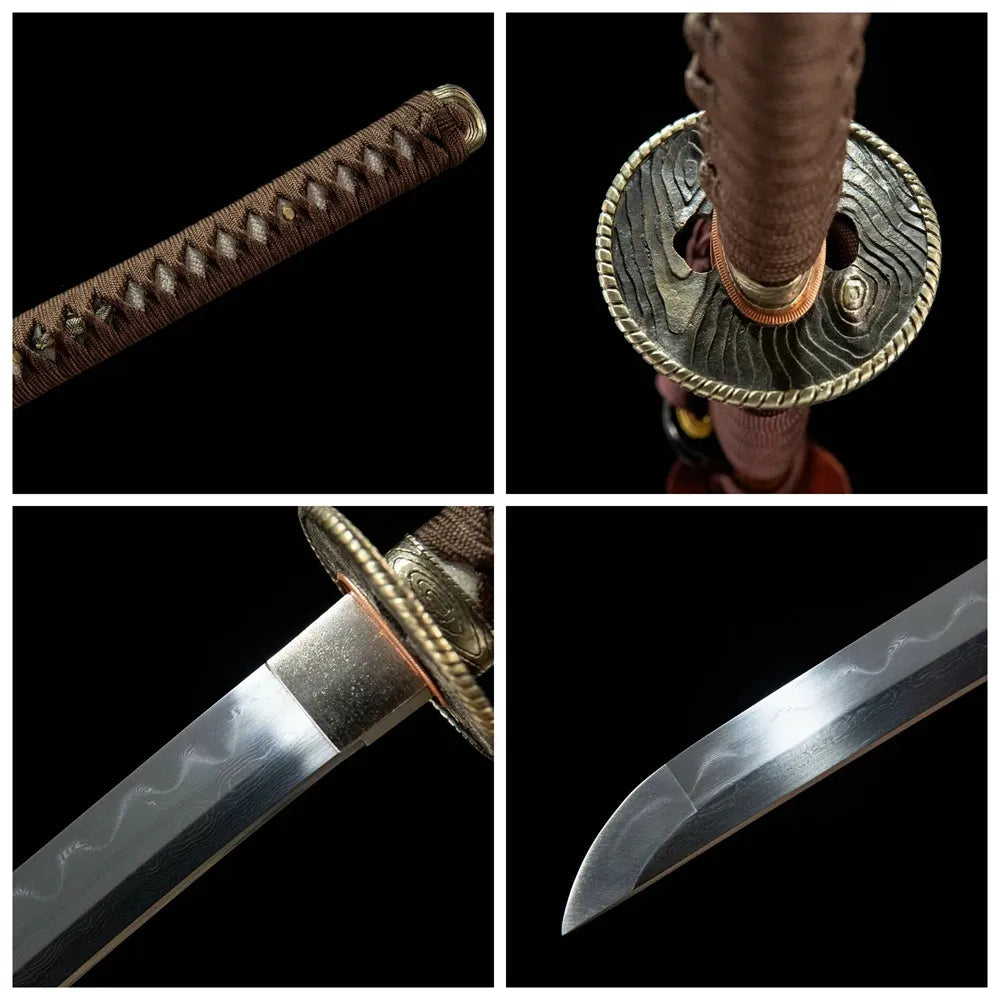
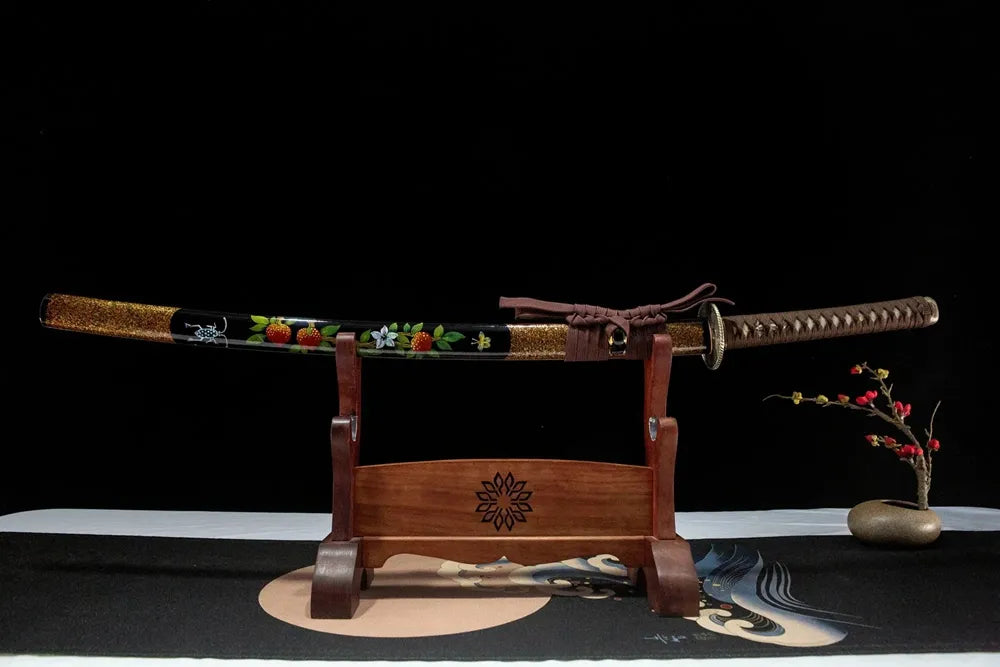
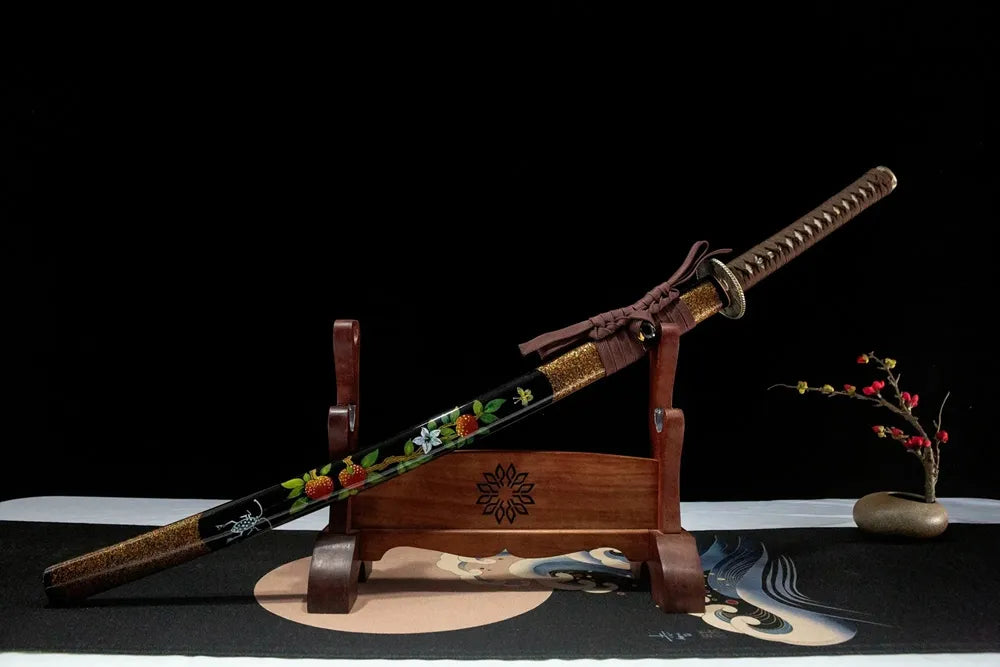
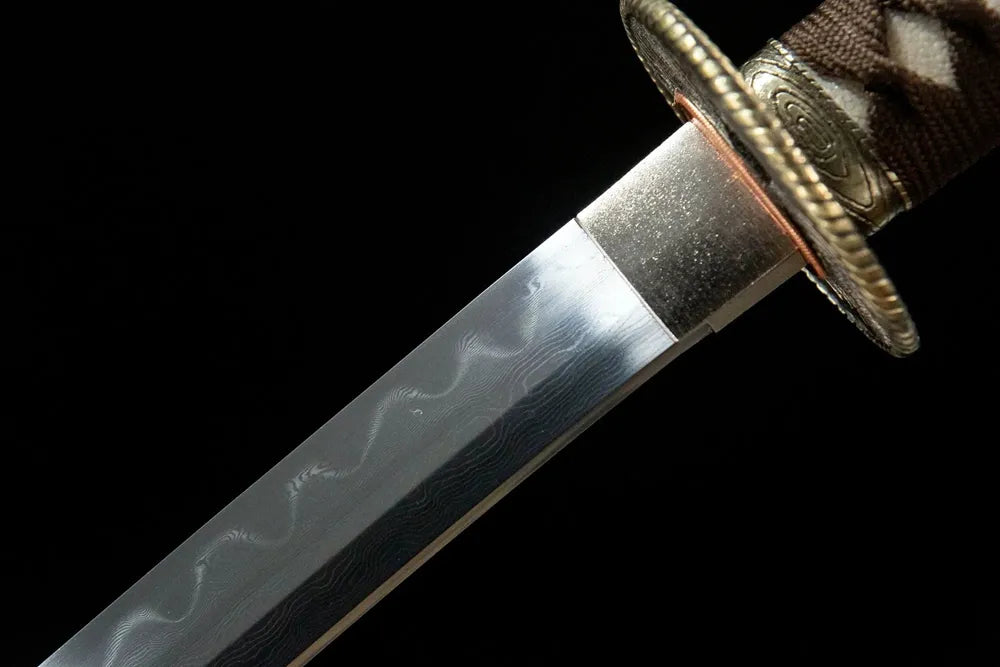
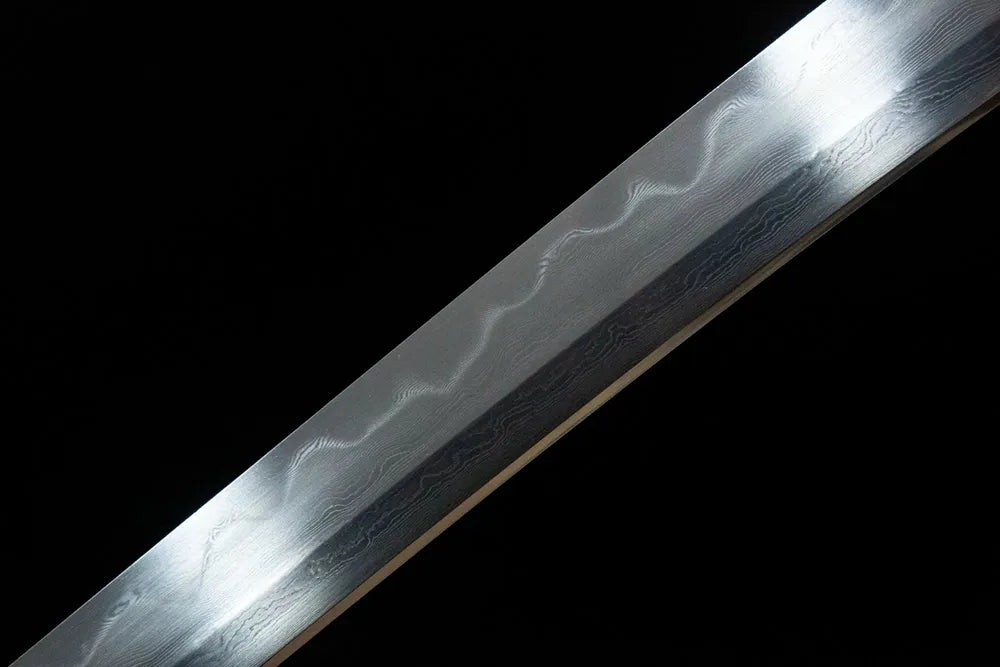
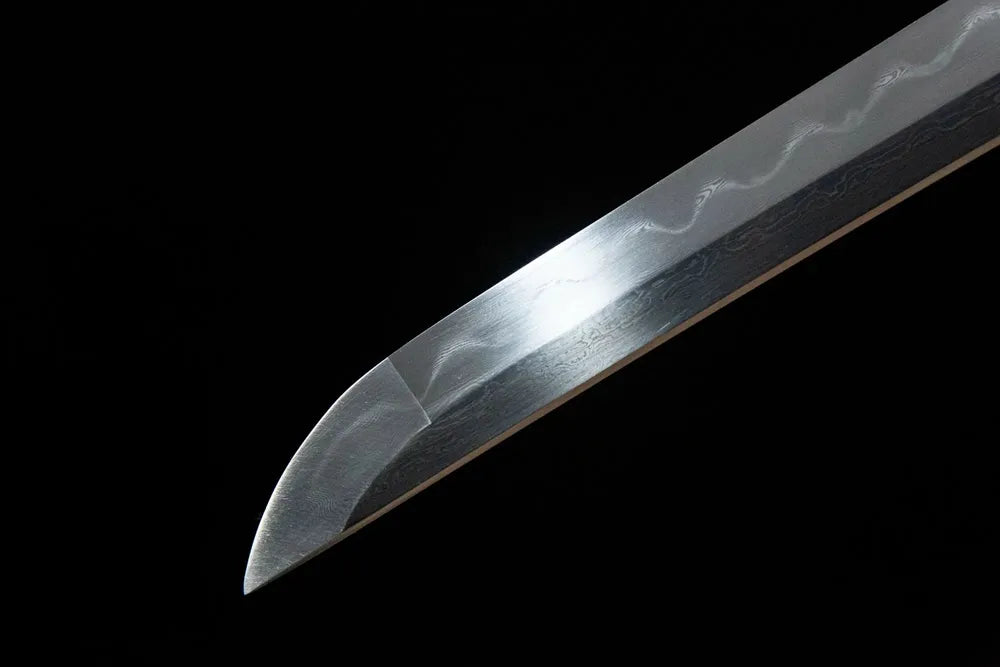
Peach Mountain Katana | T10 Steel Gunome Hamon White Copper Fittings Samurai Sword

Handcrafted by experienced swordsmen

Free American Express

Perfect after-sales service

SSL End-to-end encryption secure payment
Product Specifications
| Parameter | Value |
|---|---|
| Zencho (Total Length) | 103CM |
| Hacho (Blade Length) | 72CM |
| Handle Length | 27CM |
| Sori (Curvature) | 1.8CM |
| Sakikasane (Tip Thickness) | 0.45CM |
| Motokasane (Base Thickness) | 0.7CM |
| Sahihaba (Tip Width) | 2.2CM |
| Motohaba (Base Width) | 3.2CM |
| Quenching Method | Tsuchioki (Traditional Clay Tempering) |
| Hamon Pattern | Gunome (Wave-like Temper Line) |
| Blade Material | High Carbon T10 Steel |
| Bo-Hi (Blood Groove) | No Bo-Hi |
| Blade Structure | Maru, Full Tang, Fully Disassemblable |
| Blade Treatment | Traditional Fine Polishing |
| Blade Type | Shinogizukuri with Simulated Yokote |
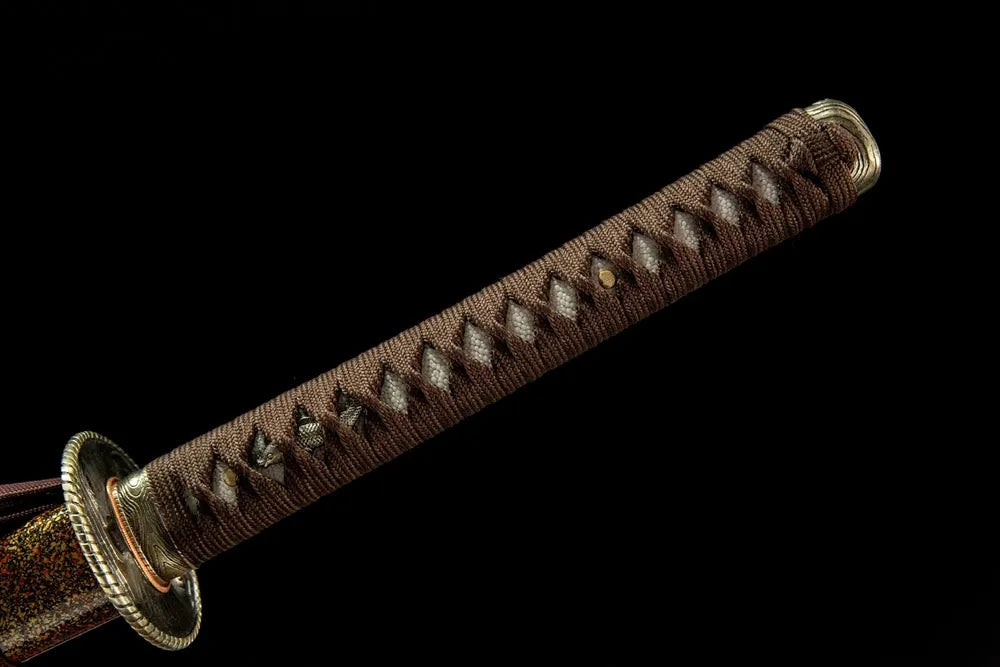
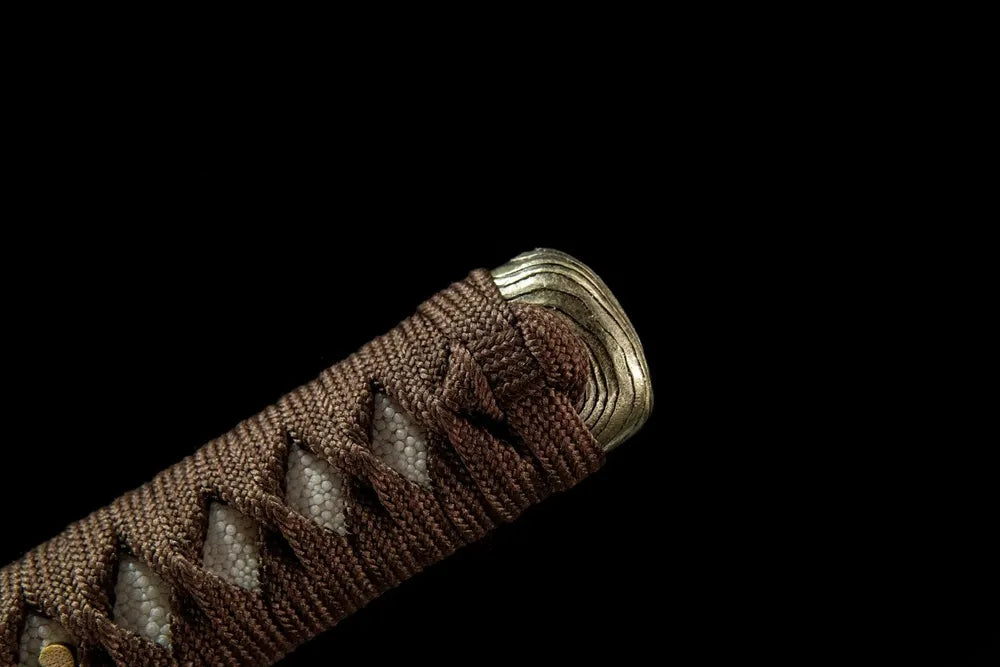
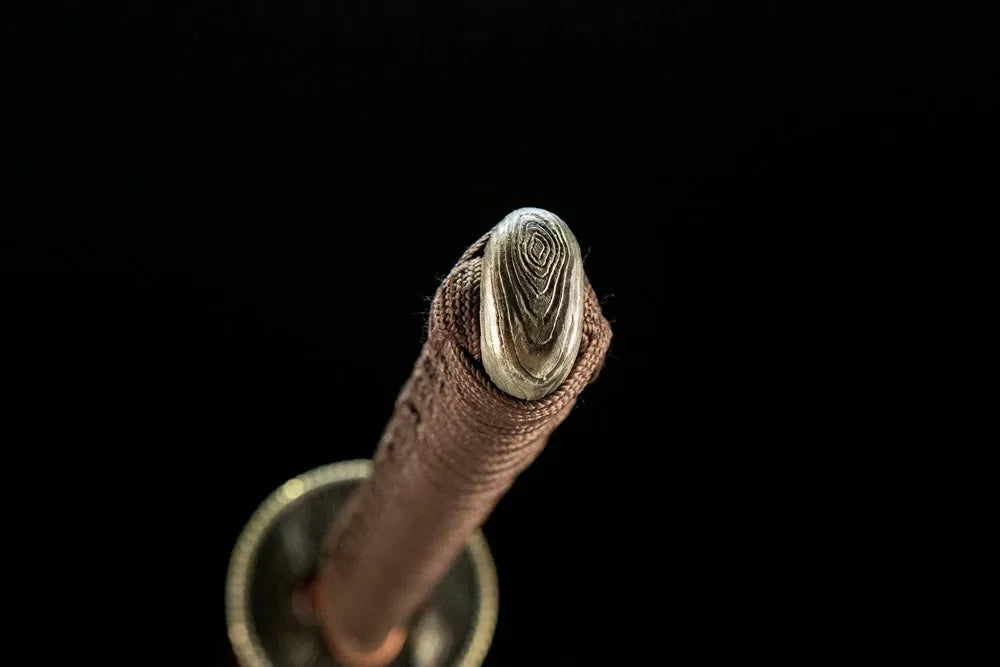
| Fuchi & Kashira | Solid White Copper with Peach Mountain Motif |
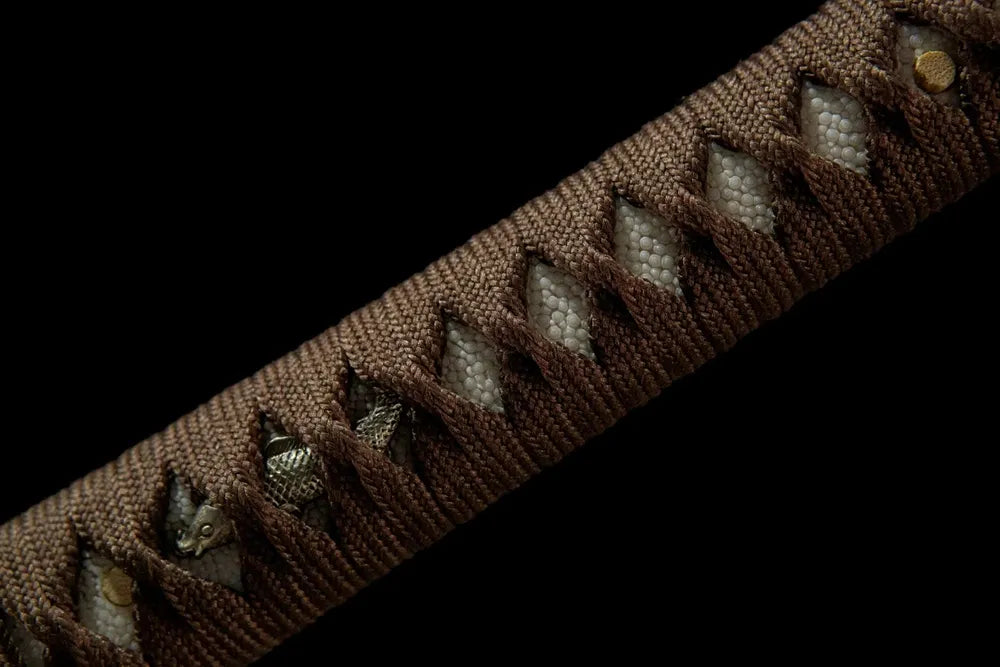
| Samekawa (Handle Core) | Genuine Ray Skin |
| Mekugiana (Peg Holes) | Two |
| Mekugi (Pegs) | Bamboo |
| Menuki | Solid White Copper |
| Seppa (Washers) | Copper |
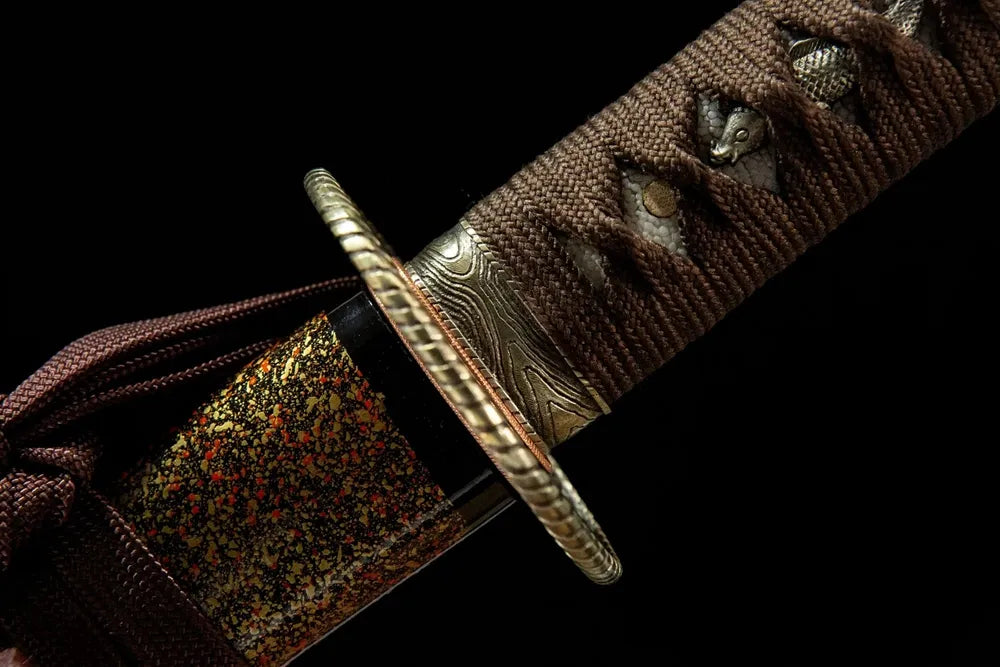
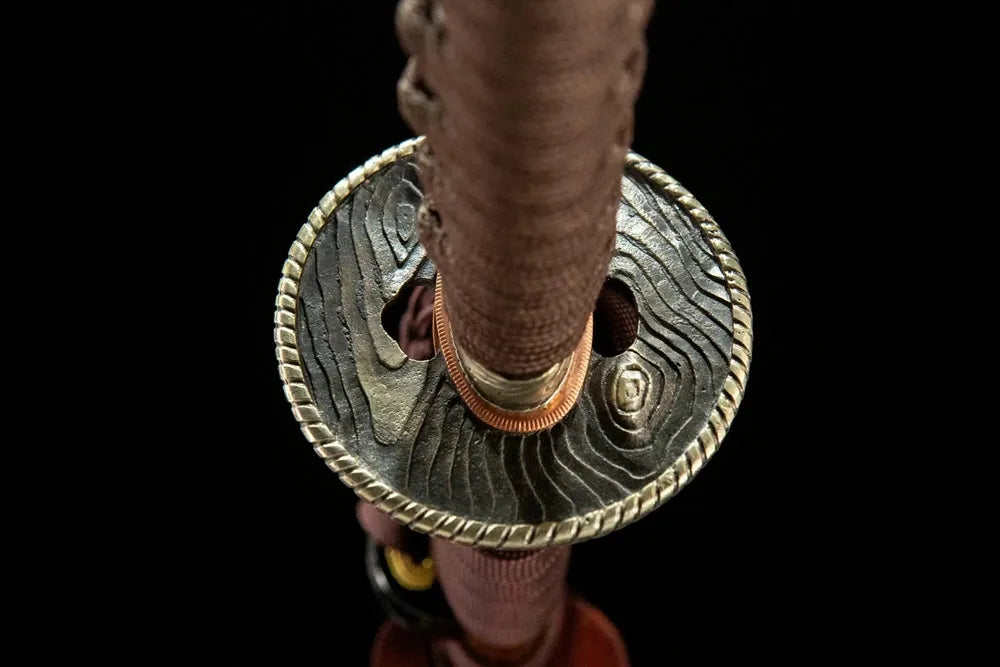
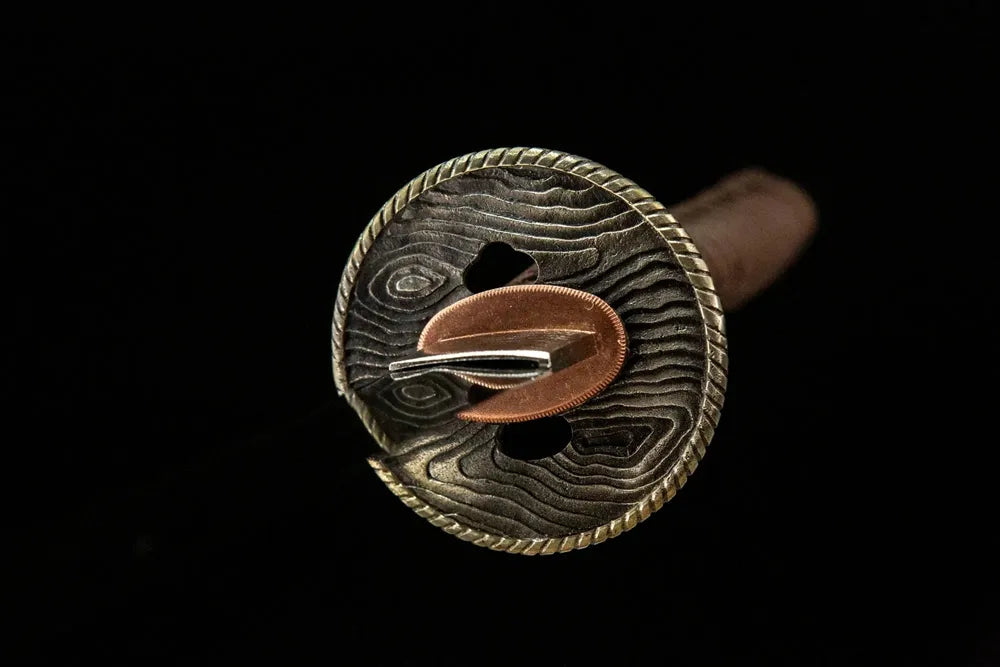
| Tsuba (Hand Guard) | Solid White Copper with Peach Mountain Pattern |
| Habaki (Blade Collar) | Copper |
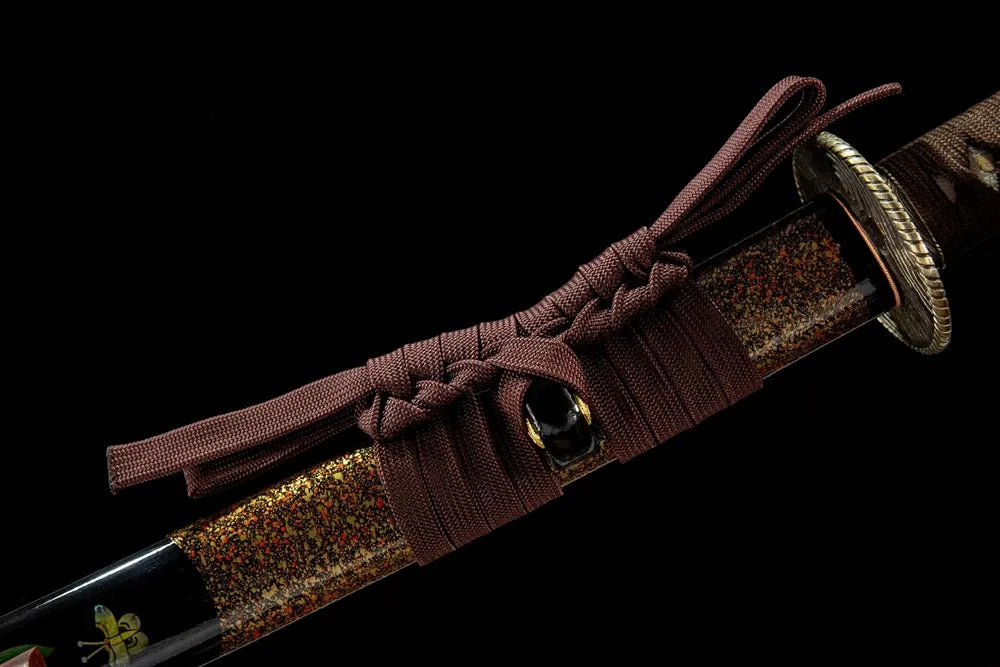
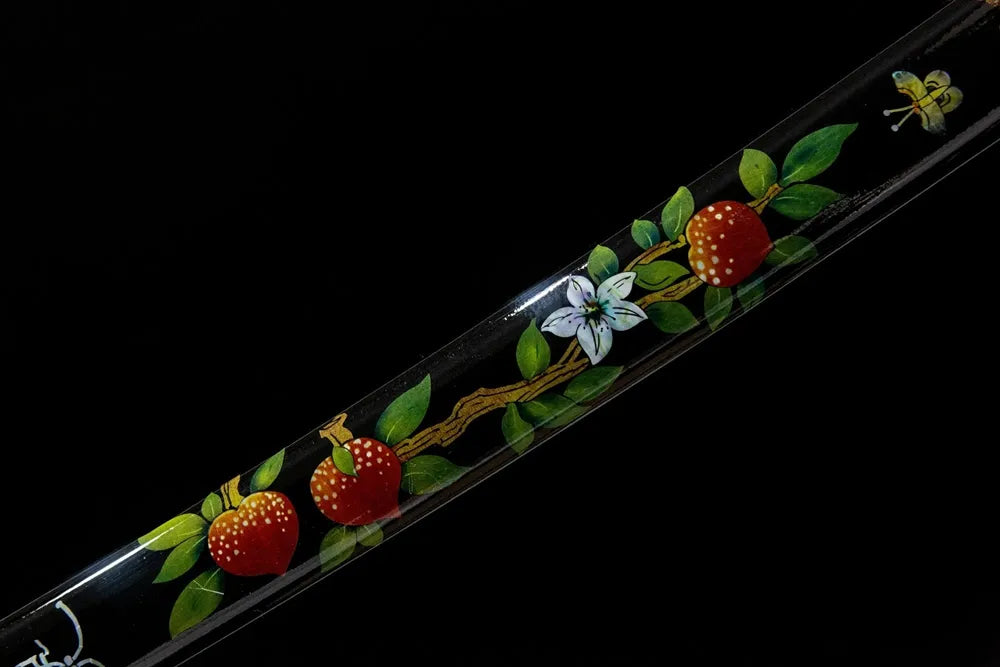
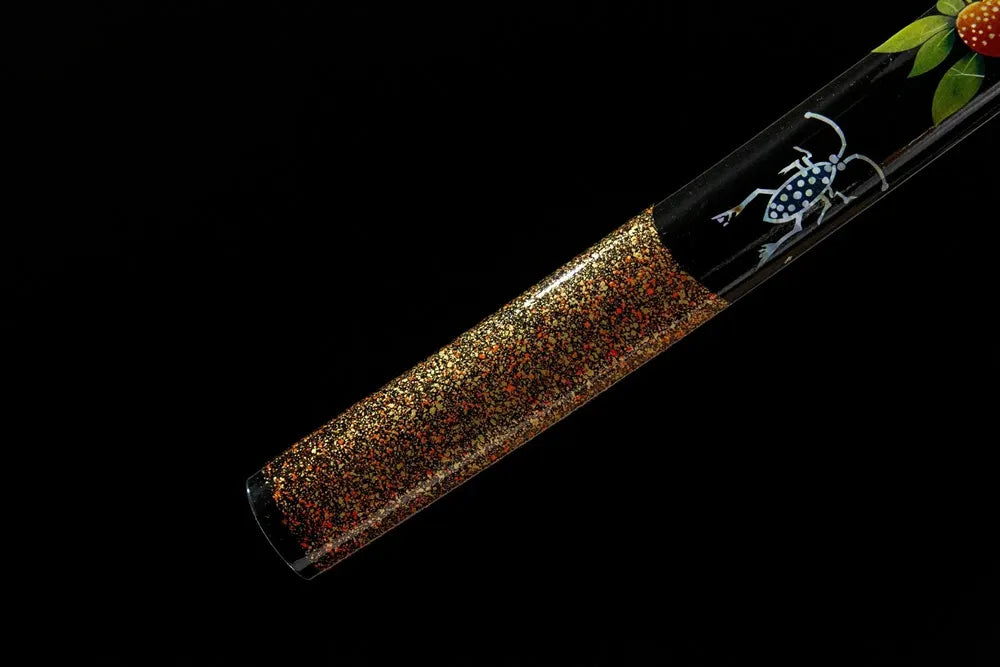
| Saya (Scabbard) | Solid Hardwood with Lacquer Paint Finish |
| Sageo (Cord) | Thick Coarse Cotton Rope |
| Gift | Premium Katana Storage Bag |
| Total Weight | 1.3KG |
| Desheathing Weight | 1.1KG |
| Note | Handmade products have minor errors, specifications are for reference only. |
About This Peach Mountain Katana
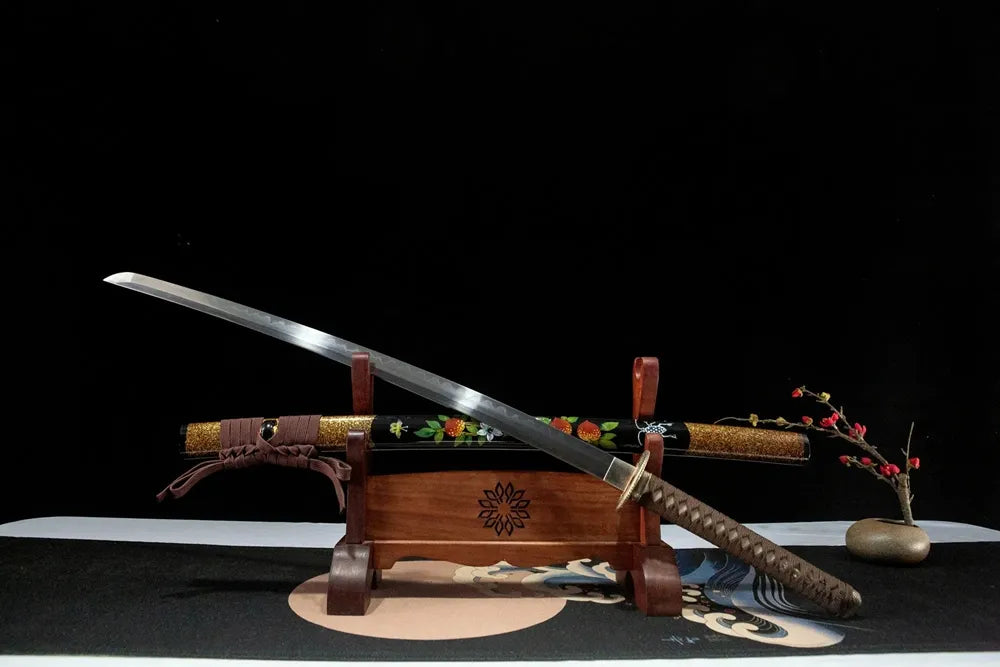
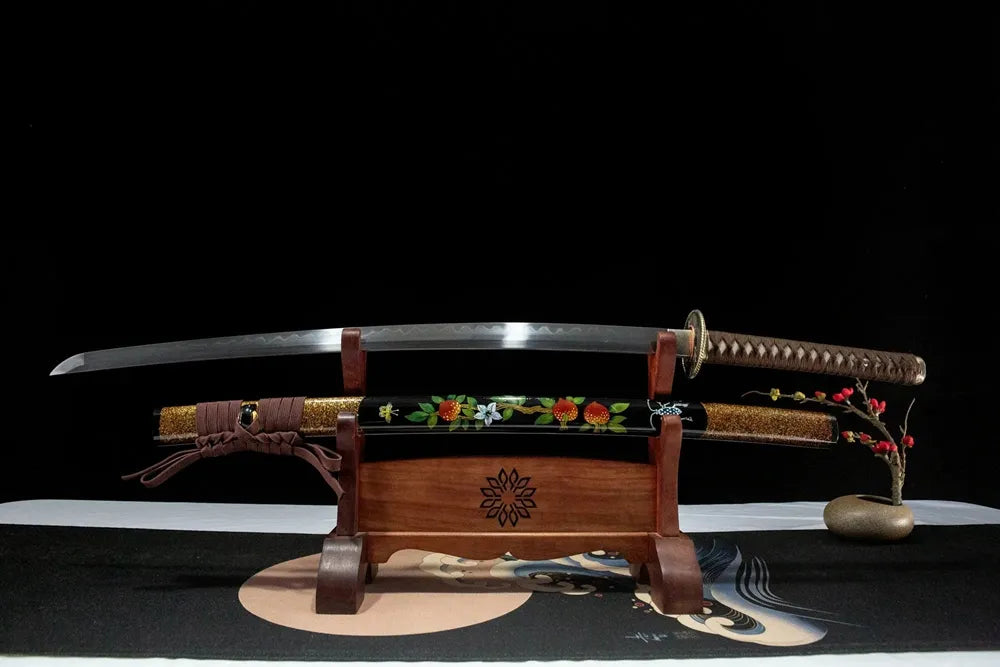
The Peach Mountain Katana is an elegantly styled entry-mid range collectible samurai sword inspired by the refined aesthetic of traditional East Asian landscape art. Forged from high-carbon T10 steel and finished with classic Tsuchioki clay tempering, it features a graceful Gunome wave-like hamon line that delivers excellent edge hardness and balanced blade toughness.
The full set of solid white copper fittings carries subtle peach mountain themed motifs, offering a soft, silvery matte luster that ages gracefully with use. Paired with a thick coarse cotton sageo for a textured, rustic feel and a smooth lacquered hardwood saya, this katana balances understated elegance with practical durability. The fully disassemblable full tang structure simplifies routine maintenance, making it an ideal choice for first-time collectors, home decorative display, and light Iaido form practice.
Key Features
- High-Carbon T10 Steel Blade: Premium T10 carbon steel with excellent edge retention and balanced toughness, suitable for both collection and light practice
- Graceful Gunome Wave Hamon: Traditional hand-applied clay tempering creates soft, undulating wave-like peaks along the blade edge for classic visual appeal
- Full Set Solid White Copper Fittings: Tsuba, fuchi, kashira and menuki all crafted from solid white copper with refined peach mountain motif details
- Thick Coarse Cotton Sageo: Durable textured cotton sheath cord with a rustic, traditional feel and reliable grip
- Genuine Ray Skin Handle: Authentic samekawa ray skin core with traditional wrap for secure, non-slip grip and classic samurai styling
- Fully Disassemblable Full Tang: One-piece full tang blade that can be fully taken apart for thorough cleaning, oiling and long-term maintenance
Frequently Asked Questions
Q: What are the characteristics of white copper fittings?
A: White copper is a copper-nickel alloy with a soft, silvery-white appearance. It is more tarnish-resistant than pure copper, develops a subtle, elegant patina over time, and has a solid, premium weight and tactile feel.
Q: What is the difference between coarse cotton sageo and regular cotton sageo?
A: Coarse cotton sageo uses thicker, textured cotton yarn. It is more durable, has a stronger grip when tying, and carries a more rustic, traditional aesthetic compared to smooth fine cotton cords.
Q: What does simulated yokote mean?
A: A simulated yokote is a visually engraved line on the blade tip that replicates the appearance of a traditionally ground yokote. It delivers the classic samurai sword look at a more accessible price point.
Q: Is this katana suitable for beginners?
A: Yes. With its balanced weight, authentic structure and approachable price, this katana is an excellent choice for first-time collectors and beginners looking for an elegant, quality entry-level piece.
For another themed T10 steel option in the same price range, check out the Green Shade Katana with fresh green aesthetic.
Browse our full collection of Handmade Katana Swords to explore more themed and traditional designs.
Learn more about hamon patterns and blade craftsmanship in our complete Katana Anatomy Guide.
Want a personalized design? Create your own blade with our Custom Katana service.
All Xingyu Sword products include free shipping to the United States and a 30-day money back guarantee.
Katana parts names and terminology
Katana parts names and terminology
In the world of Katana, Katana parts names and terminology are very important as most of the Katana parts names use Japanese vocabulary and special nouns. This page can help you understand Katana faster.


A.SAKIKASANE Thickness of blade tip.
B.MOTOKASANE Thickness of the bottom of the blade.
C.KISSAKI NAGASA Length of tip.
D.SAKIHABA Width of blade tip.
E.MUNE The surface of the katana back.
F.MOTOHABA Width of bottom of blade.
G.MUNEMACHI The notch at the top of the blade stem,where the back surface (mune) of the blade begins.
H.HAMACHI A notch at the top of the blade,where the blade begins.
I.FUKURA The radian of the blade in the tip area.
J.BOSHI Blade text in the tip area.
K.YOKOTE The boundary between blade tip and blade body.
L.KOSHINOGI Shinogi-ji above the blade tip area (yokote).
M. MITSUKADO Intersection point of yokote and blade edge of blade body and blade edge of tool tip.
N.SHINOGI MITSUKADO Shinogi,Koshinogi und Yokote linien.
O.SHINOGI-JI Blade surface between shinogi and mune.
P.SHINOGI A chear straight line extending along the longitudinal direction of the blade is the thickest part of the blade (only appearing on katana of shinogi-zakuri) .
Q.JI The surface between shinogi and nioiguchi.
R.HA The edge area of the cutter body is hardened by quenching.
S.HASAKI Asharpened edge.
T.NIOIGUCHI A clear line separating the hardened blade from the softer part of the blade body.
U.ASHI Nioiguchi's extension line in the direction of the blade.
V.HACHO A straight line that determines the length of the blade.
W.SORI Degree of blade bending.
X.ZENCHO The total length of the katana,including the stem (the blade length is only the blade body).
Y.NAKAGO NACASA Length of katana stem.
Z.MAKUGIANA A hole in the shank for receiving Mekugi (bamboo nail for fixing the blade in the handle).
AA,MEI Inscription on the hilt (usually the name of the katana maker,but there are often other information).
Now that you have learned the terminology and proper nouns of katana through this article, you also design customize your ideal katana.
Choose options