
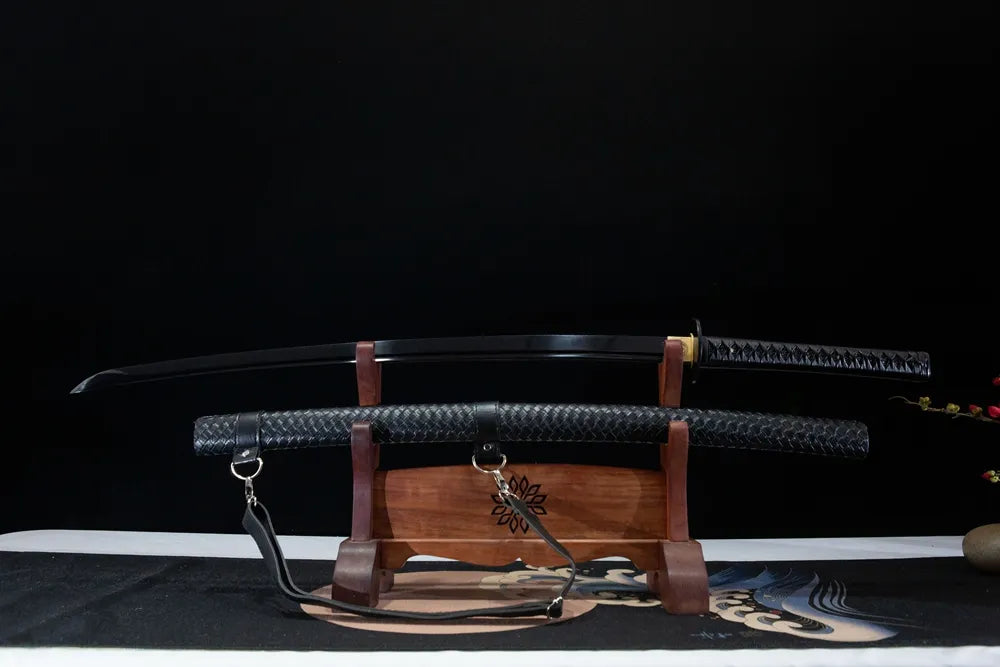
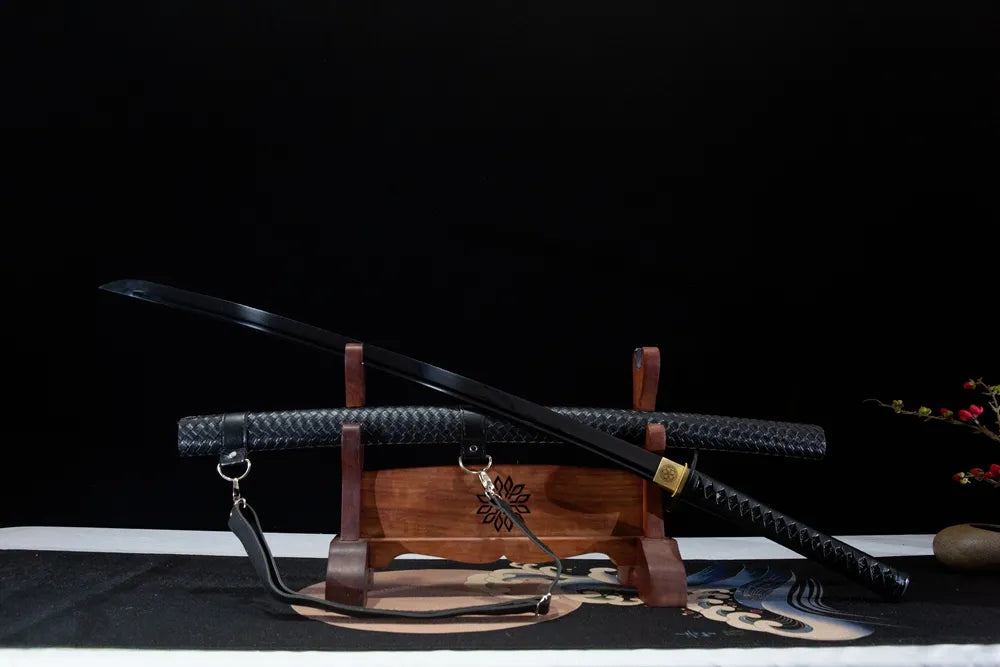
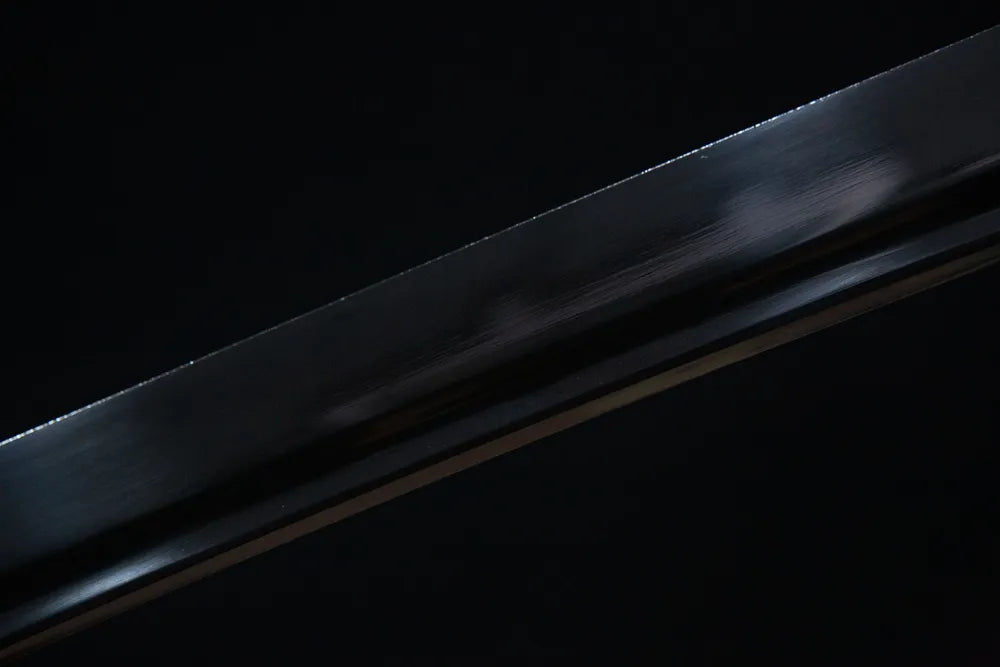
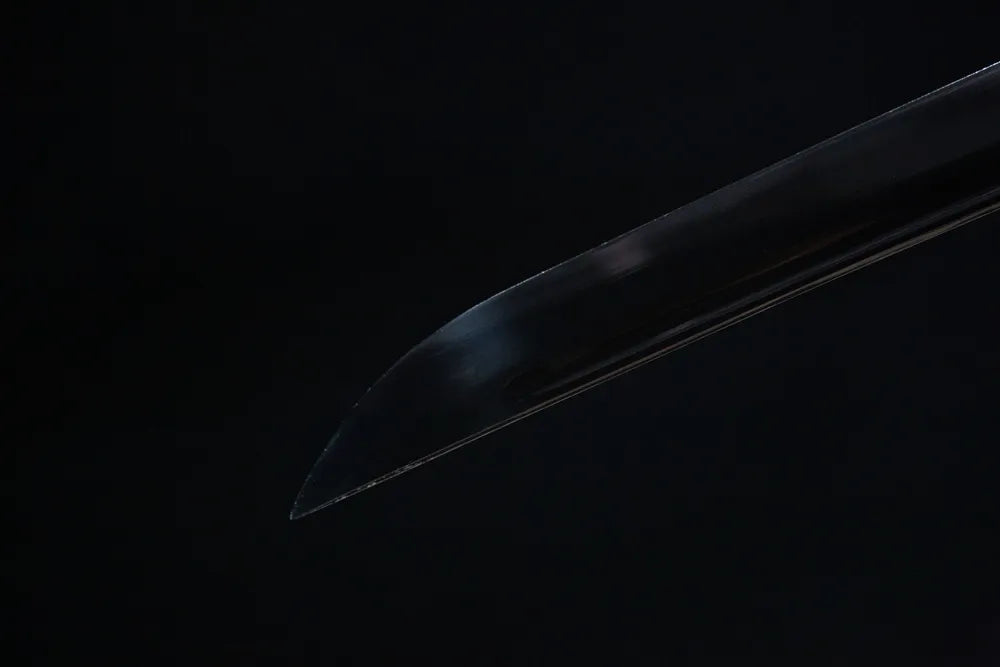
Musashi Katana | 1060 Water Quenched Plain Blade Zinc Alloy Tsuba Imitate Ray Skin Black Matte Lacquer Saya Non-Detachable Iaido Training Katana

Handcrafted by experienced swordsmen

Free American Express

Perfect after-sales service

SSL End-to-end encryption secure payment
Musashi Katana | 1060 Water Quenched Plain Blade Zinc Alloy Tsuba Imitate Ray Skin Black Matte Lacquer Saya Non-Detachable Iaido Training Katana
Product Introduction
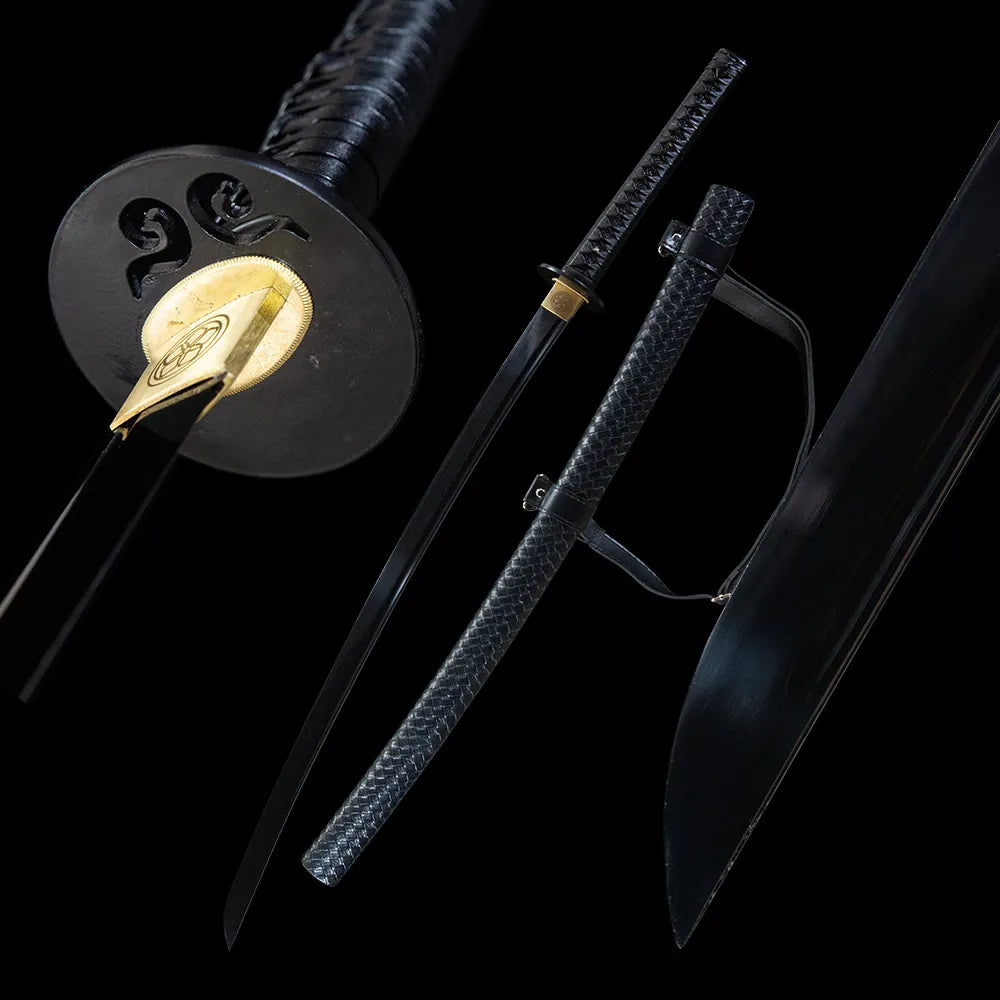
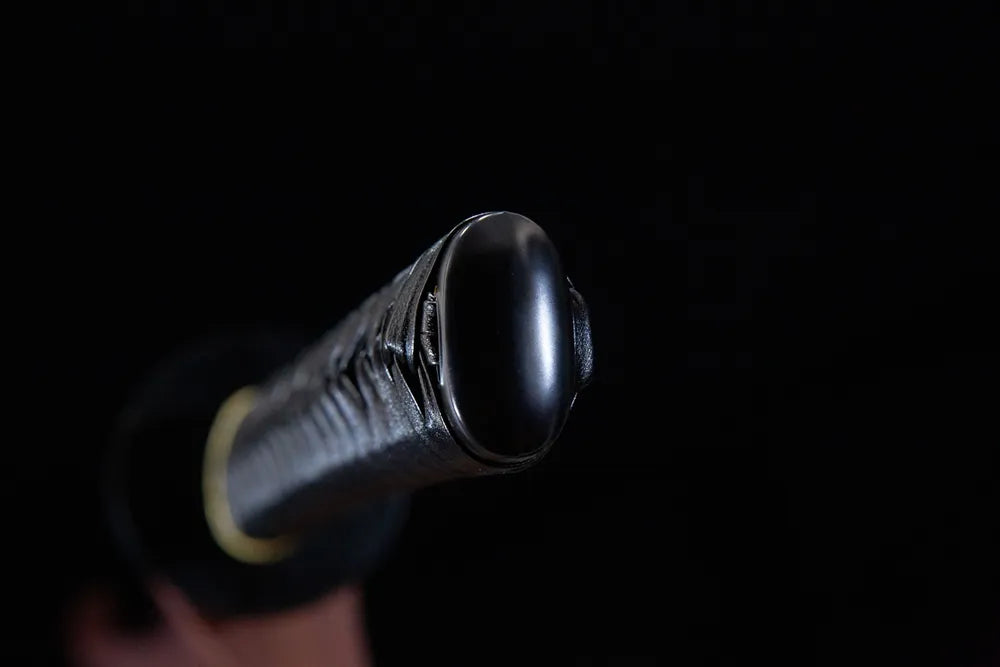
The Musashi Katana is budget minimalist martial arts training samurai sword inspired by Miyamoto Musashi’s plain warrior philosophy, developed exclusively for entry-level iaido practitioners and low-key zen style interior display. The blade adopts 1060 high-carbon mono solid steel with basic water quenching heat treatment, no distinct visible hamon temper grain, classic shinogi-zukuri maru solid blade without blood groove, basic fine surface polishing and factory light sharp edge, only applicable for repetitive drawing form training, not recommended for continuous heavy thick bamboo cutting work.
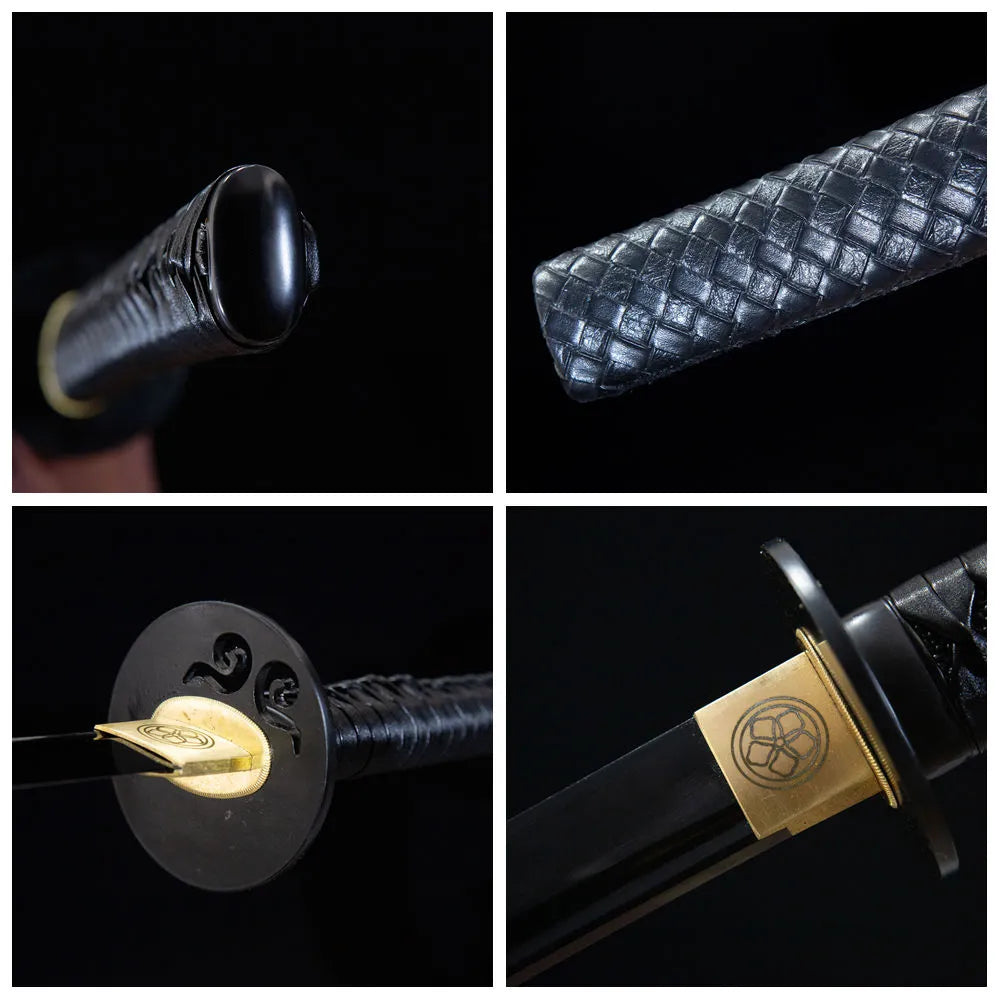
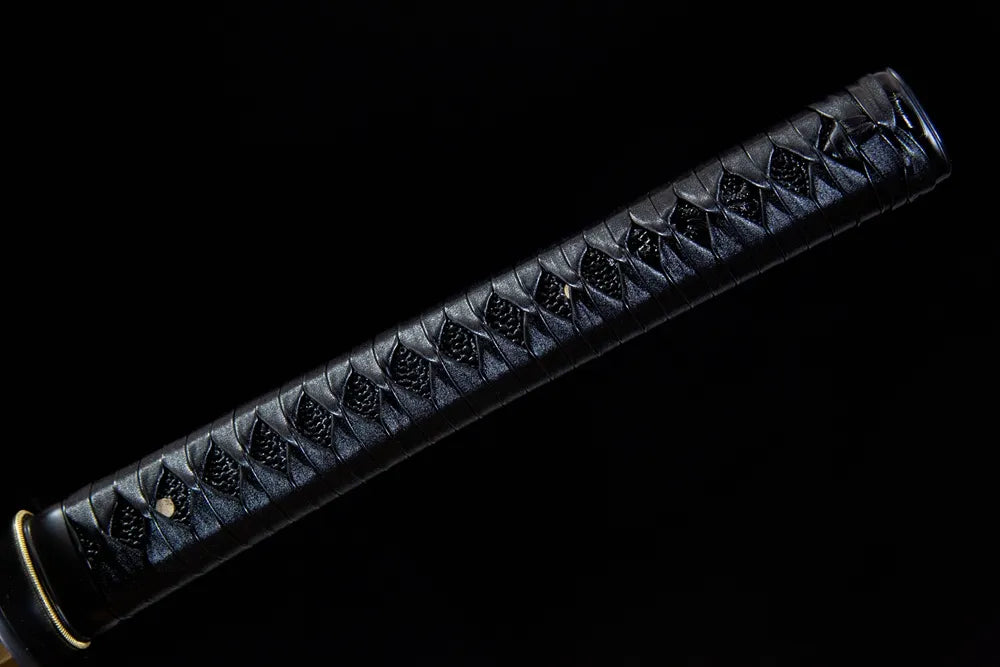
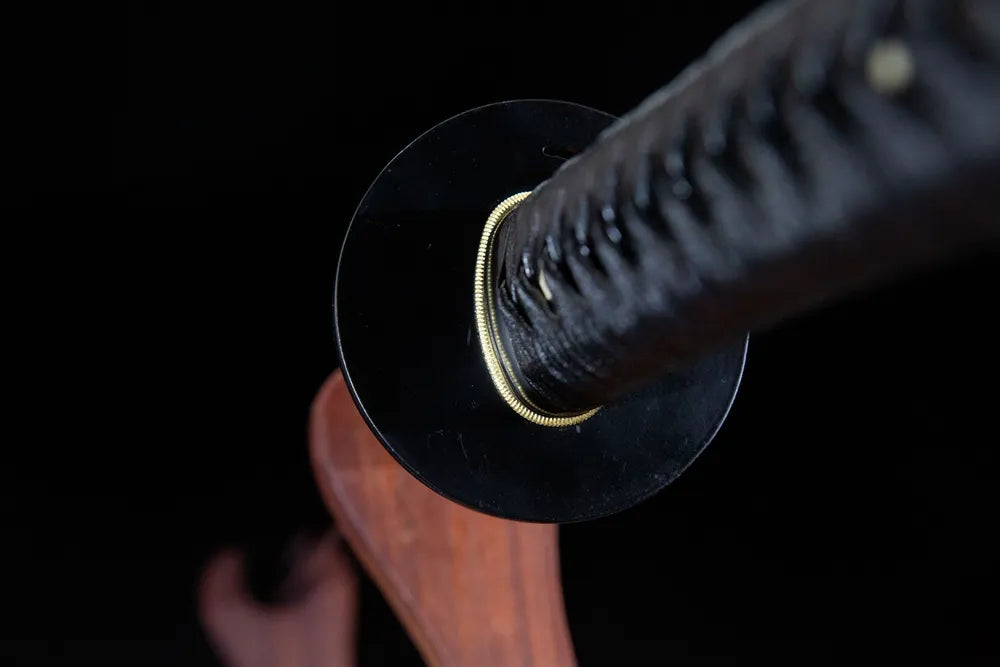
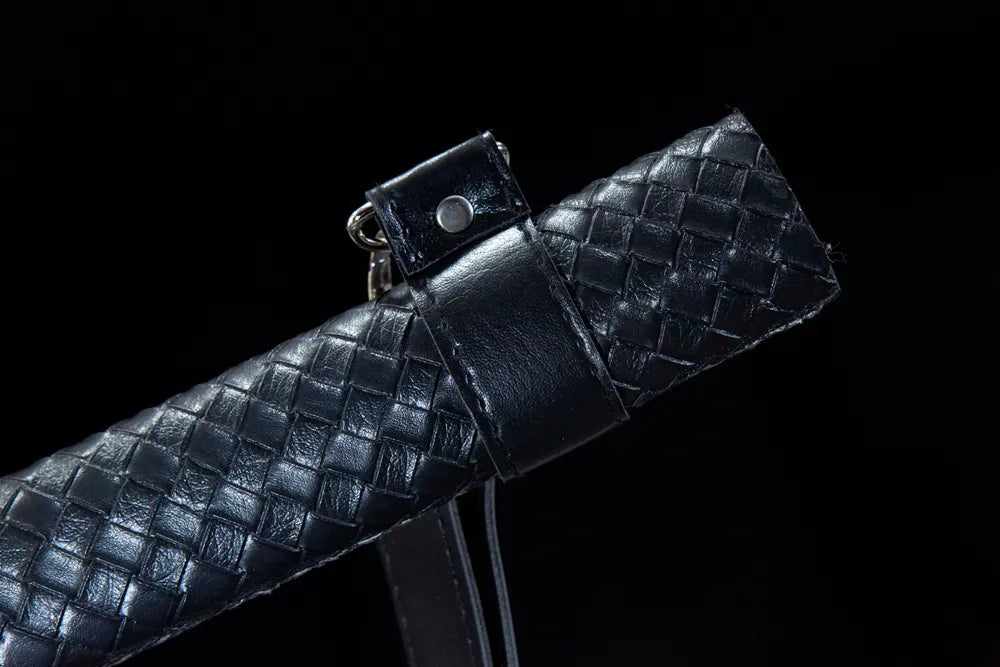
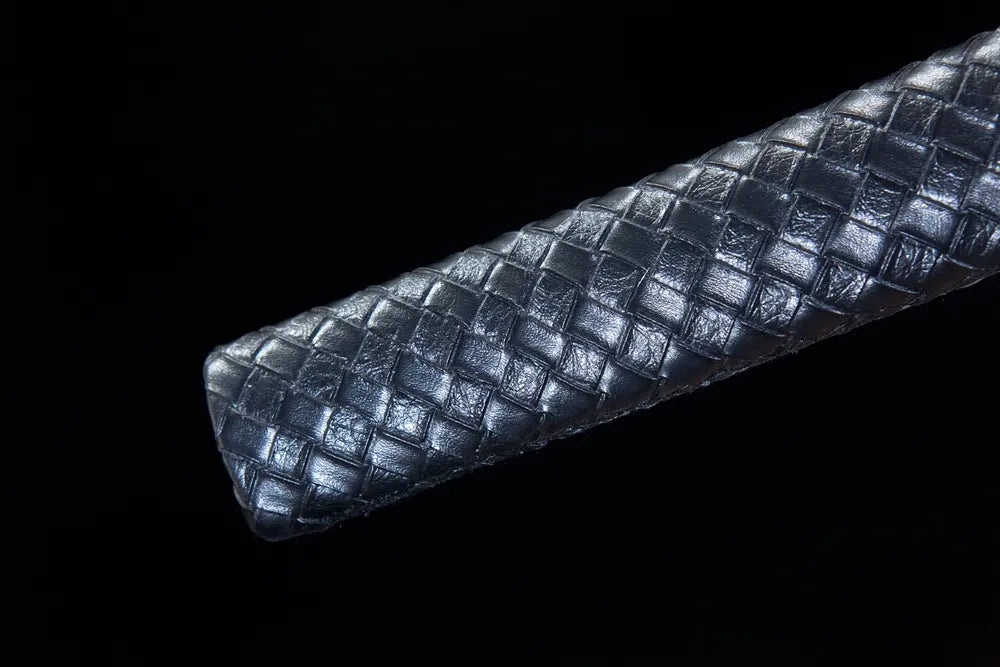
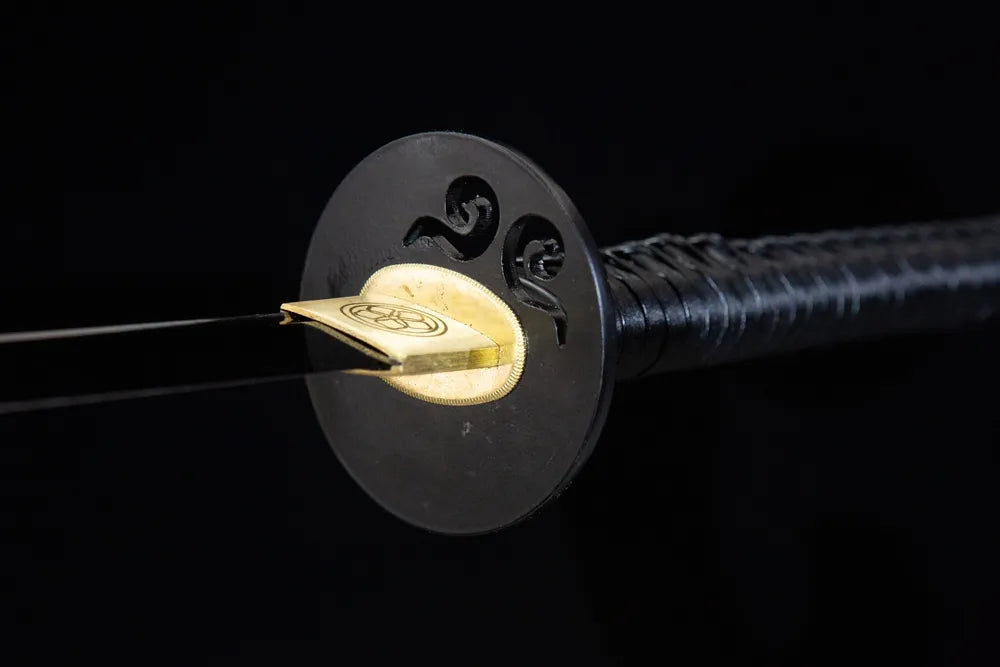
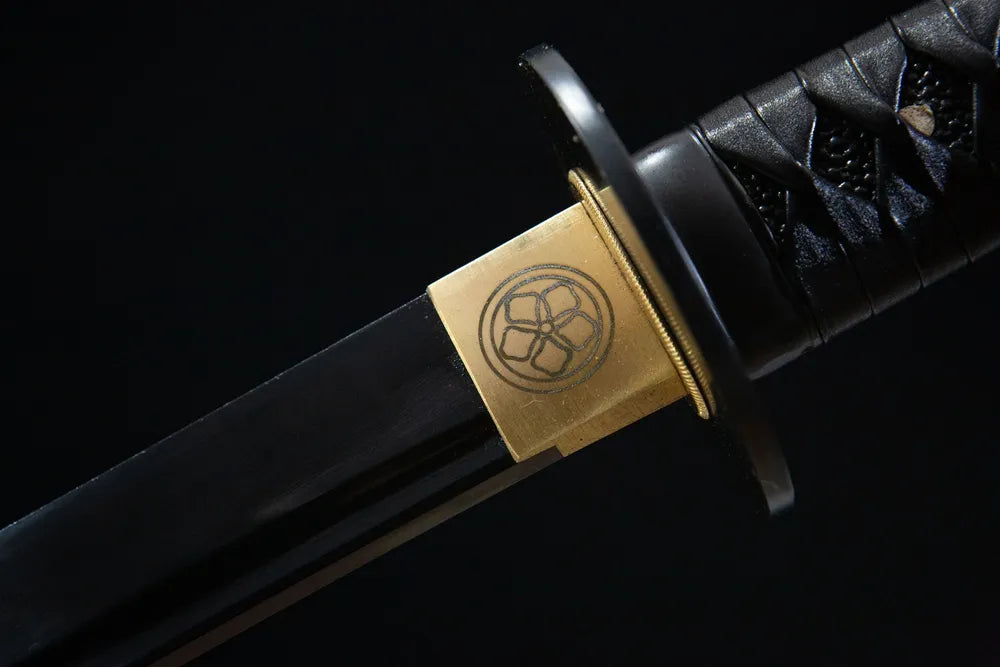
The complete set of mounting hardware is unpatterned matte zinc alloy, paired with solid copper habaki and seppa washers; oval imogata tsuka is lined with artificial imitation ray skin synthetic fabric, wrapped with beige moro-hineri diamond cotton silk, soft low-friction grip for long repetitive drills. The scabbard is solid hardwood with full uniform black matte lacquer finish, matched thin dark soft cotton sage binding cord. This sword adopts fixed non-detachable full tang structure with two bamboo mekugi pins, blade and handle cannot be split apart. A lightweight simple fabric storage bag is provided as free gift accessory; personalized blade text carving upgrade service is available upon request.
Core Selling Advantages
- Miyamoto Musashi minimalist warrior themed design, completely differentiated from dragon, floral, movie decorative premium katanas
- Cost-effective entry positioning starting at $179, affordable for new martial arts beginners
- 1060 water quenched plain blade without fancy temper grain, focus purely on iaido practice functionality
- Full uncarved zinc alloy hardware, low-distraction design to avoid visual interference during training
- Artificial imitation ray skin tsuka retains traditional grip texture while greatly cutting product cost
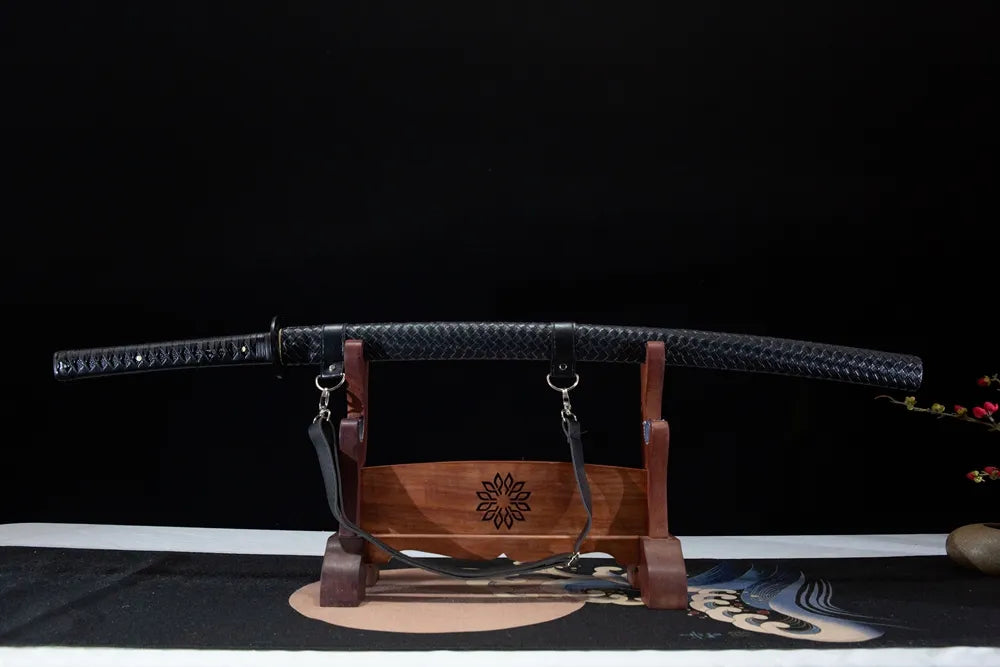
- Uniform black matte lacquer solid wood saya, low saturation dark tone matches tea room, study and martial arts studio decor
- Fixed non-detachable full tang structure prevents loose handle after long-term repeated drawing practice
- Light overall weight, effectively relieve wrist fatigue for beginners’ long-hour training drills
Complete Official Original Specifications (100% official site captured data, no modified values)
| Parameter Item | Official Standard Parameter Value |
|---|---|
| Zencho (Total Full Sheathed Length) | 102.5cm |
| Hacho (Effective Blade Length) | 72.5cm |
| Tsuka Handle Length | 26.3cm |
| Sori Blade Curvature | 1.9cm |
| Sakikasane Blade Tip Thickness | 0.45cm |
| Motokasane Blade Root Thickness | 0.7cm |
| Sahihaba Blade Tip Width | 2.2cm |
| Motohaba Blade Root Width | 3.1cm |
| Heat Treatment Craft | Basic Water Quenching |
| Hamon Temper Line Performance | No Visible Distinct Temper Grain, Plain Matte Blade |
| Raw Blade Steel Material | 1060 High Carbon Mono Solid Steel |
| Blood Groove (HI) | No HI (No Groove) |
| Blade Forging Structure | Maru-gitae Mono Solid Steel |
| Blade Profile Shape | Shinogi-zukuri Plain Training Type |
| Yokote Reinforcement Line | Not Equipped |
| Tang Disassembly Performance | Non Removable Fixed Full Tang (Cannot Split Blade & Handle) |
| Mekugiana Fix Peg Holes | Two Double Peg Holes |
| Mekugi Fix Peg Material | Natural Bamboo Pegs |
| Fuchi & Kashira Metal Material | Unpatterned Matte Zinc Alloy |
| Tsuka Wrap Weaving Craft | Moro-Hineri Beige Diamond Cotton Ito |
| Tsuka Inner Lining Material | Artificial Imitate Ray Skin Synthetic Fabric |
| Side Menuki Ornaments | Tiny Plain Matte Zinc Alloy |
| Blade Seppa Washers | Solid Copper Sheet |
| Round Tsuba Hand Guard | Uncarved Matte Zinc Alloy |
| Blade Lock Habaki Collar | Solid Copper |
| Saya Scabbard Base Material | Solid Hardwood Full Black Matte Lacquer Finish |
| Sageo Waist Binding Cord | Thin Dark Soft Cotton Rope |
| Free Gift Accessory Package | Lightweight Plain Fabric Storage Bag |
| Blade Sharpness Option | Fully Sharpened / Unsharpened Display Blade Dual Options |
| Custom Blade Engraving Service | Default No Carving; Martial Arts Text Custom Upgrade Available |
| Handmade Product Reminder | All handmade swords have minor dimensional & coating deviation, specifications for reference only |
Katana Parts Names and Terminology Guide
Standard professional nihonto component glossary for iaido beginners and Musashi martial arts enthusiasts, matched with labeled structural schematic diagrams:
KASHIRA: Plain matte zinc alloy pommel cap at handle tail.
MENUKI: Tiny unadorned zinc alloy side decorative pieces on tsuka.
TSUKAMAKI: Beige diamond woven cotton grip wrap tape.
FUCHI: Matte zinc alloy ring at the root of handle near tsuba.
TSUBA: Round uncarved matte zinc alloy hand guard.
HABAKI: Solid copper blade locking collar between blade and tsuba.
KOIGUCHI: Black matte lacquer solid wood scabbard mouth part.
SAGEO: Thin dark soft cotton binding cord for waist carry.
KURIKATA: Small built-in wood ring for threading sageo rope.
SAYA: Uniform black matte lacquer solid hardwood scabbard.
KOJIRI: Seamless black lacquer wood bottom end cap of sheath.
This schematic fully marks all thickness, width, curvature professional parameters of plain 1060 training blade. If you need custom engraving of Musashi martial arts maxims or personalized text on blade, visit Custom Katana
Frequently Asked Questions
Q: What core difference between this Musashi katana and high-end T10 clay tempered collectible swords?
A: This entry model adopts cost-effective 1060 water quenched steel without artistic hamon grain, fixed non-detachable full tang, imitation ray skin lining, positioned purely for daily iaido practice with starting price $179, not high-end collection grade sword.
Q: Why adopt non-detachable fixed tang structure?
A: Double bamboo pins lock the nakago tightly, avoid loose grip after thousands of repetitive drawing drills, more durable for long-term beginner training.
Q: What is imitation ray skin lining?
A: Synthetic fabric that simulates the grain texture of natural ray skin, effectively cut product cost to reach budget entry price without losing traditional grip touch.
Q: Can this entry katana be used for continuous heavy bamboo tameshigiri cutting?
A: Plain water quenched 1060 blade surface is easy to scratch under strong friction impact, only light tatami mat and thin bamboo drawing practice are allowed, heavy cutting is not recommended.
Q: Can I engrave martial arts quotes on the plain blade surface?
A: Custom text carving upgrade service is supported, you can engrave Musashi sword philosophy, personal mottos and minimalist line patterns.
Q: Similar budget minimalist entry training samurai sword reference?
A: You can view full matte black low-cost practice katana: Obsidian Katana.
Browse all entry-level iaido & zen minimalist training samurai swords in Handmade Katana Collection.
Master complete professional nihonto terminology knowledge via Katana Parts & Terminology Guide.
All Xingyu Sword orders support free US shipping service and 30-day hassle-free return policy.
Katana parts names and terminology
Katana parts names and terminology
In the world of Katana, Katana parts names and terminology are very important as most of the Katana parts names use Japanese vocabulary and special nouns. This page can help you understand Katana faster.


A.SAKIKASANE Thickness of blade tip.
B.MOTOKASANE Thickness of the bottom of the blade.
C.KISSAKI NAGASA Length of tip.
D.SAKIHABA Width of blade tip.
E.MUNE The surface of the katana back.
F.MOTOHABA Width of bottom of blade.
G.MUNEMACHI The notch at the top of the blade stem,where the back surface (mune) of the blade begins.
H.HAMACHI A notch at the top of the blade,where the blade begins.
I.FUKURA The radian of the blade in the tip area.
J.BOSHI Blade text in the tip area.
K.YOKOTE The boundary between blade tip and blade body.
L.KOSHINOGI Shinogi-ji above the blade tip area (yokote).
M. MITSUKADO Intersection point of yokote and blade edge of blade body and blade edge of tool tip.
N.SHINOGI MITSUKADO Shinogi,Koshinogi und Yokote linien.
O.SHINOGI-JI Blade surface between shinogi and mune.
P.SHINOGI A chear straight line extending along the longitudinal direction of the blade is the thickest part of the blade (only appearing on katana of shinogi-zakuri) .
Q.JI The surface between shinogi and nioiguchi.
R.HA The edge area of the cutter body is hardened by quenching.
S.HASAKI Asharpened edge.
T.NIOIGUCHI A clear line separating the hardened blade from the softer part of the blade body.
U.ASHI Nioiguchi's extension line in the direction of the blade.
V.HACHO A straight line that determines the length of the blade.
W.SORI Degree of blade bending.
X.ZENCHO The total length of the katana,including the stem (the blade length is only the blade body).
Y.NAKAGO NACASA Length of katana stem.
Z.MAKUGIANA A hole in the shank for receiving Mekugi (bamboo nail for fixing the blade in the handle).
AA,MEI Inscription on the hilt (usually the name of the katana maker,but there are often other information).
Now that you have learned the terminology and proper nouns of katana through this article, you also design customize your ideal katana.
Choose options