
Follow Suit Katana – T10 Tsuchioki Notare Hamon PU Wrapped Samurai Sword

Handcrafted by experienced swordsmen

Free American Express

Perfect after-sales service

SSL End-to-end encryption secure payment
Follow Suit Katana – T10 Tsuchioki Notare Hamon PU Embossed Leather Saya Samurai Sword
Product Introduction
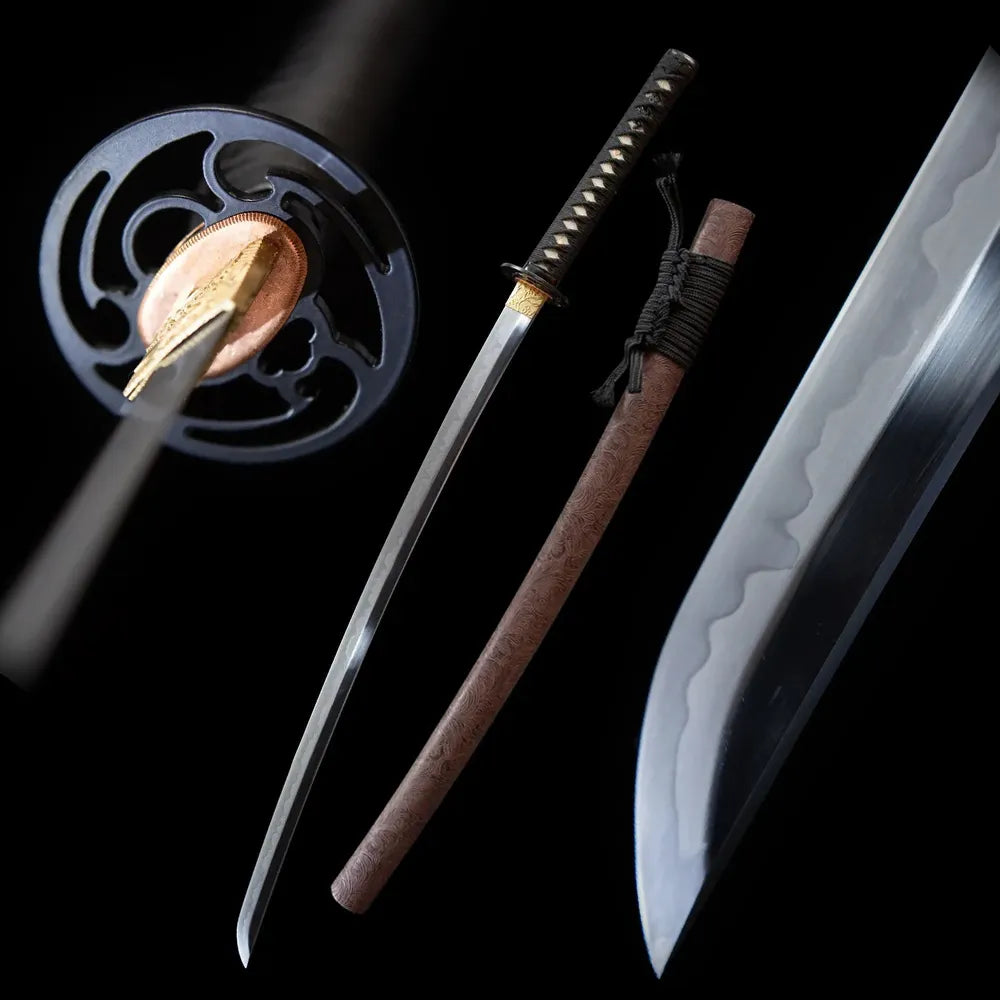
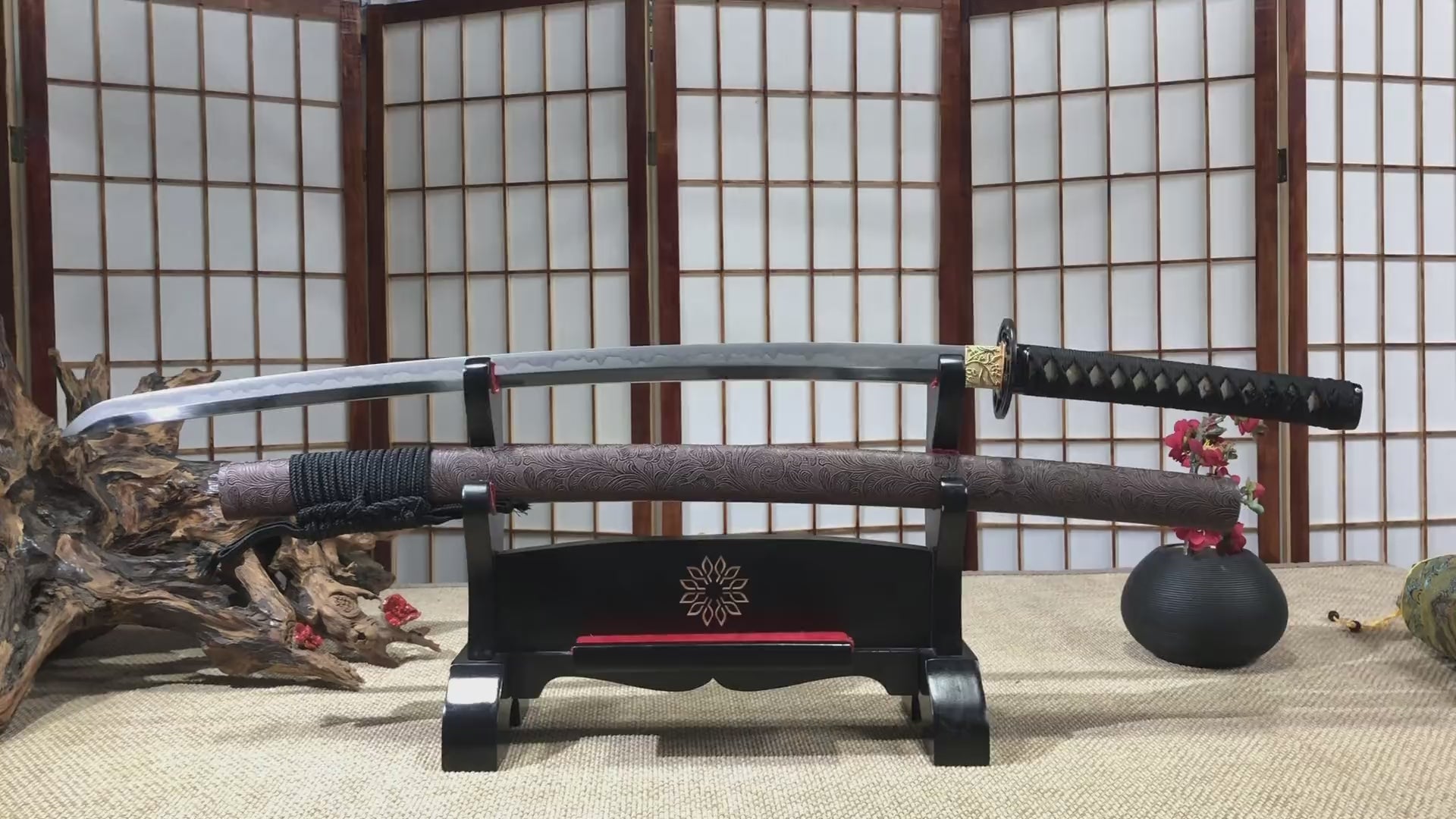
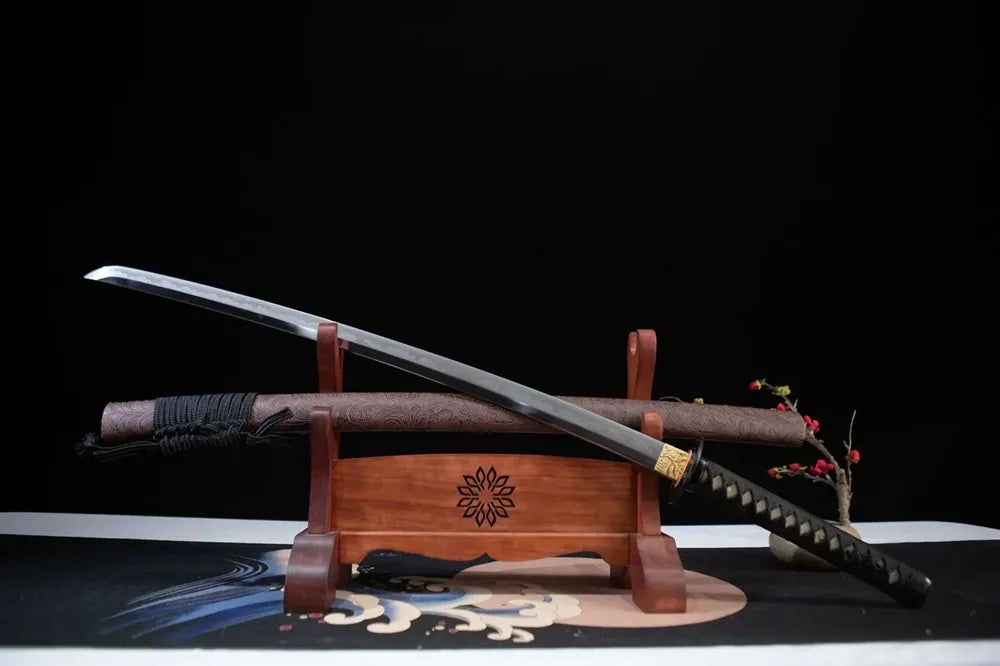
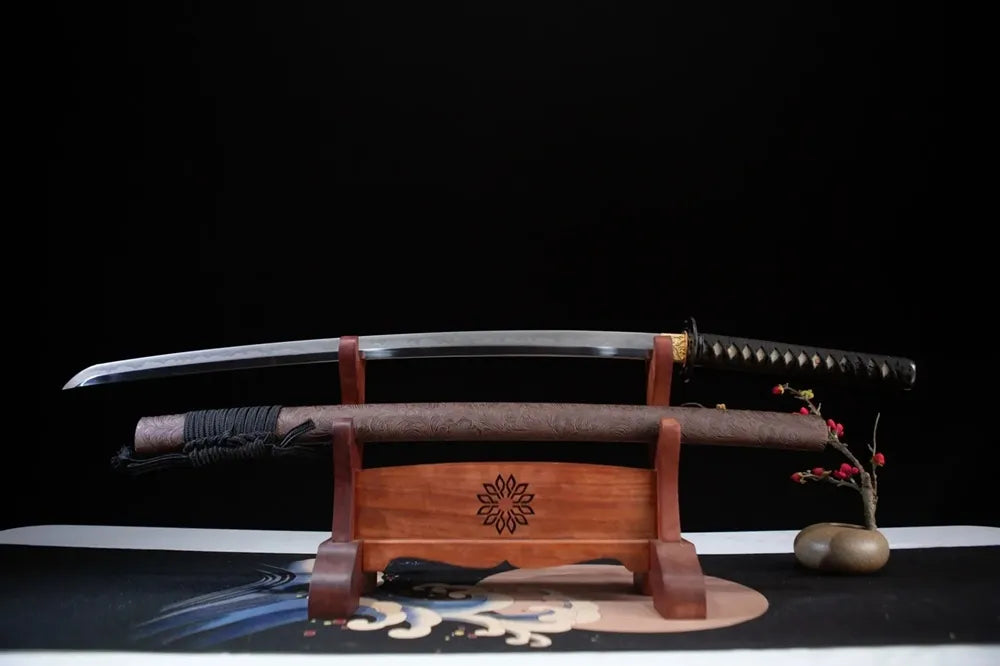
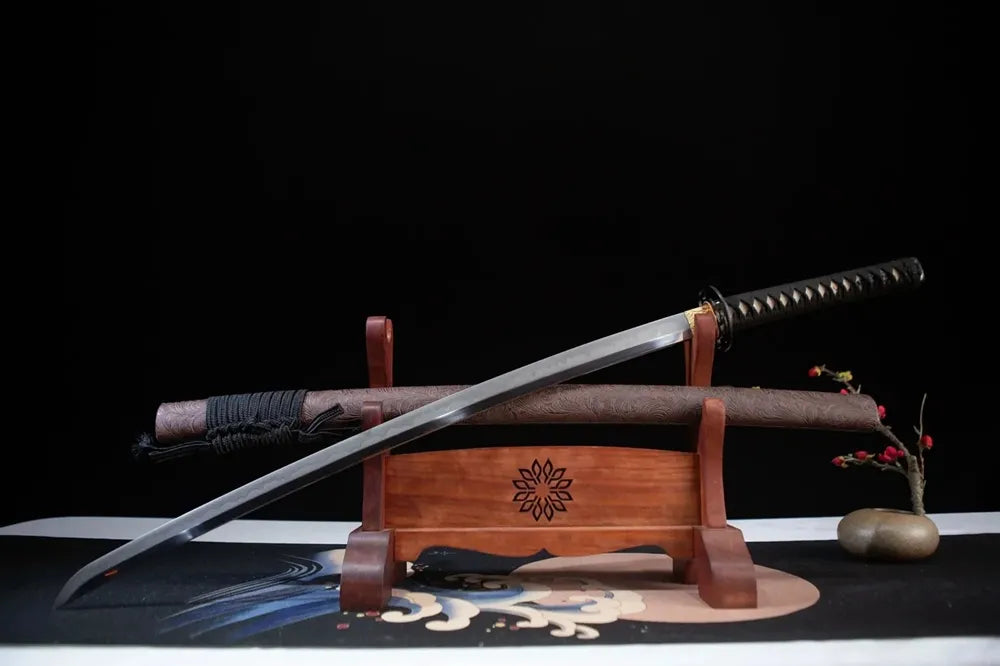
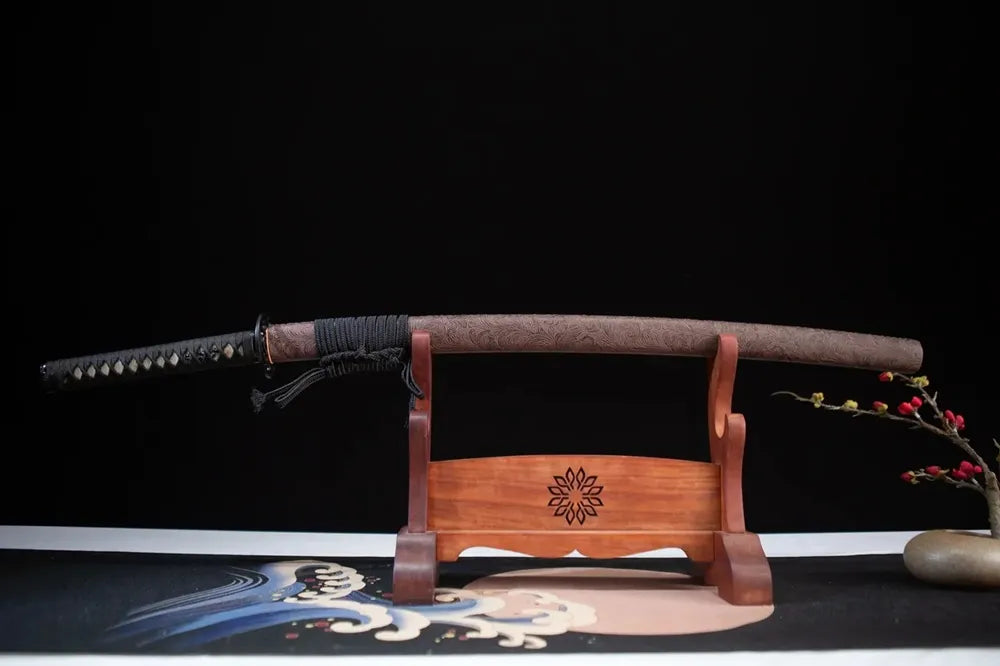
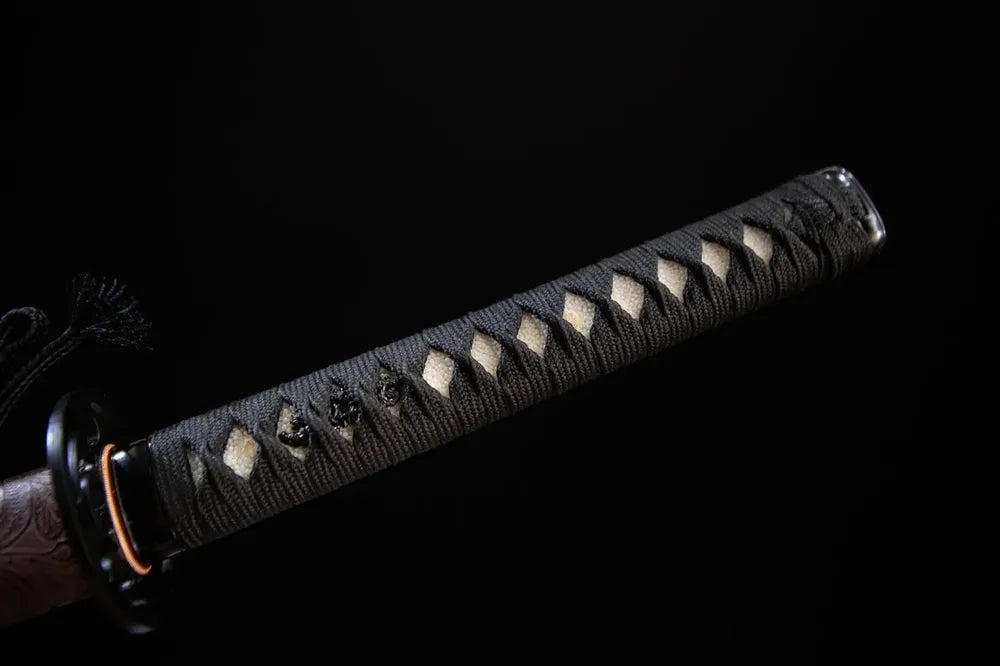
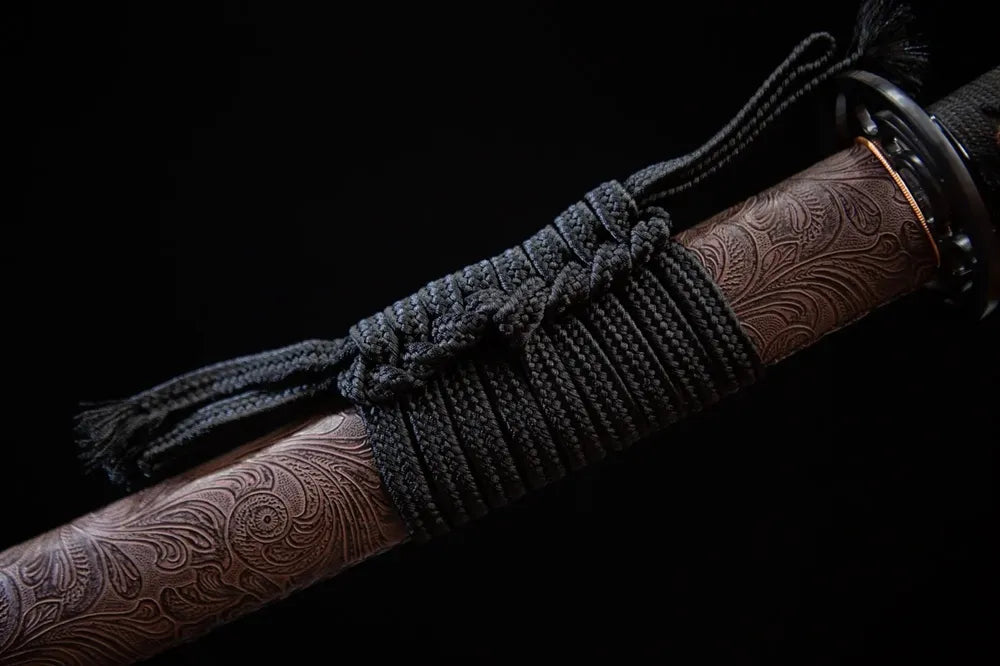
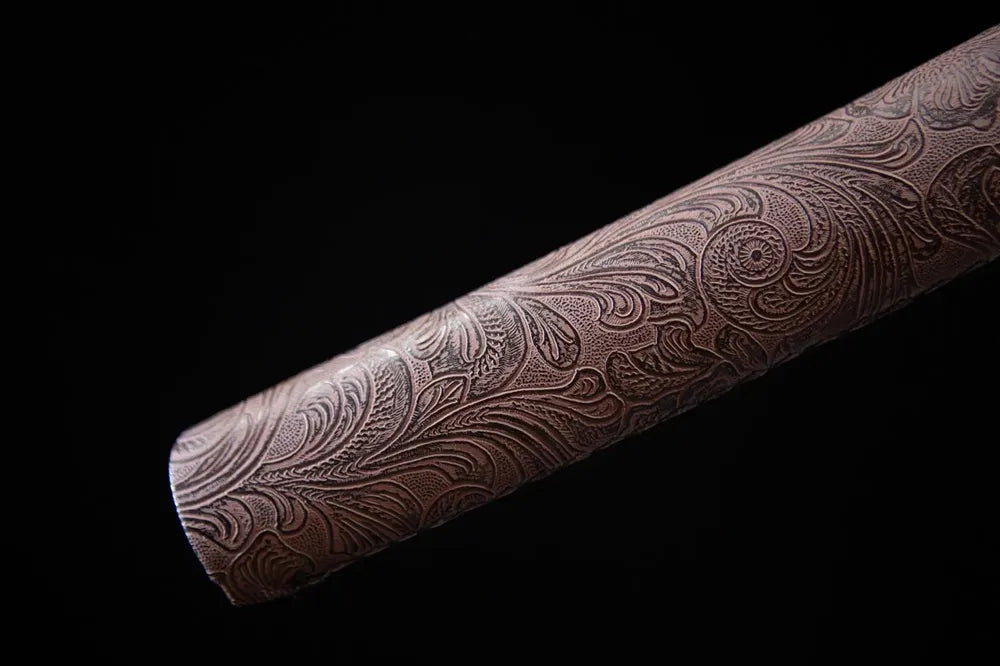
The Follow Suit Katana is retro vintage full‑size samurai warrior sword, fully differentiated from plain shirasaya wood swords, tiger painted katana and floral themed nihonto. It adopts exclusive solid wood scabbard wrapped with embossed vintage PU leather, matched hollow openwork iron tsuba and genuine natural ray skin grip. Targeted at retro sword collectors, study antique decor and oriental warrior cultural art gifts.
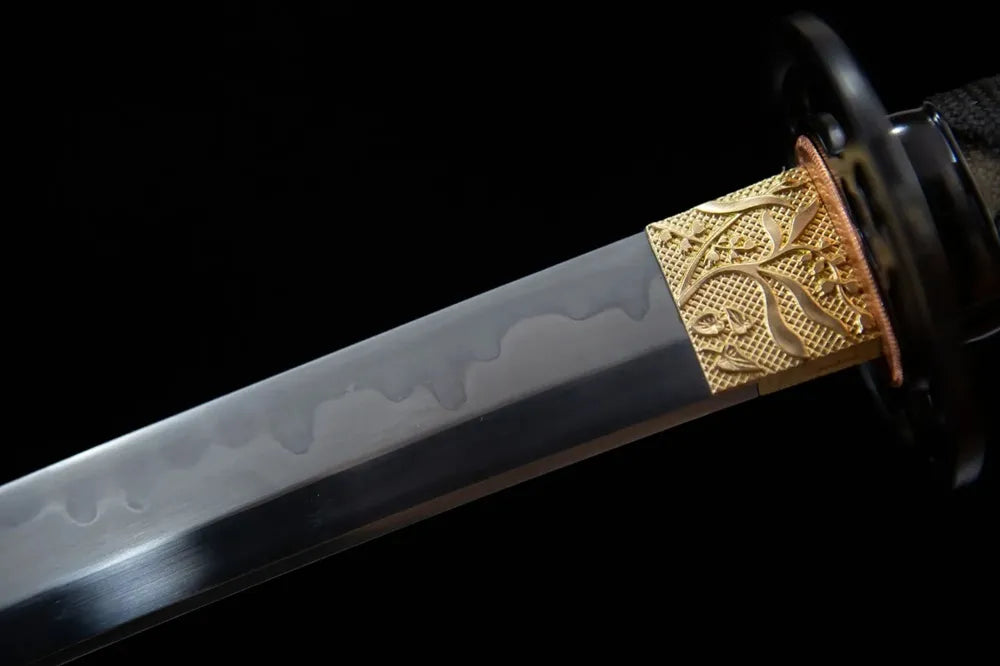
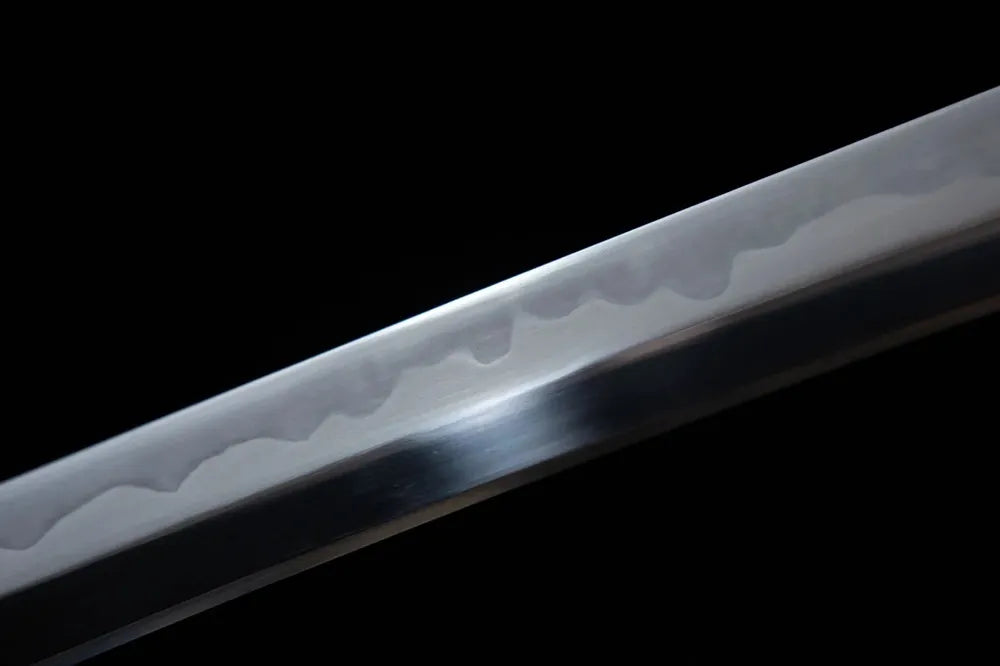
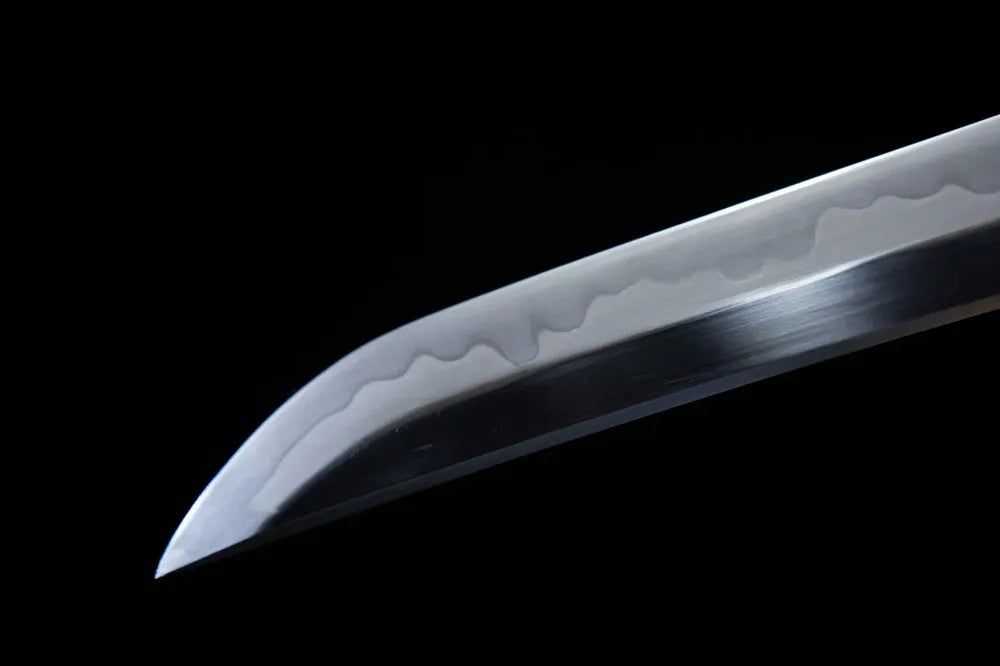
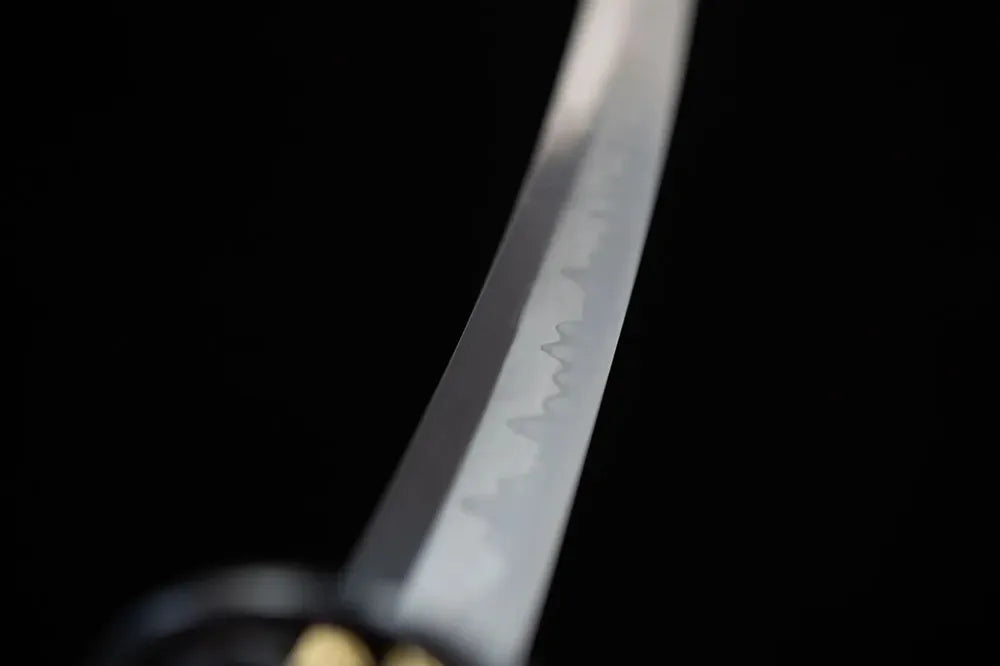
The blade adopts premium T10 high carbon steel with traditional Tsuchioki clay differential tempering craft, forming soft continuous notare wave hamon temper line, standard shinogi‑zukuri blade shape without blood groove, real embossed yokote mark, notarekomi kissaki tip, multi‑stage taganeha fine mirror polishing and factory light sharp edge. This sword is only allowed for slow static drawing appreciation; heavy cutting and violent friction will scratch delicate temper grain and are strictly forbidden.
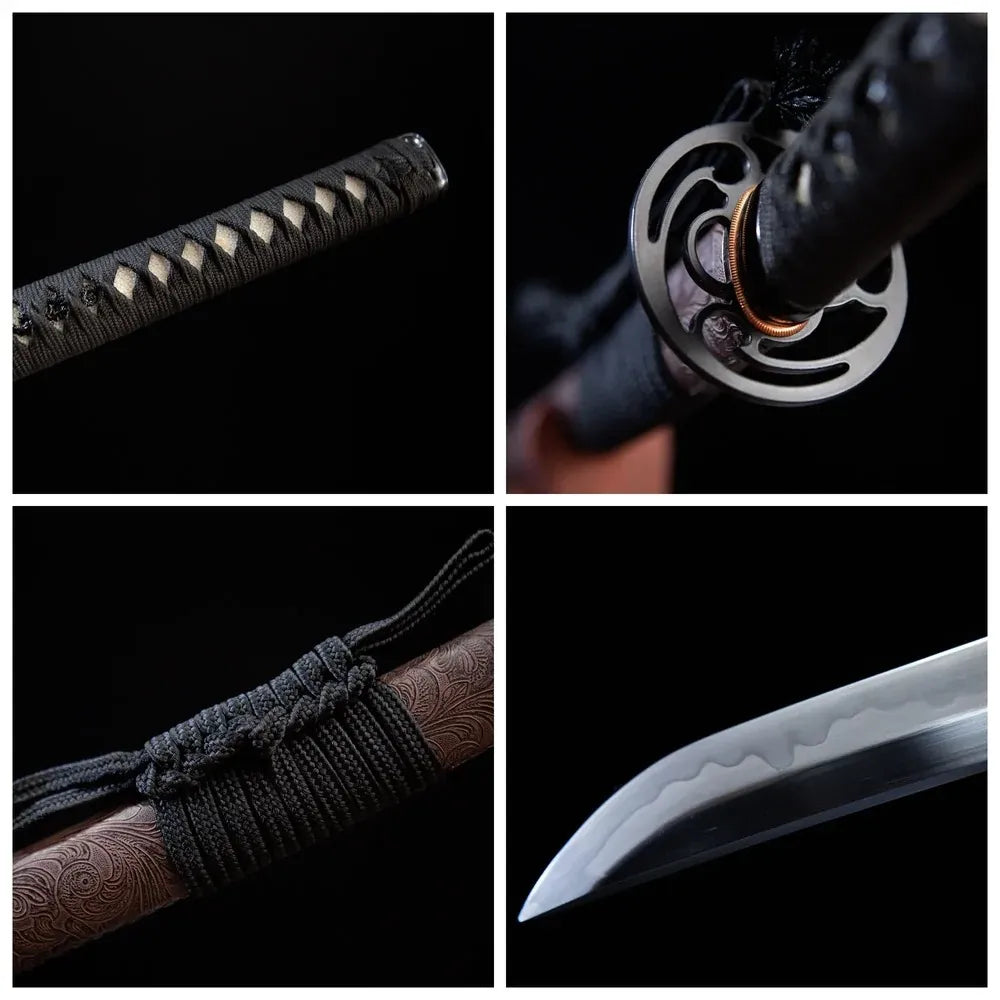
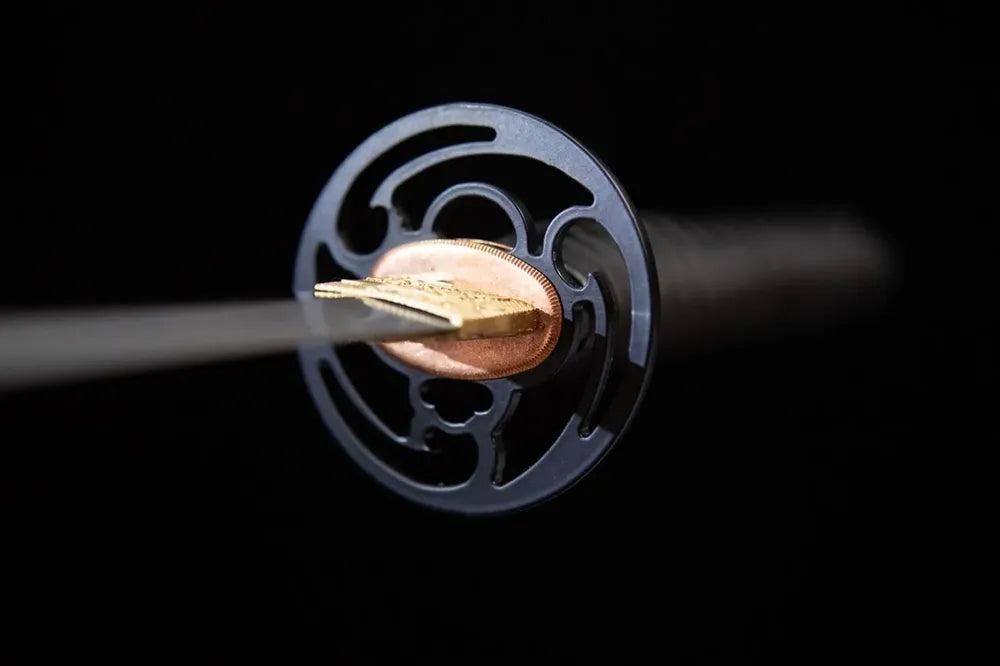
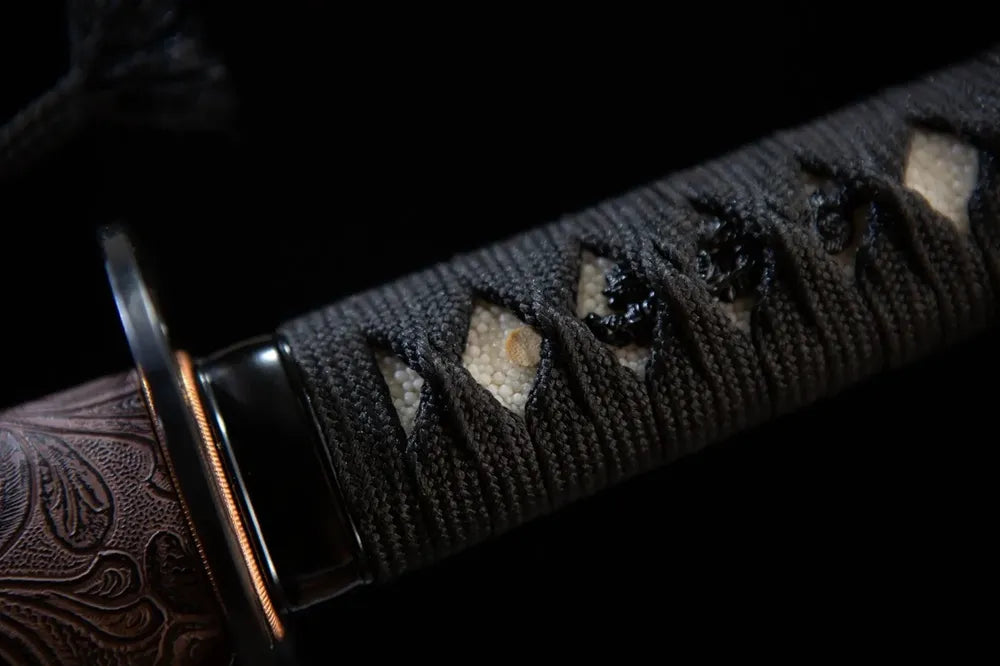
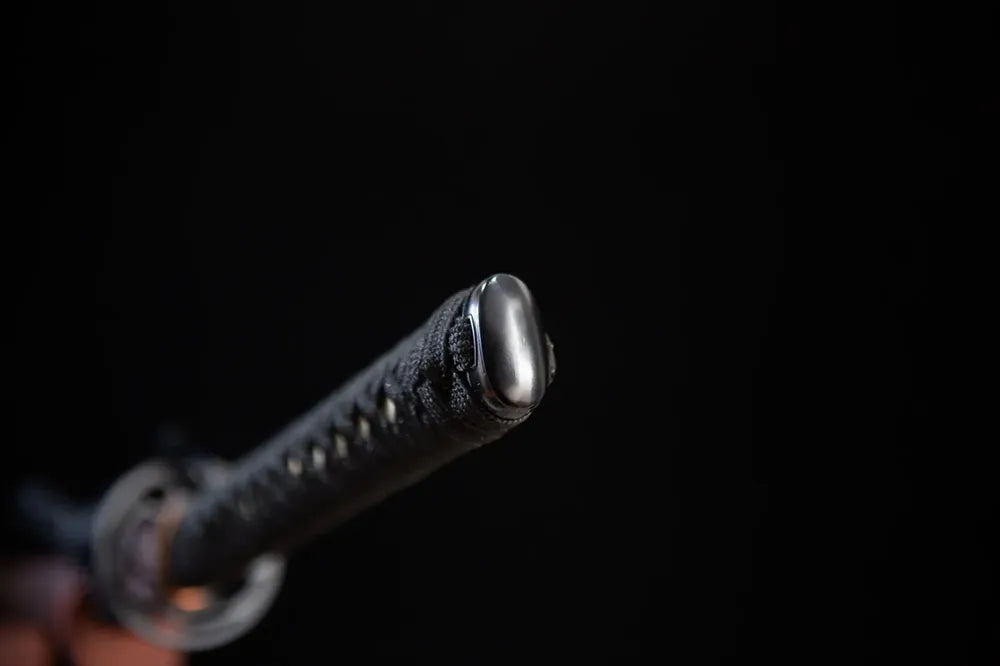
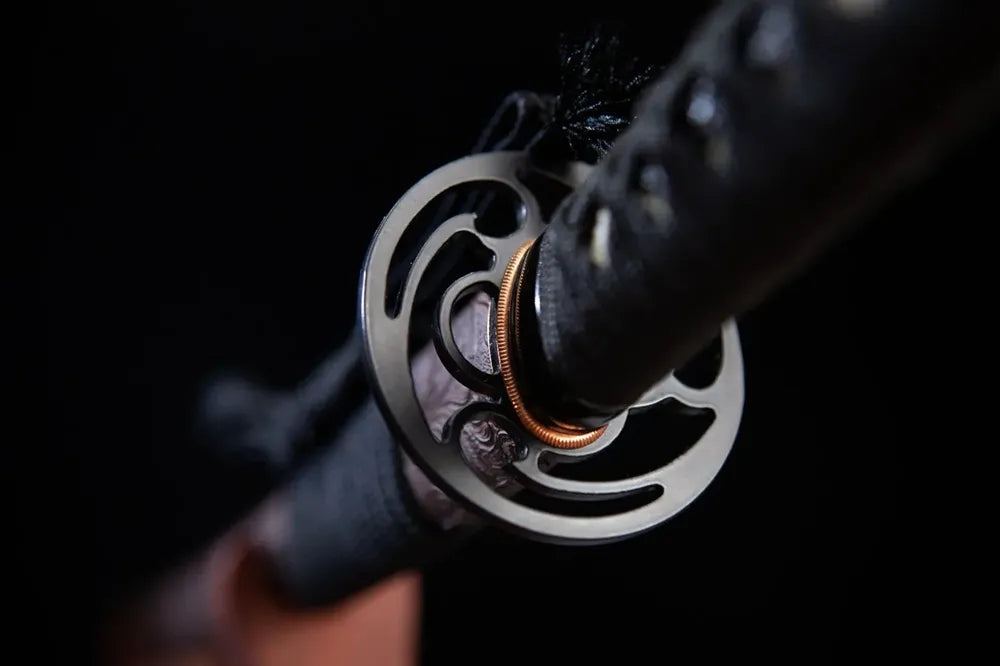
Full mounting accessories include hollow carved iron tsuba, solid copper seppa washers, gold carved copper habaki, polished alloy fuchi & kashira, tiny alloy menuki ornaments. Oval imogata tsuka uses genuine natural ray skin as inner lining, wrapped with thick black moro‑hineri cotton ito. Solid hardwood scabbard fully covered with embossed vintage PU leather, matched thick braided black cotton sageo cord. Equipped with two natural bamboo mekugi pegs to form fully removable full tang, convenient for regular blade anti‑rust maintenance. A lightweight fabric katana storage bag is provided as free accessory; custom blade text & pattern engraving upgrade service is available for extra charge.
Core Selling Advantages
- Exclusive vintage embossed PU leather wrapped scabbard design, completely separated from all plain/painted solid wood samurai swords
- Collectible T10 clay tempered blade with soft continuous notare wave hamon temper grain
- Hollow openwork carved iron hand guard with minimalist retro industrial texture
- Genuine dotted natural ray skin grip with uniform black diamond cotton wrap
- Dual bamboo peg fully detachable full tang, simple daily blade maintenance operation
- Balanced 103.5cm full length, compatible with standard large wooden sword display rack
Complete Original Product Specifications (All dimensions & materials fully retained without omission)
| Parameter Item | Parameter Value |
|---|---|
| Zencho Entire Total Length | 103.5cm / 40.7inch |
| Hacho Effective Blade Length | 72cm / 28.3inch |
| Tsuka Handle Length | 26.7cm / 10.5inch |
| Sori Blade Curvature | 1.7cm / 0.66inch |
| Sakikasane Tip Thickness | 0.6cm / 0.23inch |
| Motokasane Root Thickness | 0.7cm / 0.27inch |
| Sahihaba Tip Width | 2.3cm / 0.9inch |
| Motohaba Root Width | 3.15cm / 1.24inch |
| Kissaki Nagasa Tip Length | 4.1cm |
| Boshi Tip Shape | Notarekomi |
| Mizuheshi Heat Treatment | Tsuchioki Traditional Clay Tempering |
| Hamon Temper Pattern | Notare Continuous Wave Hamon |
| Blade Raw Material | T10 High Carbon Mono Solid Steel |
| Hi Blood Groove | No Hi (No Groove) |
| Blade Forge Structure | Maru‑gitae Mono Solid Forge |
| Blade Polishing Craft | Taganeha Fine Mirror Polishing |
| Blade Profile | Shinogi‑zukuri |
| Yokote Reinforcement Line | Real Embossed Yokote |
| Tang Disassembly | Fully Removable Full Tang |
| Mekugiana Peg Holes | Two Bamboo Peg Holes |
| Mekugi Fix Pegs | Natural Solid Bamboo Pegs |
| Fuchi & Kashira Material | Polished Alloy Metal |
| Tsuka Wrap Craft | Moro‑hineri Thick Black Cotton Ito |
| Tsuka Inner Lining | Genuine Natural Ray Samekawa Skin |
| Side Menuki Ornaments | Small Alloy Metal Ornaments |
| Blade Seppa Washers | Solid Raw Copper |
| Tsuba Hand Guard | Hollow Carved Iron Alloy |
| Habaki Blade Collar | Solid Raw Copper With Gold Carving |
| Saya Scabbard Base | Solid Wood Wrapped Vintage Embossed PU Leather |
| Sageo Binding Cord | Thick Coarse Woven Black Cotton Rope |
| Shitodome Fitting | Alloy Metal |
| Free Gift Accessory | Katana Fabric Storage Carry Bag |
| Total Full Set Weight | 1387g / 3.05pounds |
| Desheath Blade+Handle Weight | 1110g / 2.44pounds |
| Blade Sharp Option | Fully Sharpened / Unsharpened Optional |
| Custom Blade Engraving | Extra Charge Exclusive Text & Pattern Custom Upgrade Available |
| Handmade Reminder | All handmade swords have tiny dimension & embossing texture deviation for reference only |
Blade & Handle Detail Gallery
Blade Close‑ups (Upper / Mid / Tip Section)
Handle Full & Segment Close‑ups (Top / Mid / Bottom)
Fuchi & Kashira Close‑up
Tsuba Front & Reverse Side
Scabbard Mid & Bottom Section Detail
Sageo Cord Close‑up
Katana Parts Terminology Guide
KASHIRA: Polished alloy metal pommel cap
MENUKI: Small alloy metal side ornaments
TSUKAMAKI: Thick black moro cotton grip wrap
SAMEKAWA: Genuine natural ray skin inner lining
FUCHI: Polished alloy grip ring fitting
TSUBA: Hollow carved iron alloy hand guard
HABAKI: Solid raw copper with gold floral carving
KOIGUCHI: Embossed PU leather sheath mouth
SAGEO: Thick coarse woven black cotton binding cord
KURIKATA: Alloy metal cord ring fitting
SAYA: Solid wood vintage embossed PU wrapped scabbard
KOJIRI: Embossed PU leather sheath bottom end
This blade schematic shows thickness & curvature parameters. If you need custom blade engraving, visit Custom Blade Customization
Frequently Asked Questions
Q: What makes Follow Suit Katana different from plain shirasaya swords?
A: It adopts full vintage embossed PU leather wrapped scabbard + hollow openwork iron tsuba retro design, no natural plain wood exterior, fully differentiated from minimalist uncarved shirasaya series.
Q: What is Notare Hamon feature?
A: Soft long continuous wavy temper grain formed by traditional clay temper, smoother visual texture than choji clove hamon for retro warrior collection aesthetic.
Q: How to maintain PU embossed scabbard?
A: Avoid sharp metal scratches and long‑term damp storage to prevent leather layer peeling off.
Q: Can this T10 blade cut bamboo continuously?
A: Delicate notare temper grain scratches easily, only slow static drawing display is permitted.
Q: Similar minimalist plain wood samurai sword reference?
A: View stone grain unpainted shirasaya katana: Stone Grain Shirasaya Katana.
Browse all handmade full‑size samurai swords in Handmade Katana Collection.
All orders support free US shipping and 30‑day hassle‑free return policy.
Katana parts names and terminology
Katana parts names and terminology
In the world of Katana, Katana parts names and terminology are very important as most of the Katana parts names use Japanese vocabulary and special nouns. This page can help you understand Katana faster.


A.SAKIKASANE Thickness of blade tip.
B.MOTOKASANE Thickness of the bottom of the blade.
C.KISSAKI NAGASA Length of tip.
D.SAKIHABA Width of blade tip.
E.MUNE The surface of the katana back.
F.MOTOHABA Width of bottom of blade.
G.MUNEMACHI The notch at the top of the blade stem,where the back surface (mune) of the blade begins.
H.HAMACHI A notch at the top of the blade,where the blade begins.
I.FUKURA The radian of the blade in the tip area.
J.BOSHI Blade text in the tip area.
K.YOKOTE The boundary between blade tip and blade body.
L.KOSHINOGI Shinogi-ji above the blade tip area (yokote).
M. MITSUKADO Intersection point of yokote and blade edge of blade body and blade edge of tool tip.
N.SHINOGI MITSUKADO Shinogi,Koshinogi und Yokote linien.
O.SHINOGI-JI Blade surface between shinogi and mune.
P.SHINOGI A chear straight line extending along the longitudinal direction of the blade is the thickest part of the blade (only appearing on katana of shinogi-zakuri) .
Q.JI The surface between shinogi and nioiguchi.
R.HA The edge area of the cutter body is hardened by quenching.
S.HASAKI Asharpened edge.
T.NIOIGUCHI A clear line separating the hardened blade from the softer part of the blade body.
U.ASHI Nioiguchi's extension line in the direction of the blade.
V.HACHO A straight line that determines the length of the blade.
W.SORI Degree of blade bending.
X.ZENCHO The total length of the katana,including the stem (the blade length is only the blade body).
Y.NAKAGO NACASA Length of katana stem.
Z.MAKUGIANA A hole in the shank for receiving Mekugi (bamboo nail for fixing the blade in the handle).
AA,MEI Inscription on the hilt (usually the name of the katana maker,but there are often other information).
Now that you have learned the terminology and proper nouns of katana through this article, you also design customize your ideal katana.
Choose options