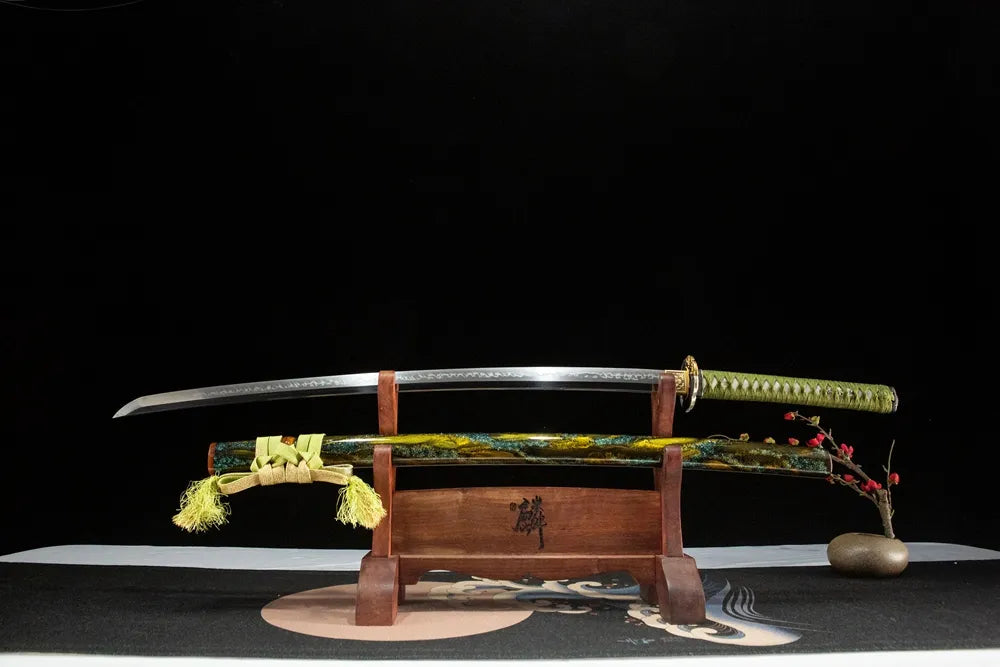
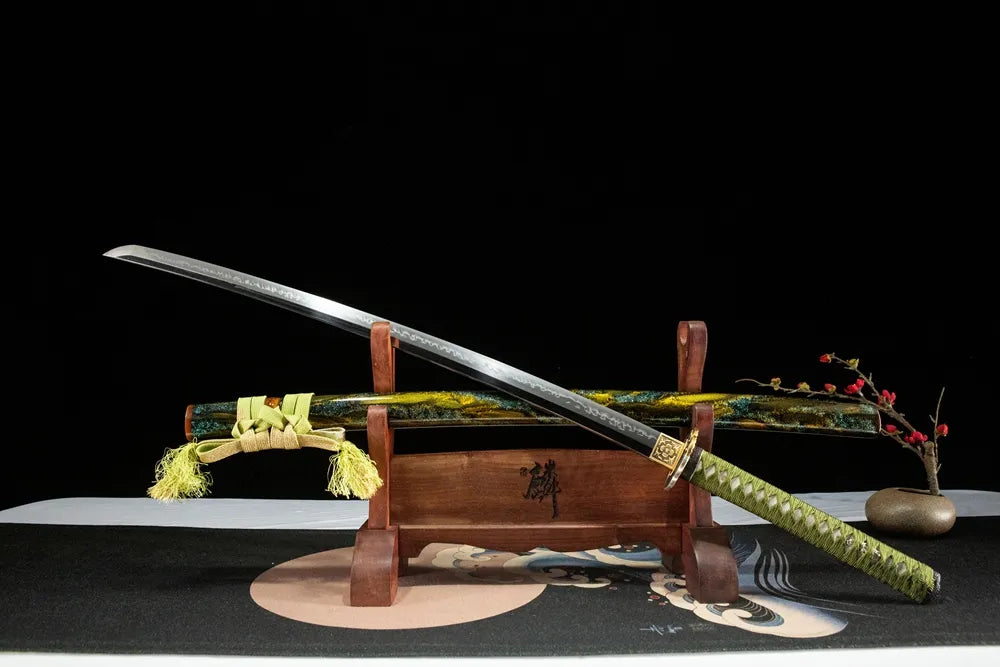
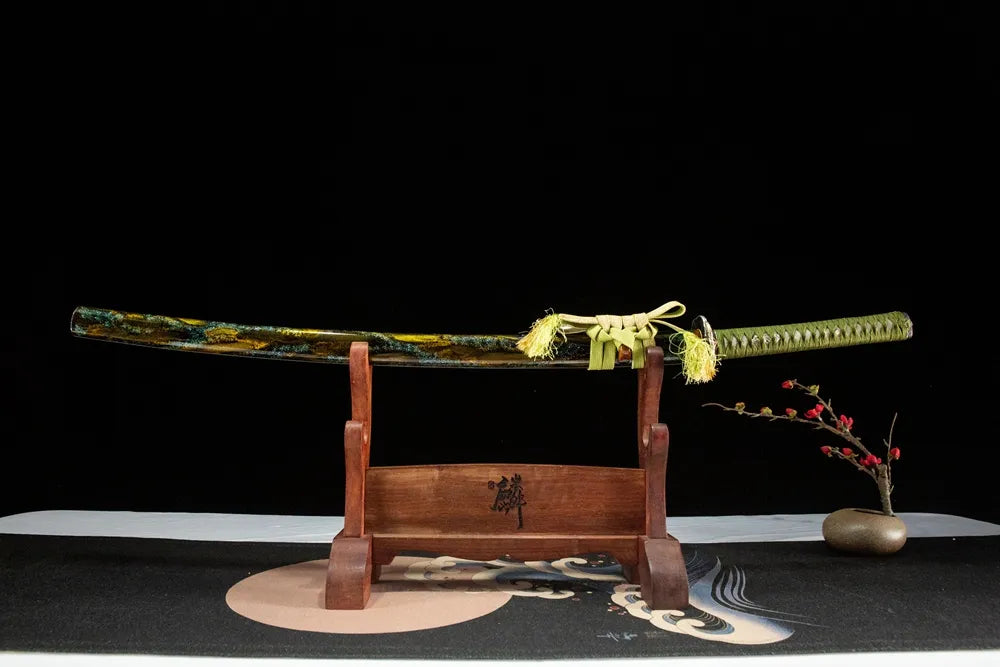
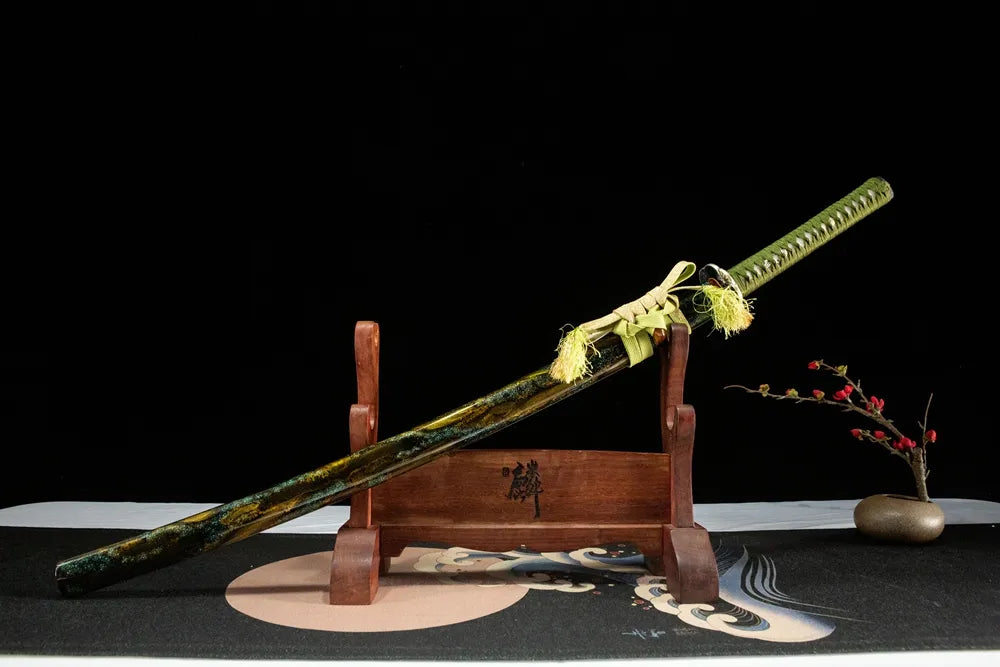
Floating Clouds Katana | Hand Engraved Cloud Pattern T10 Steel Samurai Sword

Handcrafted by experienced swordsmen

Free American Express

Perfect after-sales service

SSL End-to-end encryption secure payment
【Zencho】entire length:103CM
【Hacho】blade length:71CM
【Handle length】:27CM
【Sori】:1.7CM
【Sakikasane】:0.45CM
【Motokasane】:0.7CM
【Sahihaba】:2.3CM
【Motohaba】:3.2CM
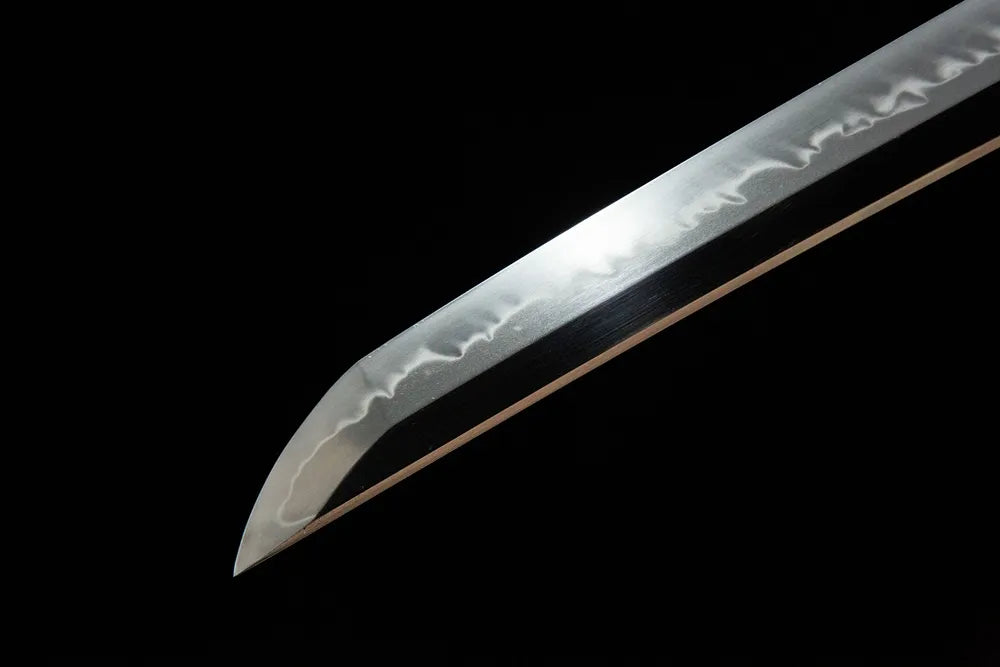
【Kissaki nagasa 】:3.7CM
【Mizuheshi】:Tsuchioki
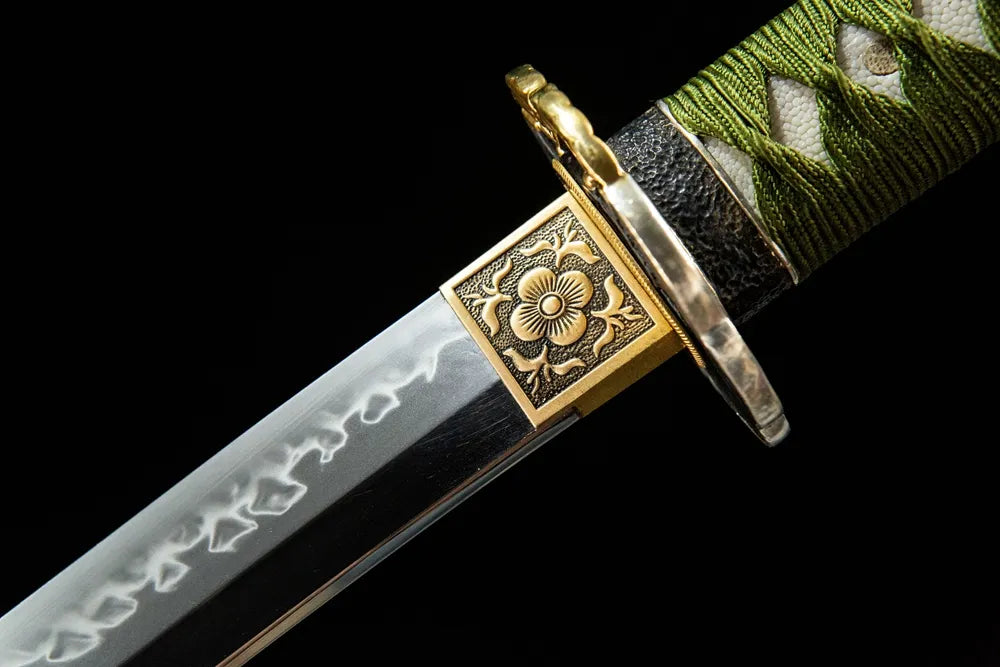
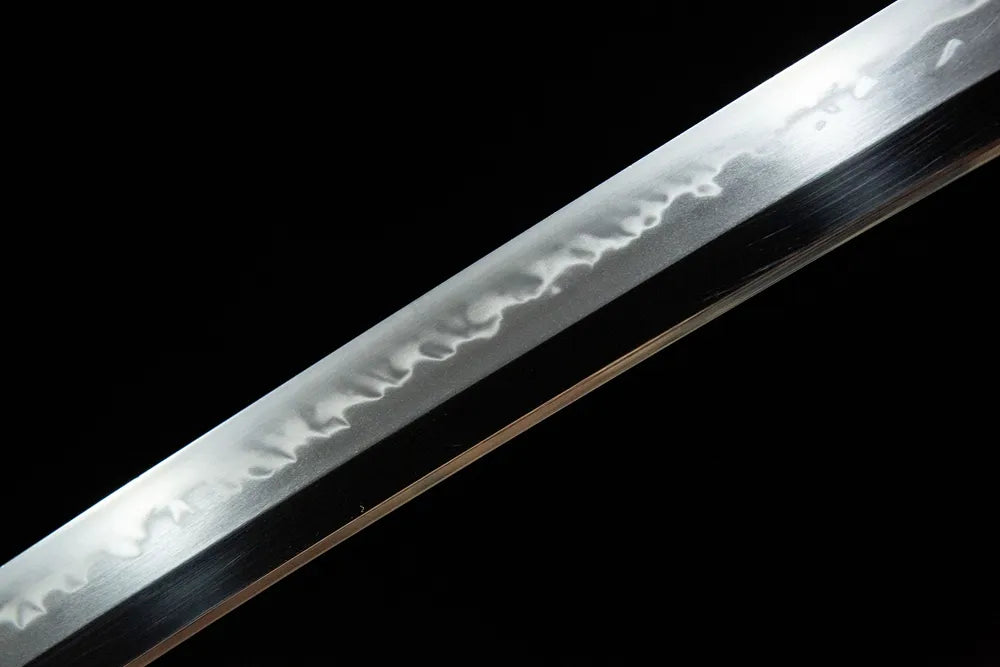
【Hamon】:JUKA-CHOJI
【Blade material】:T10
【Hi】:No HI
【Structure】:Maru
【Blade treatment】:Japanese style fine grinding
【Blade type】:Shinogizukurui
【Yokote】:Real YOKOTE
【Disassembled】:Yes
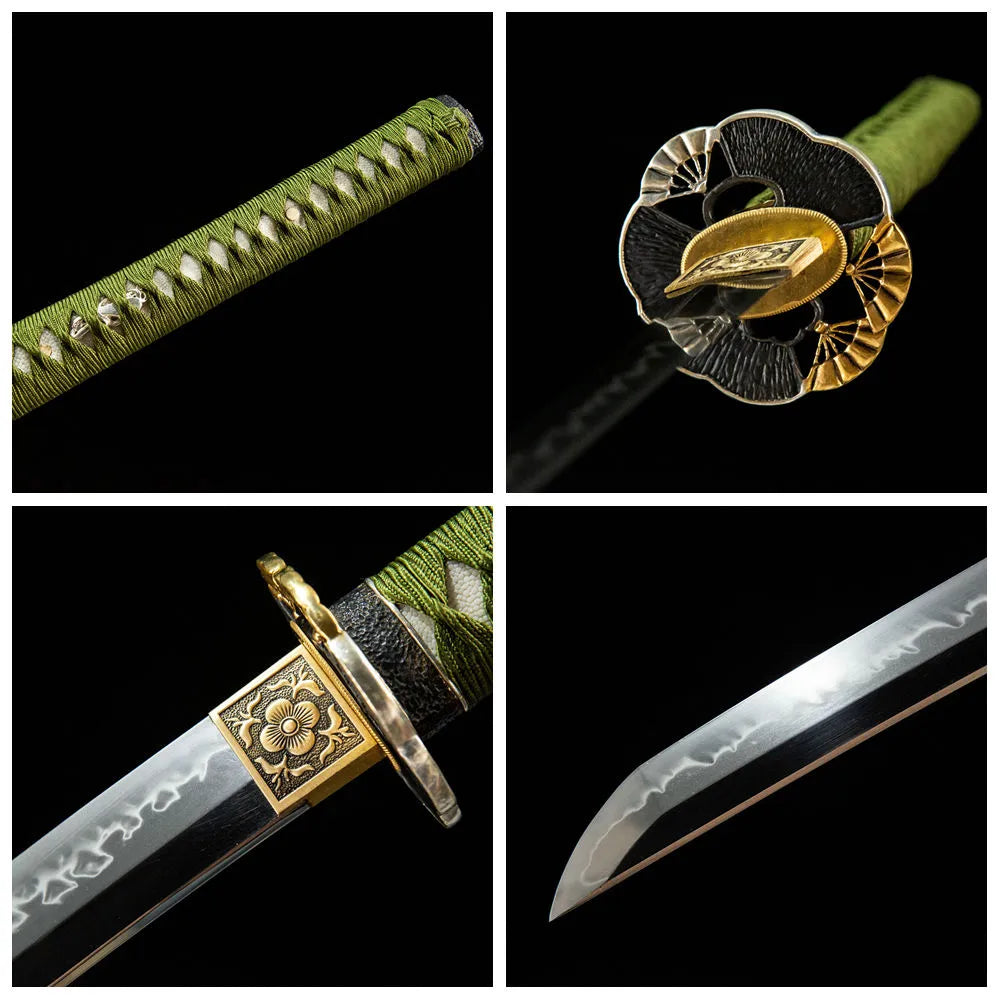
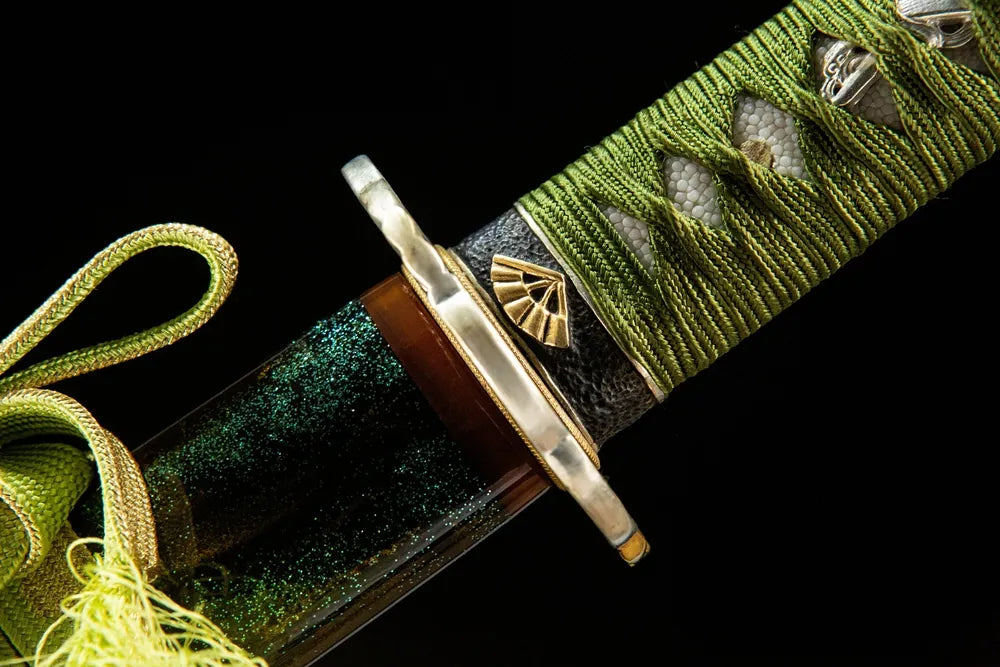
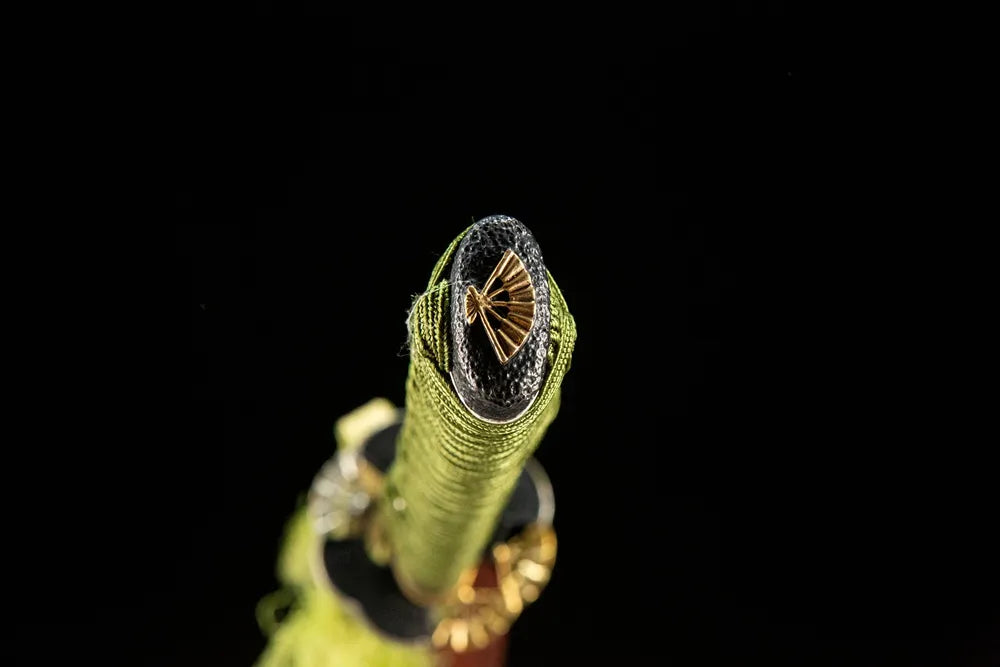
【Fuchi kashira】:Copper gilding silver
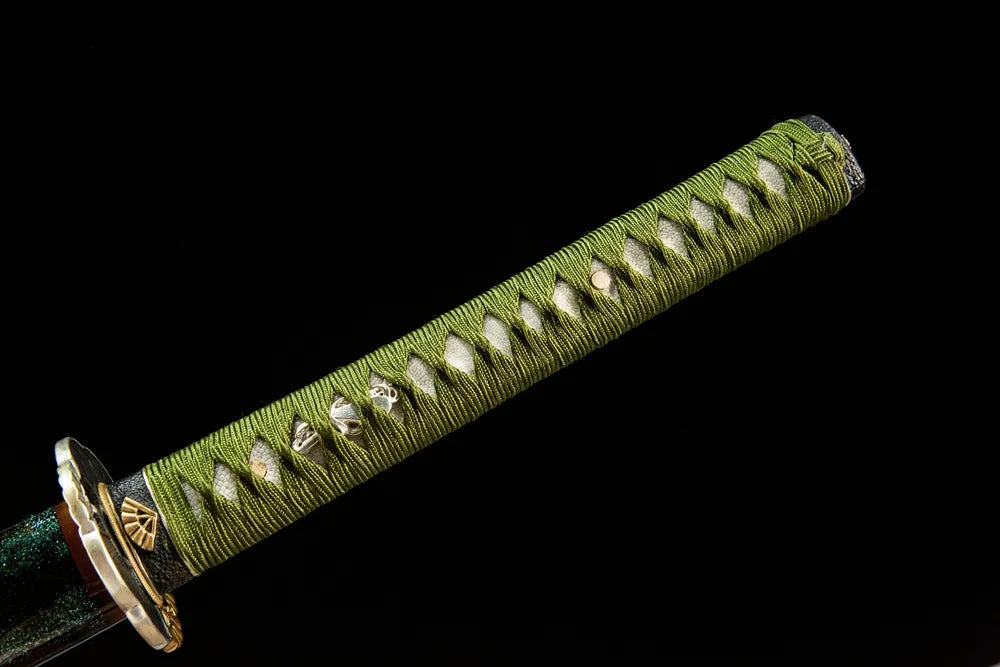
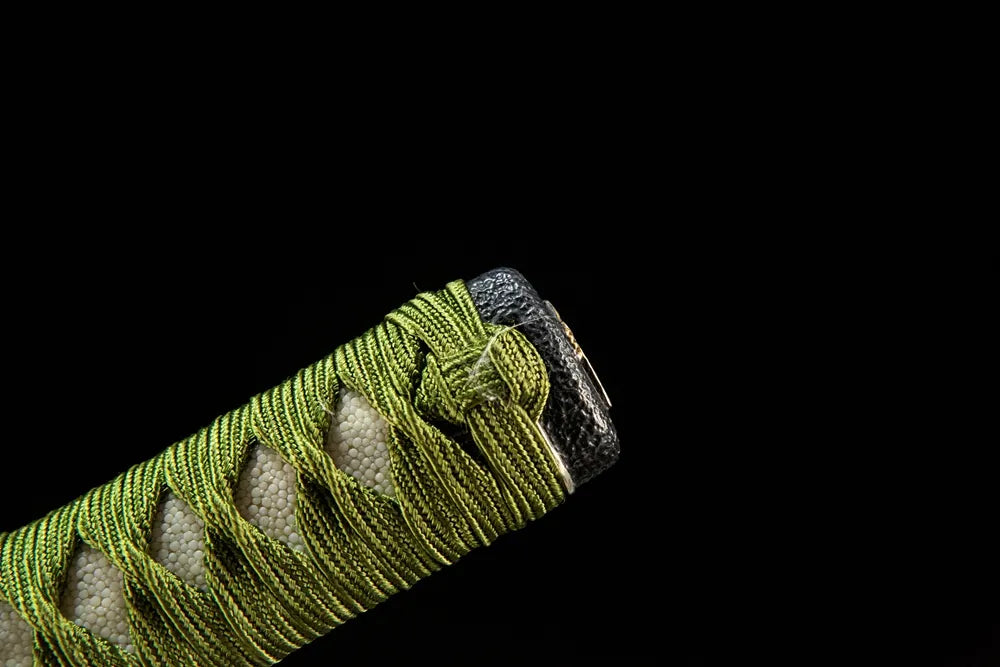
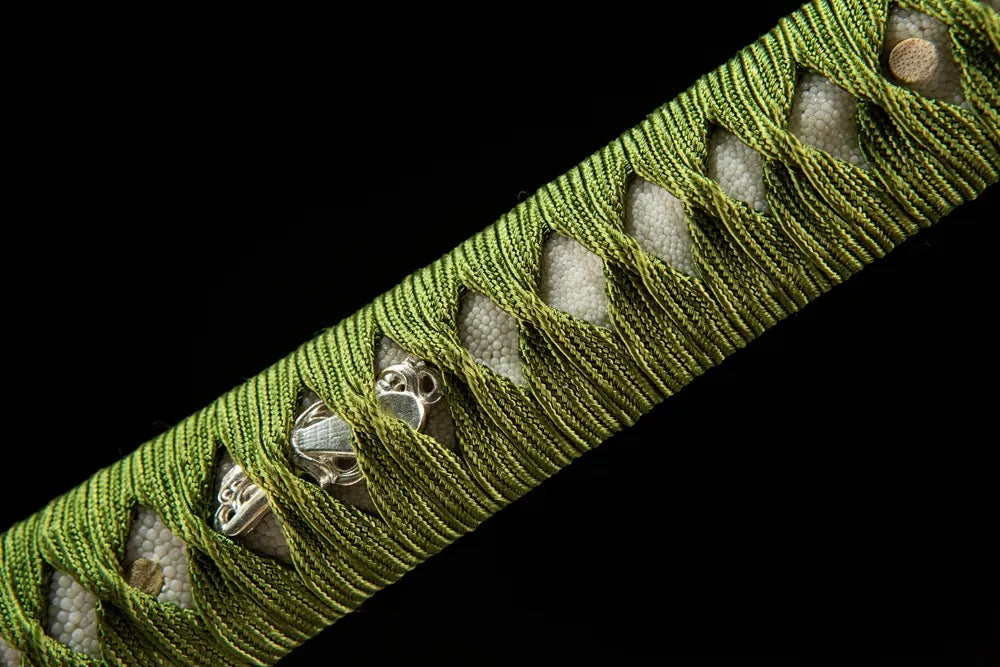
【Handle wraps】:Moro-hineri-maki
【Samekawa】:Ray skin
【Mekugiana】:Two
【Mekugi】:Bamboo
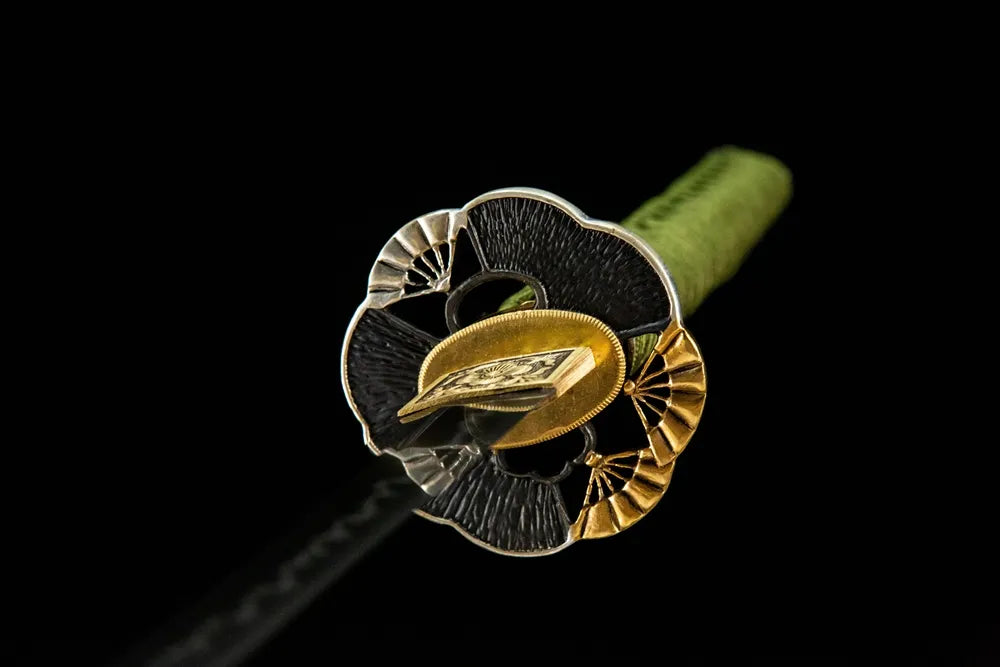
【Menuki】:Copper gilding silver
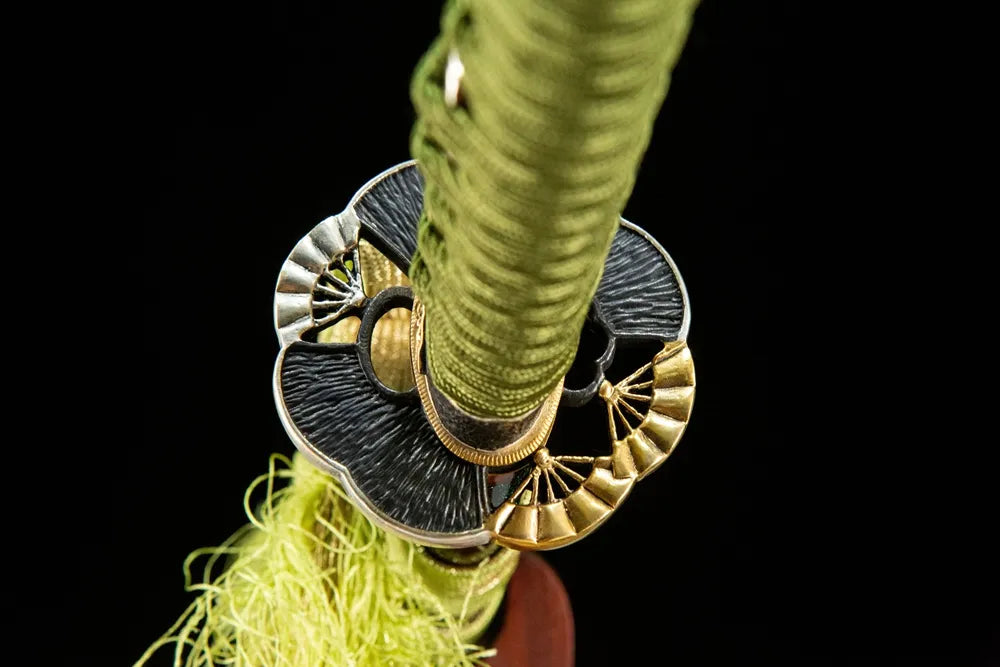
【Seppa】:Copper
【Tsuba】:Copper gilding silver
【Habaki】:Copper
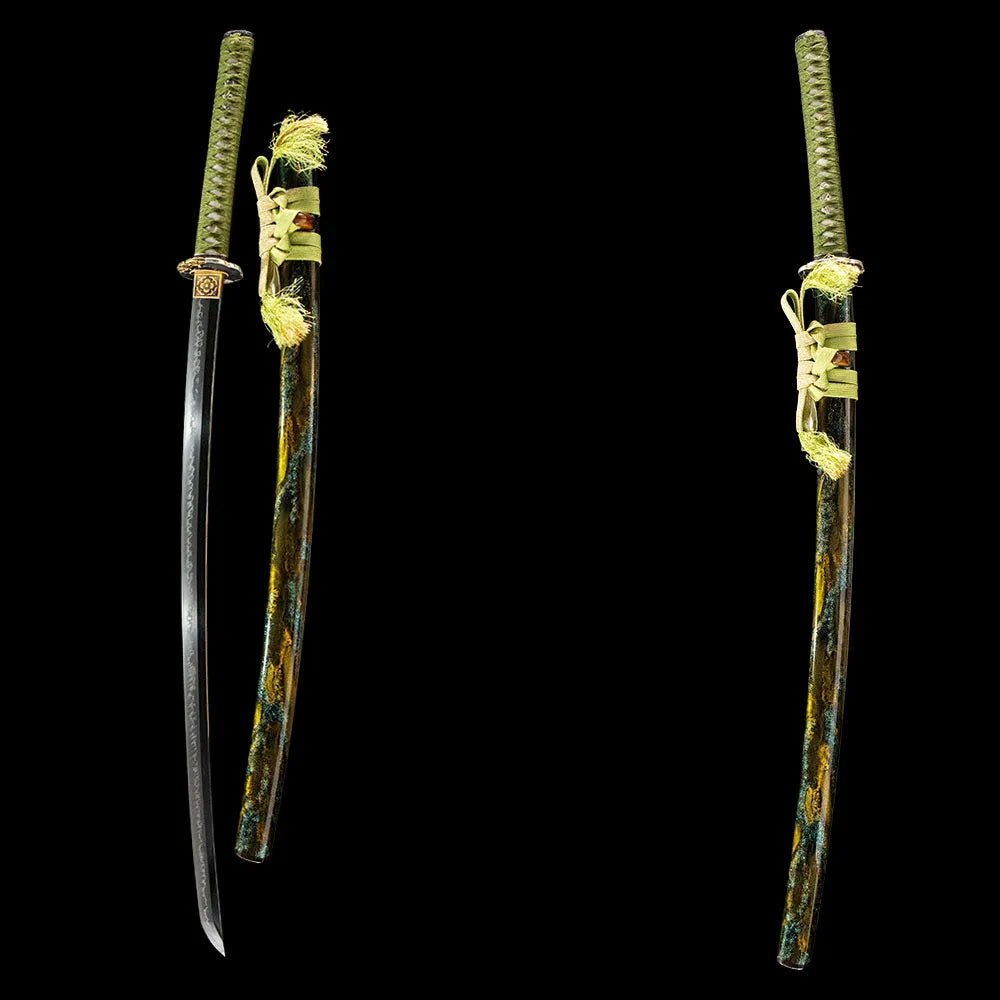
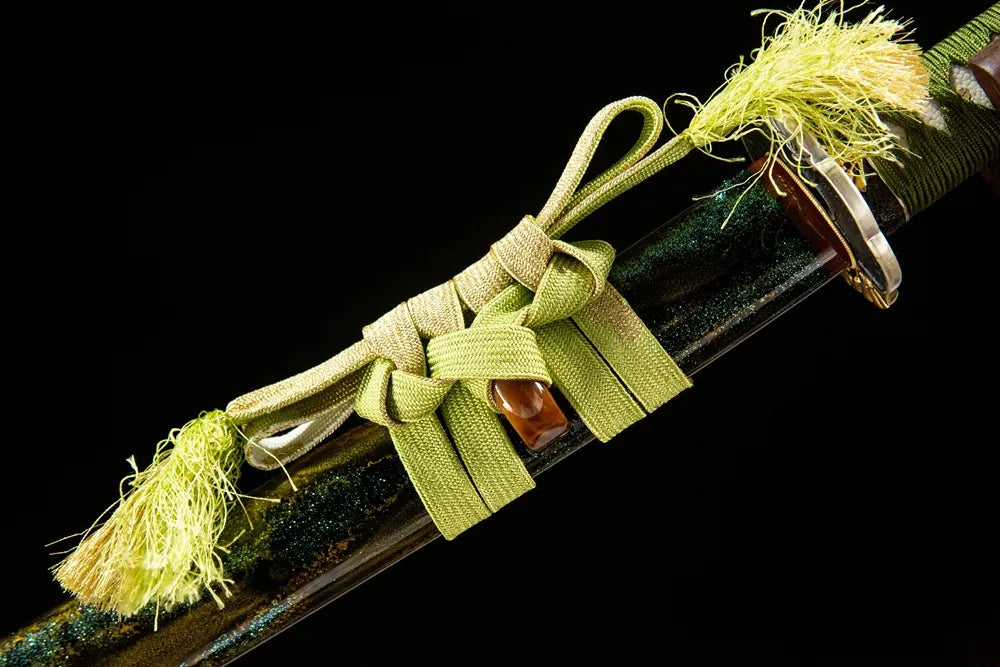
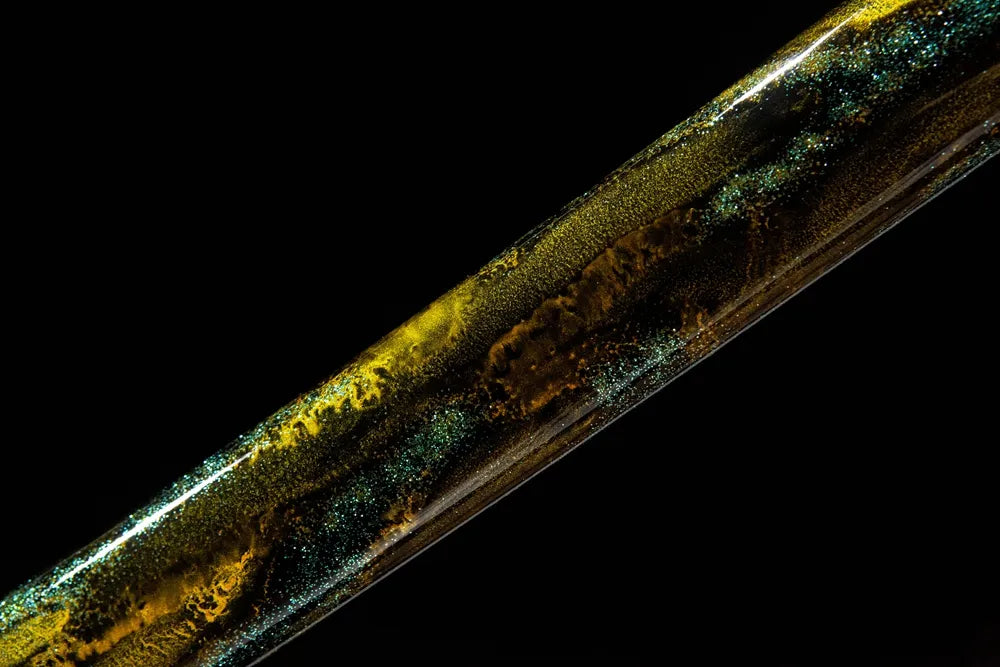
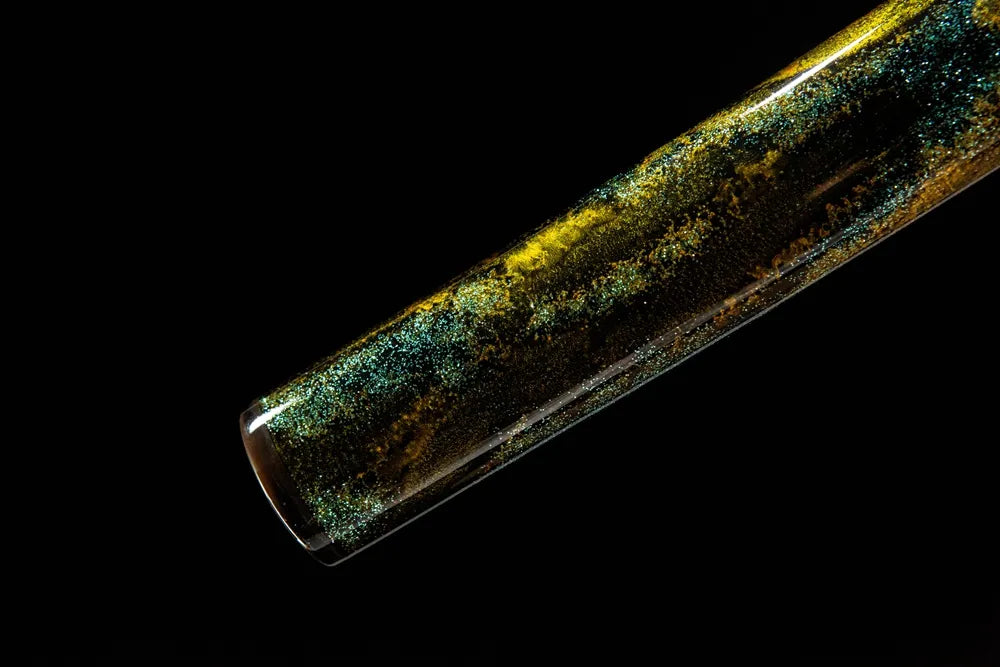
【Saya】: Chinese lacquer
【Koiguchi】:Ox horn
【Sageo】:Japanese style silk rope
【Kurikata】:Ox horn
【Kojiri】:Ox horn
【Gift】:Katana Bag
【Total weight】:1.5KG
【Desheathing weight】:1.2KG
【Other】: Handmade products have errors, specifications are for reference only!
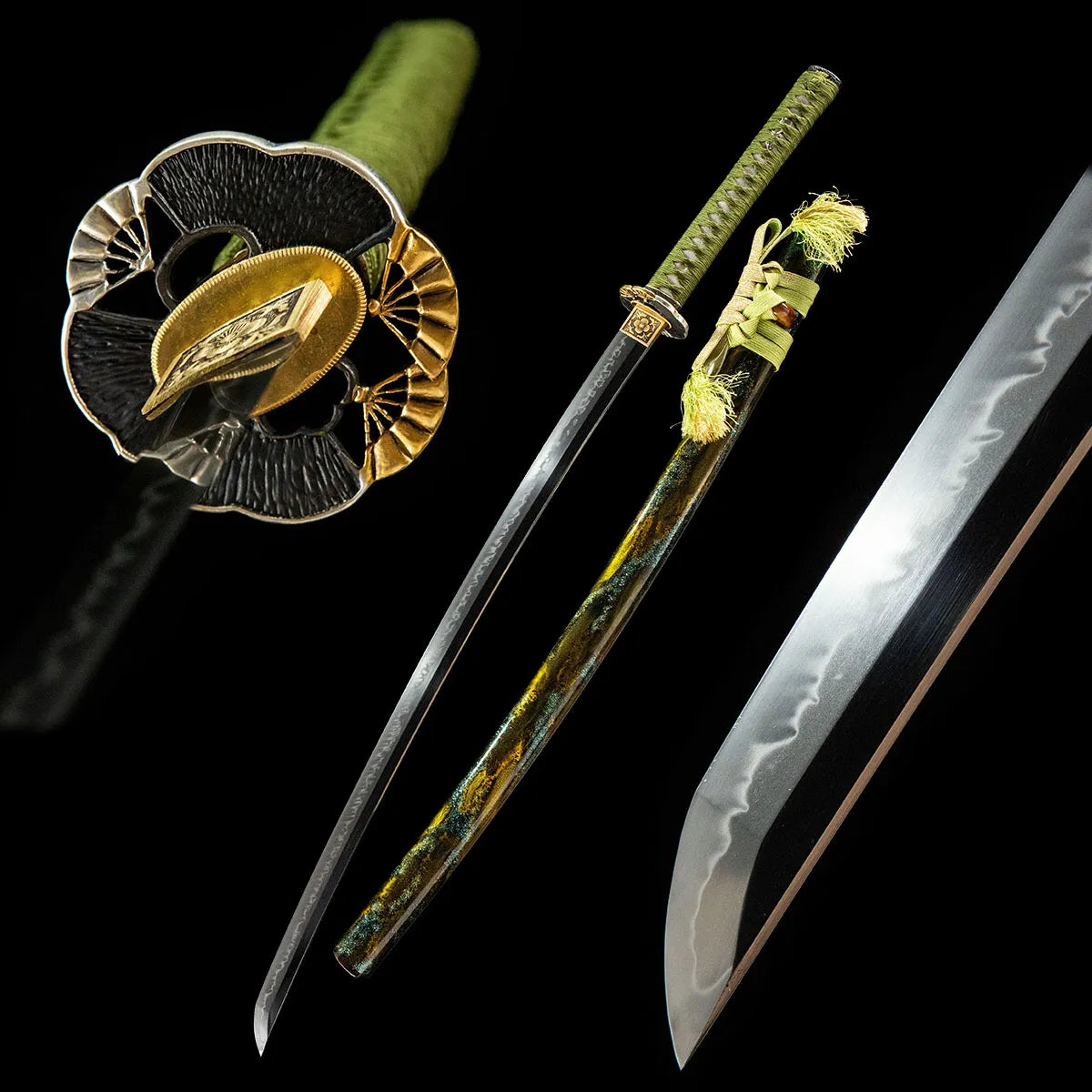
Introducing the Floating Clouds Katana – a masterpiece of sword artistry that combines traditional Japanese craftsmanship with stunning artistic design. Each sword is handcrafted by master artisans in Longquan, China, featuring intricate hand-engraved cloud patterns that flow along the entire length of the blade.
Forged from premium T10 high carbon steel and clay tempered using ancient techniques, this katana produces a beautiful natural hamon (temper line) that is unique to every sword. The full tang construction ensures maximum strength and durability, while the perfectly balanced weight provides an exceptional handling experience.
Key Features
• ✅ **Hand Engraved Cloud Patterns**: Intricate cloud motifs carved by master craftsmen along the blade
• ✅ **Premium T10 Carbon Steel**: Clay tempered to HRC 58-60 for optimal balance of hardness and toughness
• ✅ **Natural Hamon Temper Line**: Unique and beautiful temper line created by traditional clay quenching
• ✅ **Full Tang Construction**: Blade extends the entire length of the handle for maximum strength
• ✅ **Premium Ray Skin Handle**: Authentic samegawa ray skin handle with traditional silk wrap
• ✅ **Solid Wood Lacquered Saya**: High-quality hardwood scabbard with glossy black lacquer finish.
This Floating Clouds Katana is more than just a sword – it is a work of art. Perfect for discerning collectors, as a centerpiece in any sword collection, or as an unforgettable premium gift for sword enthusiasts.
All Xingyu Sword products are backed free shipping to the United States.
### Frequently Asked Questions
Q: Are the cloud patterns on the blade truly hand engraved?
A: Yes! Every single cloud motif on the Floating Clouds Katana is individually carved by hand by our master artisans with decades of experience. No two blades are identical – each sword is a one-of-a-kind work of art with its own unique cloud flow and character.
Q: What is the natural hamon line and how is it created?
A: The hamon is the beautiful wavy temper line along the blade edge, created through the traditional clay tempering process. We coat the blade in a special clay mixture before quenching, which causes different parts of the steel to cool at different rates, resulting in this distinctive and highly sought-after pattern.
Q: What steel is used for the blade and why?
A: We use premium T10 high carbon steel, widely recognized as the best material for traditional Japanese swords. It offers an exceptional balance of edge retention and toughness, and when clay tempered, produces the most vivid and authentic natural hamon patterns.
Q: Is this a full tang katana?
A: Absolutely! This katana features a full tang construction, meaning the blade extends the entire length of the handle. It is secured with two bamboo mekugi pegs, providing maximum structural integrity and durability that will last for generations.
Q: What material is the handle made of?
A: The handle features authentic real ray skin (samegawa) wrapped in traditional black silk using the Moro-hineri-maki technique. This provides a superior non-slip grip, exceptional durability, and an authentic historical appearance.
Q: What is this katana primarily designed for?
A: The Floating Clouds Katana is specifically crafted as an art piece for discerning collectors. It is perfect for display in your home or office, as a centerpiece in your sword collection, or as a prestigious gift for sword enthusiasts.
Q: Can this katana be used for cutting practice?
A: While it is fully functional and comes sharpened, we strongly recommend using it exclusively for display and collection purposes. The delicate hand-engraved cloud patterns can be damaged during heavy cutting, which would diminish its artistic and collectible value.
Q: What is the difference between this katana and cheaper mass-produced swords?
A: Unlike mass-produced swords that use machine stamping and inferior materials, every aspect of the Floating Clouds Katana is crafted by hand. From the forging and tempering to the engraving and assembly, each step is performed by skilled artisans to the highest standards of traditional sword-making.
Q: Can I customize this katana?
A: Yes! We offer a range of customization options, including custom engraving on the blade or handle, different handle wrap colors, and upgrades to higher-grade fittings. Contact us directly to discuss your specific requirements.
Q: What is the overall weight and balance of this katana?
A: The total weight is approximately 1.35 kg (2.98 pounds), with a desheathing weight of 1.12 kg (2.47 pounds). It is perfectly balanced according to traditional Japanese proportions, making it comfortable to handle and ideal for display.
Katana parts names and terminology
Katana parts names and terminology
In the world of Katana, Katana parts names and terminology are very important as most of the Katana parts names use Japanese vocabulary and special nouns. This page can help you understand Katana faster.


A.SAKIKASANE Thickness of blade tip.
B.MOTOKASANE Thickness of the bottom of the blade.
C.KISSAKI NAGASA Length of tip.
D.SAKIHABA Width of blade tip.
E.MUNE The surface of the katana back.
F.MOTOHABA Width of bottom of blade.
G.MUNEMACHI The notch at the top of the blade stem,where the back surface (mune) of the blade begins.
H.HAMACHI A notch at the top of the blade,where the blade begins.
I.FUKURA The radian of the blade in the tip area.
J.BOSHI Blade text in the tip area.
K.YOKOTE The boundary between blade tip and blade body.
L.KOSHINOGI Shinogi-ji above the blade tip area (yokote).
M. MITSUKADO Intersection point of yokote and blade edge of blade body and blade edge of tool tip.
N.SHINOGI MITSUKADO Shinogi,Koshinogi und Yokote linien.
O.SHINOGI-JI Blade surface between shinogi and mune.
P.SHINOGI A chear straight line extending along the longitudinal direction of the blade is the thickest part of the blade (only appearing on katana of shinogi-zakuri) .
Q.JI The surface between shinogi and nioiguchi.
R.HA The edge area of the cutter body is hardened by quenching.
S.HASAKI Asharpened edge.
T.NIOIGUCHI A clear line separating the hardened blade from the softer part of the blade body.
U.ASHI Nioiguchi's extension line in the direction of the blade.
V.HACHO A straight line that determines the length of the blade.
W.SORI Degree of blade bending.
X.ZENCHO The total length of the katana,including the stem (the blade length is only the blade body).
Y.NAKAGO NACASA Length of katana stem.
Z.MAKUGIANA A hole in the shank for receiving Mekugi (bamboo nail for fixing the blade in the handle).
AA,MEI Inscription on the hilt (usually the name of the katana maker,but there are often other information).
Now that you have learned the terminology and proper nouns of katana through this article, you also design customize your ideal katana.
Choose options