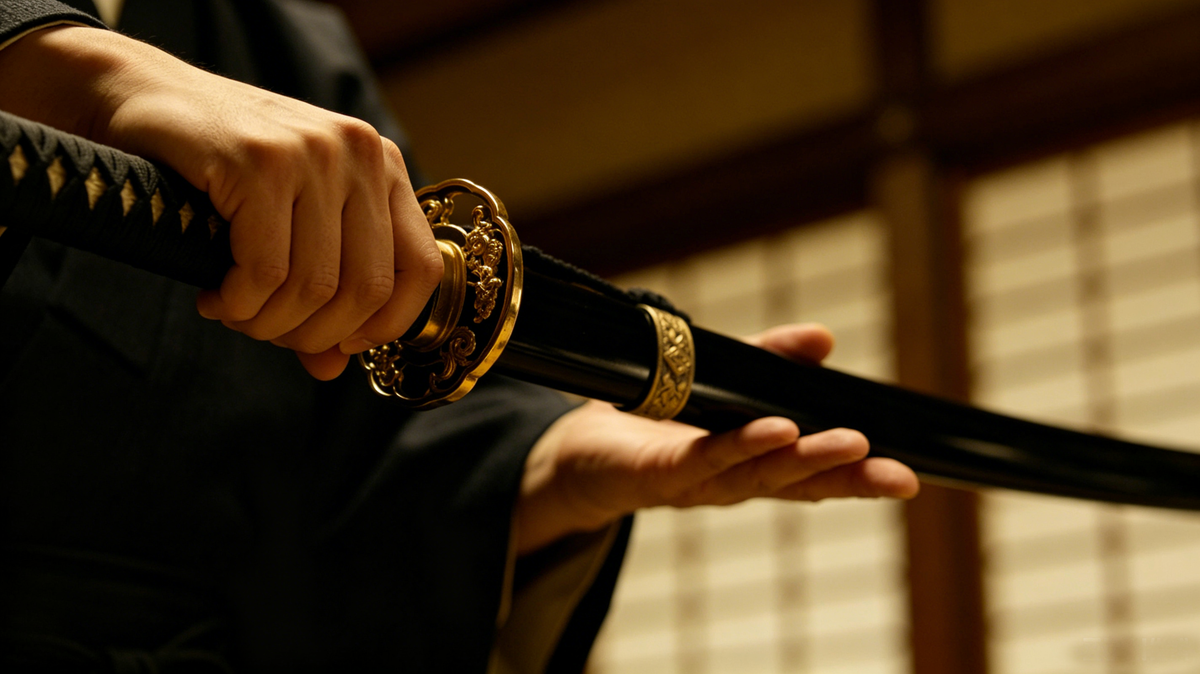
Samurai sword-Soul of a Samurai

Across more than two thousand years of Japanese civilisation, no artifact carries heavier cultural weight than the samurai sword, widely revered as the literal soul of the samurai class. Far beyond a mere cold weapon forged for battlefield slaughter, the nihonto we collectively call samurai sword acts as a tangible bridge spanning imported continental ironcraft, feudal class stratification, the austere philosophy of Bushido, sacred swordsmith craftsmanship, and a global cross-cultural phenomenon that still captivates collectors, martial artists and cultural researchers to this day. To grasp the true meaning of this iconic blade is to unpack an entire nation’s evolving identity: from straight imported bronze blades of the Yayoi Period to the refined curved katana perfected in the late Muromachi era, from a tool of war exclusive to battlefield soldiers to a sacred spiritual totem bound to every layer of samurai daily life. Countless global enthusiasts remain trapped in superficial misunderstandings: was the samurai the sole class legally permitted to wield edged blades in feudal Japan? Does “samurai sword” refer only to the long katana we see in films and animation? What hidden philosophical and ritual meaning lies within the daisho two-sword set worn by every dignified warrior? This sweeping comprehensive guide traces the complete millennial evolution of Japanese swords, dissects the core three blade classifications and their respective tactical and symbolic missions, unveils the sacred forging craft hidden beneath every polished surface, interprets the intricate ritual etiquette governing sword wearing, storage and inheritance, and introduces our handcrafted historically accurate replica series, offering an all-encompassing cultural deep dive for cultural lovers and serious collectors alike.
The Millennial Evolution of Japanese Swords: Five Defining Eras Shaped By War, Craft And Social Revolution
The origin of Japanese iron blades can be traced back to the Yayoi Period, when straight single-edged swords were introduced from the Korean Peninsula and mainland China, buried within noble burial mounds as status ornaments rather than practical combat tools. Over centuries of localised innovation, regional warfare reshaped blade geometry, forging materials and production techniques, dividing the full history of authentic nihonto into five irreplaceable historical eras, each bearing distinct artistic, structural and functional hallmarks that mirror the shifting tides of Japanese feudal society.
1. Jokoto – Ancient Straight Blades (300 AD – 900 AD)
Jokoto represents the earliest native Japanese swordmaking tradition, characterised by entirely straight, uncurved blades with flat hira-zukuri profiles lacking distinct ridgelines. These primitive ironworks relied on imported smelting methods, with limited folding and tempering technology. In this era, swords were reserved exclusively for imperial nobles and clan chieftains; ordinary foot soldiers rarely carried iron weapons, marking blades as pure symbols of royal authority rather than mass combat equipment.
2. Koto – The Golden Age Of Traditional Swordcraft (900 AD – 1596 AD)
The late Heian Period marked a revolutionary turning point: mounted cavalry warfare demanded blades with gentle curvature for efficient downward slicing, birthing the prototype of the modern katana. The Koto era stands as the undisputed golden age of nihonto craft, home to legendary master smith schools including Bizen, Mino and Yamashiro. Smiths perfected multi-layer tamahagane folded steel and differential clay tempering, creating vivid, unique hamon temper lines that remain the benchmark of blade artistry. Swords forged during this age balanced unrivalled cutting sharpness with incredible structural resilience, prized by collectors worldwide for their pure, uncompromised traditional technique.
3. Shinto – New Swords Of The Early Edo Peace (1596 AD – 1781 AD)
Following the devastating flood that destroyed the Bizen school, the centre of sword craftsmanship shifted to Mino craftsmen, birthing the Shinto period. Relative nationwide peace under the Tokugawa shogunate shifted sword priorities from battlefield durability to intricate decorative fittings, elaborate tsuba engravings and polished blade aesthetics. Shinto blades carry softer curvature, thicker spine profiles and ornate ornamental details, reflecting a society where swords transitioned from frontline war tools to daily class insignia for stationary samurai retainers.
4. Shinshinto – The Koto Revival Movement (1781 AD – 1876 AD)
By the late Edo Period, a generation of master smiths grew disillusioned with the overly decorative, functionally diluted Shinto craft, launching a widespread revival movement dedicated to recapturing the rugged, combat-ready purity of ancient Koto blades. Shinshinto smiths revived lost multi-fold forging and tempering recipes, replicating classic hamon patterns and robust blade geometry of the Kamakura and Muromachi golden age. Blades from this era blend the artistic refinement of Edo aesthetics with the lethal practicality of medieval war swords, standing as the final peak of feudal Japanese sword craft before legal prohibition.
5. Gendaito – Modern Restored Sword Craft (1876 AD – Present)
The landmark Haitōrei Edict of 1876 abolished the centuries-old samurai privilege of public sword carrying, nearly erasing the entire traditional smith trade overnight; countless master craftsmen abandoned their furnaces, and irreplaceable forging techniques teetered on extinction. Gendaito refers to all swords forged after this pivotal edict, created by certified surviving master smiths dedicated to preserving endangered nihonto craft. While modern steel processing tools assist production, authentic Gendaito replicas strictly retain traditional tamahagane folding and clay tempering, reviving samurai sword culture as a global art, martial and collectible heritage rather than a feudal class symbol.
To study authoritative archival records of traditional Japanese sword forging standards, historical classification and certified craft regulations, you may reference the official database maintained by Japan’s leading cultural preservation body: Nihonto Preservation Association official craft archives
The Blade As The Samurai’s Soul: Bushido Philosophy Encapsulated Within Steel
No other cultural artifact in human history binds a warrior’s moral code so inseparably to a handheld weapon as the samurai sword and Bushido, the unwritten spiritual doctrine that governed every choice of the samurai class. To a samurai, their katana was never merely equipment for duels or battlefield defence; it was a physical vessel housing their tamashii, their innermost soul. The core tenets of Bushido – unwavering loyalty to one’s lord, absolute personal honour, unyielding self-discipline, compassionate rectitude and fearless acceptance of death – were visually and spiritually mirrored within every stage of a blade’s creation and every ritual of its daily handling.
Swordsmiths treated forging as a sacred, almost religious ritual, purifying their bodies and minds before lighting the forge furnace, viewing the repeated folding and hammering of impure raw iron as a metaphor for human spiritual refinement: just as countless layers of flawed ore are hammered and folded to create flawless razor steel, samurai spent their entire lives tempering their own character to strip away greed, cowardice and weakness. Zen Buddhist austerity permeates every design choice of the katana: its minimal, unadorned core structure rejects excess vanity, while the fragile yet razor-sharp cutting edge serves as a constant reminder of life’s transience, a central Zen concept known as mujo. Confucian ideals of hierarchy are embedded within the daisho two-sword set, marking the samurai’s fixed elevated social rank above common civilians, while Shinto reverence for natural craftsmanship honours the sacred mineral elements forged into every blade.
This symbiotic bond between warrior and blade permeated every life stage of a samurai. Upon a boy’s coming-of-age genpuku ceremony, he received his first wakizashi short sword as a symbolic induction into the samurai code. Samurai would sleep with their daisho laid beside their futon each night, speak of their blades with reverence and often bestow unique personal names upon them, treating each sword as a lifelong companion. When a samurai reached the end of his life, his trusted katana and wakizashi were placed beside his body for burial, a belief that the blade would accompany his spirit into the afterlife, a final testament to their unbreakable lifelong bond.
Three Core Types Of Samurai Blades: Katana, Wakizashi, Tanto – Tactical Function And Symbolic Dualism Of The Daisho Set

The iconic daisho – literally translating to “big and small” – the paired long and short sword set exclusive to samurai, embodies the dual nature of the warrior’s life: the long katana for open battlefield combat, and the wakizashi for intimate indoor confrontation and honour rituals. Complementing this pair is the tanto dagger, the smallest blade carrying the heaviest weight of samurai dignity. Each blade category adheres to strict fixed length thresholds, distinct structural designs and non-interchangeable cultural roles that cannot be substituted for one another.
1. Katana – The Primary Battle Blade, Symbol Of Martial Might
The globally recognised samurai katana serves as the primary long blade of the daisho set, defined by a minimum blade length exceeding 60 centimetres with a soft, uniform natural curvature optimised for rapid upward drawing and powerful horizontal slicing. Worn edge-up tucked into the left waist obi, the katana allowed samurai to complete a lethal draw-and-strike motion in a single fluid movement, a tactical advantage unmatched by straight European swords. Designed for open-field combat against armoured foot soldiers and mounted opponents, its balanced weight distribution delivers devastating cutting force while retaining precise control for controlled duels. Within Bushido symbolism, the katana represents public martial strength, the samurai’s duty to defend their clan and uphold justice across open lands.
2. Wakizashi – The Auxiliary Short Blade, Guardian Of Personal Honour
Measuring below 60 centimetres in blade length, the wakizashi acts as the secondary half of the daisho pair, engineered for tight, confined indoor environments where the long katana cannot be freely swung. Narrow castle corridors, residential halls and cramped village alleyways demanded a compact blade for close-quarters counterattacks, disarming strikes and post-battle beheading rituals. Socially, the wakizashi carried unique ceremonial weight: samurai were required to remove their katana before entering the estate of high-ranking lords, yet retained their wakizashi at all times indoors as an unassailable marker of their noble warrior status. Spiritually, the wakizashi stood for private personal honour, the unspoken code a samurai upheld even when stripped of their primary battle weapon.
3. Tanto – The Compact Dagger, Ultimate Symbol Of Samurai Dignity
The tanto is the shortest nihonto classification, with blade length restricted to under 30 centimetres, crafted as a compact stabbing dagger rather than a slicing sword. Most infamously tied to the seppuku ritual of honourable self-sacrifice, the tanto represented the absolute autonomy a samurai held over their own life and reputation. Unlike the daisho pair, the tanto could be carried by samurai in all formal audiences, even when both katana and wakizashi were surrendered, making it the most intimate, irreplaceable symbol of unshakable samurai self-respect. Beyond ritual use, the tanto served as a utility blade for cutting rope, wood and minor field tasks during long patrol journeys.
Forging A Soul In Steel: The Sacred Craft Of Tamahagane Folding And Clay Tempering
The unmatched cutting performance and resilient structure of authentic samurai swords stem from two irreplaceable traditional craft processes that distinguish nihonto from all other global edged weapons: repeated tamahagane steel folding and differential clay tempering. These labour-intensive, ritualised manufacturing steps are not mere production techniques, but a sacred art form passed down through smith lineages for over a thousand years.
Tamahagane raw steel is smelted from pure iron sand in traditional tatara furnaces, producing raw ingots filled with uneven carbon impurities. Master smiths cut, stack, heat and hammer the steel repeatedly, folding the metal hundreds of times to distribute carbon evenly across every layer, eliminating brittle weak points while creating millions of invisible laminated layers within a single blade. This folding process balances two contradictory properties: extreme cutting sharpness along the edge, and flexible shock resistance along the thick spine, preventing the blade from snapping under heavy impact.
Following shaping, smiths apply a variable clay coating across the blade surface before quenching in cold water: a thin layer of clay covers the sharp cutting edge, while thick insulating clay coats the spine and body. During rapid cooling, the thinly coated edge hardens to a razor crystalline finish, while the thickly insulated spine remains softer and malleable. The stark visual boundary formed between hard edge and flexible body is the unique wavy hamon temper line, an artistic fingerprint unique to every individual swordsmith, rendering each authentic samurai sword a one-of-a-kind work of functional fine art.
Ancient Ritual Etiquette For Wearing, Storing And Inheriting Samurai Swords
Every interaction a samurai had with their daisho followed rigid, unbreakable ceremonial etiquette rooted in centuries of feudal custom, a constant physical reminder of the respect owed to the blade as a sacred extension of their soul. Rules governed every detail from waist-wearing orientation to vertical rack storage, audience entry protocols and multi-generational inheritance customs.
For daily outdoor travel, all samurai swords must be worn fixed to the left hip, blade edge facing upward; this positioning allows the right hand to draw the blade in one uninterrupted fluid motion without awkward obstruction. Indoor storage racks followed strict hierarchical ordering from shortest to longest blade: tanto placed on the uppermost shelf, wakizashi in the middle tier, and the full-length katana resting at the bottom, honouring the combat priority of each blade type. When visiting high-ranking feudal lords or imperial officials, samurai were mandated to remove their katana and wakizashi before crossing the household threshold, retaining only their tanto dagger as a symbol of unrelinquishable personal dignity. When passing down a daisho set to a son or heir, formal inheritance ceremonies were held, where the elder samurai recounted the blade’s battle history and spiritual significance, passing both physical weapon and the associated Bushido moral responsibilities to the next generation of warriors.
Standard Size Parameters Of Three Core Samurai Blade Classifications
- Katana: Functional blade length ≥60cm, total overall length ranging 70–90cm, soft uniform longitudinal curve, worn edge-up on left waist obi, primary open-combat weapon of the daisho pair
- Wakizashi: Blade length strictly below 60cm, mass popularised across all samurai ranks throughout the Edo Period (1603–1868), secondary indoor close-quarters blade
- Tanto: Blade length capped under 30cm, earliest prototypes emerging during the 9th century Heian Period, ritual and utility dagger symbolic of samurai life autonomy
Handmade Samurai Swords For Sale – Historically Faithful Custom Replica Series
Get your handmade samurai sword replica: Custom Forged Traditional Samurai Katana Replica

Our workshop crafts a complete range of historically faithful samurai sword replicas, forged by artisans trained in the full traditional tamahagane folding and clay tempering techniques preserved from ancient nihonto craft. Every component – from carved decorative tsuba guards, wrapped tsuka handle cord, polished blade hamon lines and fitted leather saya scabbards – can be fully customised according to personal aesthetic and functional demands, with dedicated craftsmanship guidance provided by the Xingyu Sword specialist team. Each replica retains the precise weight balance, natural blade curvature and authentic silhouette of period-accurate feudal samurai blades, rejecting simplified flimsy mass-market imitations that sacrifice historical accuracy for low production costs.
Blades can be customized as sharp or unsharpened upon purchase. Our handcrafted samurai sword replicas serve multiple legitimate purposes: serious historical cultural collection, traditional martial arts kenjutsu training, period cosplay reenactment, and high-end interior ornamental display. Every collector who acquires our replica receives not merely a decorative edged prop, but a tangible gateway to explore the millennial Bushido culture and sacred swordsmith art of feudal Japan.